If we are nice to people, they will be nice to us…

Today morning I was meeting a guest at work in a common meeting room. I had booked it from 830 to 0900 hrs only. My meeting spilled over and the receptionist at our office promptly and politely reminded me to vacate the room as the participants for the next meeting were waiting.

I realised that I had over stepped my time and apologised for the same and vacated the room as requested. As we came out and sat in the lobby to conclude our meeting, the receptionist told us that we can continue and conclude our meeting in the same room. When I enquired what happened to the other meeting, she told me that she had arranged an alternate discussion room for them.

I wondered why it happened . On reflection, I realised that every day when I pass through the reception I wish them and return back their gleaming smile. I try to be polite to them always. So, today I realised that if I am nice to people around me, they always try to be nice to me.

It may appear a simple thing in life but difficult to practise. All of us want to be good to others all the time but the circumstances make us vulnerable many a time. Imagine you have parked your car in a no parking zone and on your return you see a cop placing a fine on you. What do we do – we say we were not aware that it was a no parking zone. We go further and justify stating we had parked only for a few minutes. In the end when fined, we lose our patience. Was it our fault of parking in a banned zone or the cop’s mistake of rightly fining us.

At work, we behave no different. We keep rescheduling meetings as per our convenience and changing priorities. When someone does not attend a meeting on a rescheduled date and time, we express our displeasure. We forget that we had rescheduled, postponed and advanced the same meeting five times to suit our convenience without checking on the convenience of our team members. We were not nice to our team members’ convenience but we expect them to be nice and adjust to our convenience all the time.

We expect our bosses to adjust when we fall sick all of a sudden. But when a similar things happens to any of our team members we preach the importance of maintaining good health and the criticality of work on those days when our colleague is sick.

We are equally belligerent at home. We do not bother to wish the security guards in our homes when we pass by them every day. On the contrary, we expect them to salute us and wish us every single time we pass through the main gate of our campus. Is this fair ? If we do not have the courtesy to treat security guards and our maids as human beings, can we expect them to treat us humanly ?

One of the drivers at my workplace who is a diabetic told me that one day his lunch break was delayed and he requested his boss for a 15 minutes break so that he could quickly have a bite. His boss not only denied him the break but also made him feel small by asking how he could ask for a break when he was so busy at work that day. His boss was possibly not even aware that his driver was a diabetic.

My learning in life is that if we expect our family, friends or colleagues to be nice to us, we need to learn to be nice to them. If we treat our servants, drivers, security guards etc humanely, they will reciprocate humanness with equal measure.

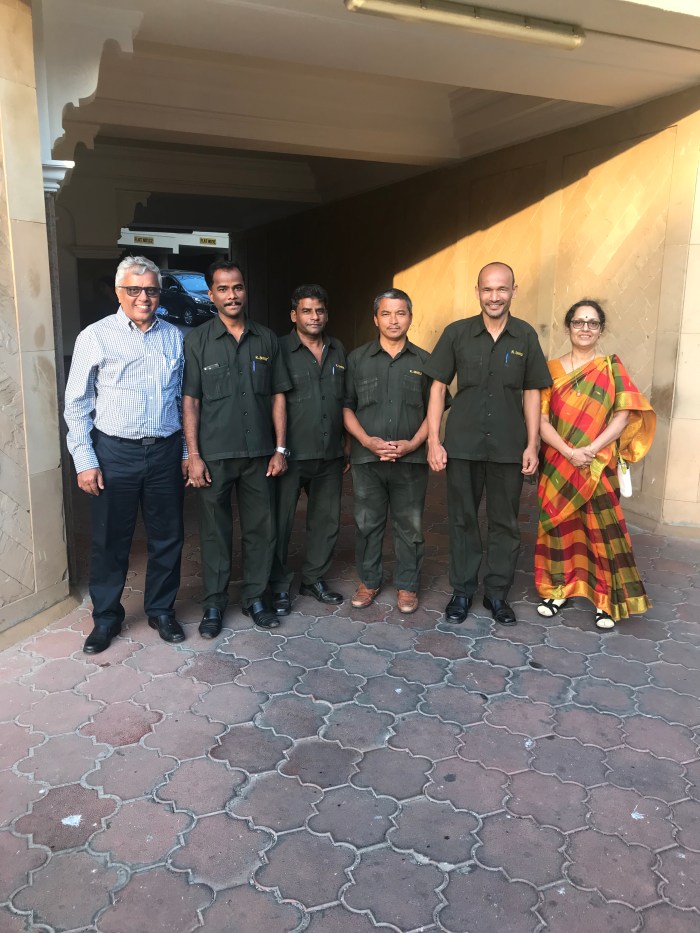
As in the photo above, our security staff took care of us 24×7 even beyond their call of duty since we treated them with respect.

Lets learn to be nice, if we want others to be nice to us.

S Ramesh Shankar

5th September 2018
Life in a digital world

Our life has transformed as we transition from an analog to a digital world. We are connected 24 x 7 through technology. Apart from connected devices, cloud computing and artificial intelligence, our world seems digitised in more ways than one.

We get up with an alarm from an AI digital assistant and end the day listening to music on an app. The time in between getting up and sleep is digitally controlled. We look at the news app more than the newspaper for our news update. We book a cab using a hailing app rather than the traditional black and yellow cab at the taxi stand.

Our breakfast may be pre-cooked in the microwave using a pre-programmed instruction through AI. Then as we proceed to work in a cab, we clear our pending emails on the mobile. Our connected watch may remind us of the appointments in the calendar.

As we enter office, the digital board at the entrance reminds us of the key happenings at work. Then the laptop or tablet is the enabler at work for emails, conferences and scheduling the day.

We use our mobile again to book a quick lunch through a food hailing app as we have no time to have a sumptuous lunch at the canteen chatting with colleagues at work. The day zips past as if it is less than 9 hours at work. We are busy interacting only with our mobile phone and laptop and do not have the time even to wish our colleagues at work.

Our workplace has transformed due to the impact of digitalisation. The business planning cycles have shrunk from years to months and now weeks. The workplace has transformed into spending more time with laptops and machines rather than people around us.

The business models are getting disrupted. Technology like artificial intelligence, data analytics, cloud computing etc are changing the way we think and respond to our customers. The response times have dramatically changed and the so has our definition of competition.

Which is our market ? Who are our customers ? Who are our competitors ? Every thing is changing. The speed of change is faster than the change itself. What we think as impossible today becomes a reality tomorrow. Our customers and competitors are getting redefined in every way.

Then as we return home in the evening, we are busy on social media to wish friends and relatives for their birthdays, anniversaries and promotions. We neither have the information in our memory nor the time to wish anyone in person. Sometimes we end up wishing our own family members only on social media although we may stay together at home.

We then reach home and are busy on our mobile or tablet to look at movies, sitcoms or games to relieve ourselves of all the stress and strain of the day. We are oblivious of all our family members around us at home and do not have time or the energy to even talk to them or listen to their stories.

Life seems hectic in every way possible. We seem to be racing against time always. Technology seems to make us lonely and less emotional in all our relationships. We do not seem to know our neighbours at home nor our colleagues at work except by email ids and social media identities.

How can organisations help individuals cope with such a stressful life ? Helping employees balance life and work is possible in many ways . Some of initiatives at organisational level in this direction have been :

– 24 x 7 free counselling services for employees and their family members

– Healthy break ( exercise for 3 minutes) twice a day at work

– Programmes like “Fit for life” & Enrich your life” for different employee segments

– Health and wellness interventions at the workplace

– Flexibility of working hours and work from home policy

– Sabbatical & Volunteering leave

I sometimes wonder whether such a life is worth it. I am not sure. If I look back at my own life, I had all the time in the world in the past. I was never in a hurry at home or at work. I always remembered the telephone numbers of all my family members and friends in my brain memory. I never forgot to wish friends, family or colleagues at work on their birthdays or anniversaries.

Today I wonder if technology has enabled me or disabled me to be a good human being. May be it is unfair for me to blame technology for my current state. I may be more to blame than the digital technology around me. Instead of managing technology to my benefit, I have allowed technology to rule my life.

It is time to challenge ourselves. Digital technology has been invented to make our life better and more comfortable. It is up to us to use technology effectively. Let us learn to attach and detach from technology as we think it is appropriate. Let us not end up in a health centre for digital detoxification.

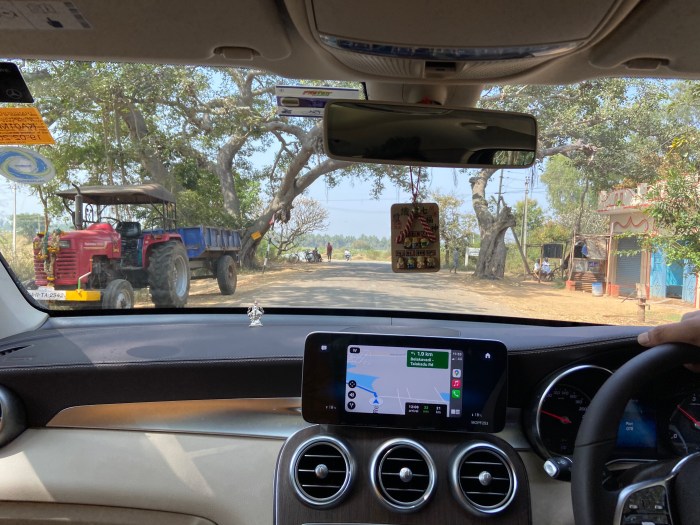
Th GPS in the car is very useful to guide you to your destination as in the photo above. It can take you to any place on earth without any knowledge of the route.

Time to digitally attach or detach is now.

S Ramesh Shankar

24th October 2018

Customer First, Employee Always

Our Customer pays our salary – every employee needs to understand this reality. This a bitter truth that many of us do not realise as the organisation grows and our brand matures in the market. We had a similar experience and hence launched a Customer first programme in our organisation. The objective of the programme was to keep our “Customers” in the centre of everything we do within the organisation.

We evolved five modules in this organisational intervention. They were Customer Intimacy, Customer First Culture, Reliable Execution, Service Excellence & Lean Processes. Each of the modules was led by a leadership team member and supported by a team. This led to our Customer Engagement scores more than trebling in 3 years. We focussed back on the customer within the organisation.

Now that the customer centricity was established, we shifted our focus to employees. We realised that while it is critical to focus on customers, it is equally important to keep employees highly engaged. It is true that if we treat employees well, they in turn would ensure that customers are happy always.

We launched an intervention and called it “People Matter”. We had a long tradition of training and certifying our project managers using global processes and standards. We took a leaf out of this experience and decided that we will train all our people managers and then certify them through a three stage process.

We identified a professional external partner and then trained more than 800 people managers and certified them. All of them went through a two day class room training. They they had to work out an action plan in three people management areas impacting their team and submit it. Then they had to implement their ideas and a feedback was taken from their team on their leadership style. This was followed by implementation and a follow up feedback from their team members to measure impact of their actions.

We found a cultural transformation permeating the entire organisation. I got phone calls, emails and personal feedback whenever I visited locations from team members. Many of them were positively surprised at the changes in their manager’s behaviour. It appeared that the program was making a impact in changing leadership behaviours.

We shared the best practices of various people managers across the organisation through newsletters and other communication channels. We invited the best people managers, who scored the highest to our annual business conference and enabled them to share their experience with the rest of the people managers.

The journey has just begun. We have supported this initiative by empowering people managers to decide the increments and promotions of their team members. We encouraged them to reward and recognise their team members in innovative ways. All new initiatives in the organisation were channelled through these people managers.

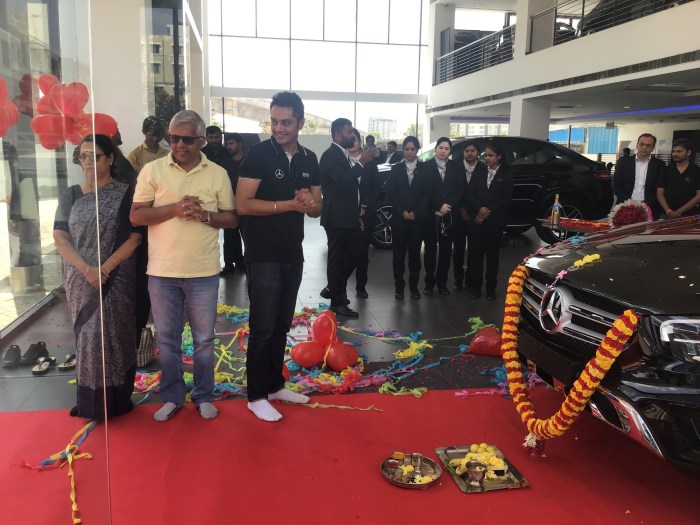
Great companies  believe that if they take care of their employees, they will take care of their customers as in the photo above.

Hence, customer first, employee always.

S Ramesh Shankar

25th August 2018