You share more, you learn more…

I have been privileged in life in every way. I have learnt from everyone around me at home and at work. Every family member and friend has been generous in sharing their knowledge, skills and life lessons with me. Similarly at work, every colleague I have worked with or interacted with has been more than eager to share their learnings with me.

I have sometimes wondered as to why people conserve their knowledge. Some people believe that if they share their knowledge or skill, they may lose their competitive advantage or their worth in life. I think the other way around. The more you share, the more you learn.

Let us reflect on own lives from childhood. Every time we recite a nursery rhyme to a kid, we memorise the same and never forget it. Similarly, every time I have taught maths to my kids, I have improved my own numerical abilities. In my view, it is difficult to imagine that I will lose my identity if I share my knowledge or skills with others.

I have seen this attitude at the work place too. Many senior professionals try to conserve their knowledge and skills thinking that it increases their value in the organisation. It is the other way around. A leader who is ever willing to share knowledge or skills or builds positive attitude in others is the one sought after by the team members.

One interesting dimension to be kept in mind in organisations is that even if you share a policy or a process, it cannot be aped in terms of culture or execution the way you do it in your organisation. Culture evolves. It cannot be copied. So, there is no rhyme or reason not to share your best practises with the world.

We can see in sports that the best players are ever willing to share their skills with their juniors. They never feel threatened that their juniors will learn their skills and make them redundant. Life is no different. Nobody can copy your style or attitude in life. Knowledge and skills are to shared to be sharpened. Attitude is to be ingrained from within.

Organisations and societies spend years to evolve their cultures. It is not possible for another society or culture to easily cut, copy and paste them. Similarly, it is not possible for an organisation to copy a system or a process easily unless there is a culture as a base and a value system to support it. So, we need to realise that the more we share, the more we create learning opportunities for ourselves as individuals and organisations.

Every individual learns from others more than from oneself. So, it is imperative that even as individuals, the more we share, the more we learn. Learning by sharing has to be a way of life. It has to be an attitude to life. This ensures that we can never become obsolescent.

Even sharing kulfi as in the picture above with your friends can be a learning opportunity.

Let us learn to share always.

S Ramesh Shankar

18th December 2018

Journey is as important as your destination

Most of us love to go on vacations. We plan for days together about where to go. We choose our destination based on our interests, the company we are likely to have and the time we have for our holiday.

However, we forget one simple rule of life. We focus so much on the destination that we forget the journey. We do all the research to find out everything about the place we plan to visit. The places to visit, the weather, which may help us to plan the clothes we need to take. We also plan the people we have to meet at our destination.

In this whole process for planning our holiday, we forget that there will so much to do on the way to our destination. Imagine you going on a holiday in a car with family and friends. In my view, the journey is more joyful than the destination. We focus so much on the goal that we forget to enjoy the journey.

Life is no different. Each of us have a lot of goals in life. We have a lot of ambitions. We meticulously plan to reach all our life goals. But most of the times we do not end up enjoying the journey to our destination. For eg. One of our goals may be to graduate from a prestigious university in a beautiful state. We focus so much on our academics that we do not have time to see places in that beautiful city. We do not have time to admire nature or meet wonderful people around the university.

This is so true almost in every aspect of our lives. We resolve to go for a morning walk every day to the park. Our goal is to keep fit and maintain good health. This is laudable. But while we are walking 5 kms a day in a beautiful park, we don’t enjoy the green trees, wild flowers, the singing birds or the blue sky above us.

Then as we get ready to go to work or college, we are running against time. Even if we are taking a public transport, we have so much to enjoy along with way before we reach our destination. We close our eyes and miss to see the world around us. We may get opportunities to meet nice people along the way. We may observe good Samaritans around us serving society and so on.

At work, our focus is on target to achieve for the day. There is nothing wrong with that goal. But we fail to wish people around us. We do not remember to wish a dear colleague on her birthday. We may even find it difficult to find time to have a healthy lunch break.

In our social life, we are not different. We neither remember festivals and occasion to celebrate with family and friends nor remember to wish them even if we are at home on a festival holiday. We think sending and receiving messages on social media the best past time in life. We do realise that social media does not convey emotions. We do.

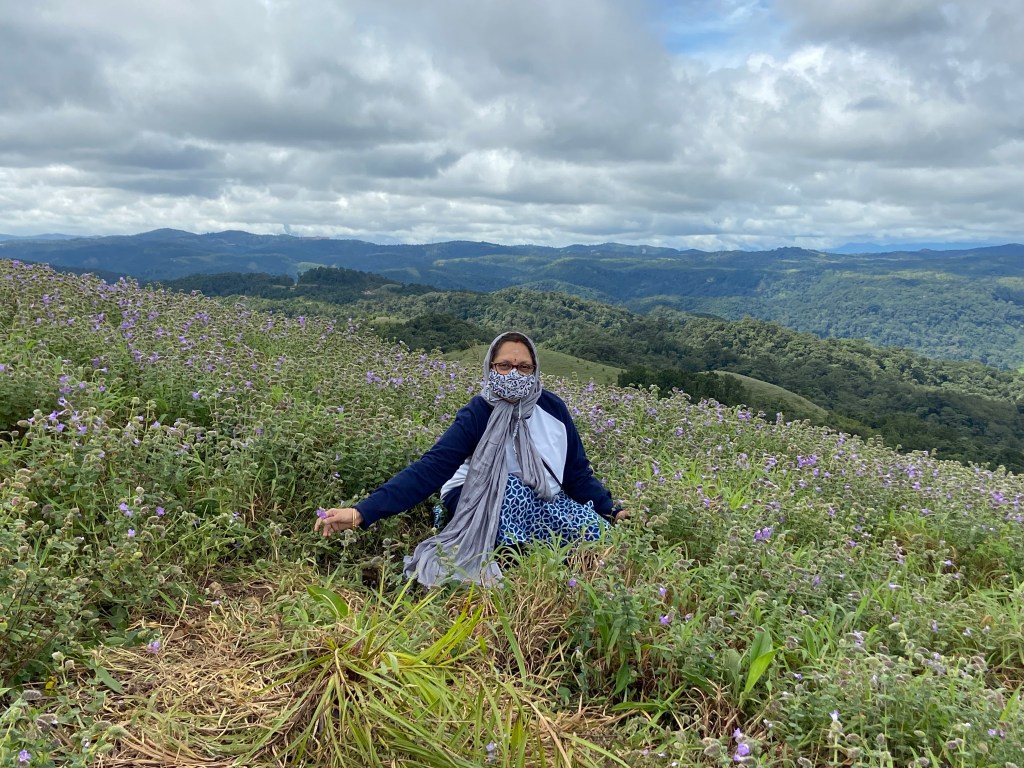
Imagine missing a sight like in the photo above and not pausing your journey to admire this beauty as in the photo above.

It is time to wake up and enjoy the journey as much as the destination. We all are born on a pre determined date and possible our return date to heaven is also fixed. The time in between these two dates is at our discretion. This is the journey we need to enjoy as life. We should not spend our life worrying about the ultimate date. After all, all of us have to go some day. Some go earlier while others may go later.

Time to enjoy the journey is now.

S Ramesh Shankar

22nd November 2018

Insecurity of the boss

One of my colleagues at work is a prolific writer. He writes articles regularly and also publishes in magazines and newspapers. He is proficient in professional areas as well as fiction. One day he called me to inform that I will not see his articles in newspapers or in the public domain anymore. I was surprised and enquired as to why he suddenly lost interest.

He called me back to tell that his boss has asked him to stop publishing articles in the public domain like newspapers, magazines etc. I asked him the reasons for the same and he had no answers. He said his boss feels that a lot of his time is spent in writing articles and thereby he is not able to contribute much within the organisation.

I had advised one of my colleagues who worked with me to utilise every opportunity to represent the organisation and present papers and participate in discussions in academic and professional circles. I was surprised that one day she called me to state that her current boss has started questioning her participation in these events on the basis of time spent (even if most of them were on weekends) and also on their impact to the business.. I wondered why and when asked for the reasons her explanations were not very convincing.

This led me to the insight that many managers are insecure of their own team members. As parents, all of us want our children to excel in whatever they pursue. We want them to do better than us both in their career and in life. Then how is it different for a manager or a leader. Many leaders are wary of their own team members. If my boss calls one of my subordinates directly and interacts with her, I am worried.

Similarly many managers themselves want to make all presentations in leadership team meetings and do not want to give opportunities to their team members. They may justify this by stating that they cannot take the risk of failure or afford any goof up in front of senior leaders. I beg to differ. If we cannot take risks with our own team members, with whom will we take ?

Imagine a senior cricketer thinking that if he coaches a budding youngster and the junior excels, he may lose his place in the team. A true leader will always want his team members to do better than himself. One of the primary responsibilities of a leader is to develop their own team members. If leaders feel that projecting their team to the outside world will expose their weakness, they are only fooling themselves.

On the contrary, the best of leaders I have seen and worked with in my career have always promoted and facilitated their juniors with potential to try and even fail. After all, none of us can excel unless we get an opportunity to fail, learn and improve. As a leader, I should use every opportunity to promote my team members. The more I promote my team, the more I am respected as a leader. We can give all the credit if they succeed and own responsibility if at all they fail.

I recall one of the quotes of the legendary JRD Tata. Once when many leaders from the TATA group left and became CEOs of other companies, somebody asked him if TATA is producing leaders for other companies. JRD replied that he is happy that TATAs are producing CEOs for the country. This is leadership in action.

The more I am worried about displaying the talent of my team members in public domain, the more insecure I am as a leader. Further, really talented people will be wary of working in my team. The earlier a leaders learns about this insight, the better it is for his or her own career.

We need to remember that our security builds security of our team members. The more insecure we are, the more insecure our team members feel and behave. The more we expose our team members to the world outside, the more we get recognised as a leader. A true leader should be almost invisible and work only in the background.

The insecure boss is like the king of the past, who never left his seat for the fear that someone else may occupy it if he leaves it even for a few hours.

Every leader needs to realise that their own insecurity is their weakness rather than the weakness of their team members. The earlier they realise it, the better they will grow as a leader.

Let us learn to develop ourselves by developing our team by giving them all possible opportunities to learn and grow both within and outside the organisation.

Lets try from today.

S Ramesh Shankar

15th May 2021