Relearning from childhood…

IMG_2188

Learning is a life long journey. I was sitting with my grandson, who is 7 years old. He asked me if I knew how to use Instagram on my phone. I said yes. He asked me if I could take a photo of his with the whiskers of a rabbit. I told him that I did know how to do it. He readily agreed to teach me.

He advised me to open the app on my phone. He then showed me as to how change the setting on the phone and then take a selfie as in the photo above. I was quite stunned. It was great learning to use a mobile app from a 7 year old.

As children, we are inquisitive and curious. We learn continually by observing others and things around us. When I asked him as to how did he learn it – he said that he saw my son doing the same on his phone. As we grow up in life, we possibly forget to be curious. Our inquisitiveness is buried within us. We feel shy to ask questions and thereby our learning retards.

It is time to look back and learn from childhood. If we cannot turn the clock back, we can observe young kids around us and learn from them. Another incident made me realise how simple observation can be of great learning value. My grand son was at home for his school vacation. We were playing with each other. Then he wanted to download a few games on my iPad.

I gave him my iPad and enquired which games he would like download. He glanced through the app and shortlisted a few. When I was about to download, he told not to do so. He informed me that every app has a preview. We should preview the game and only if it is interesting, we should download the app. It would otherwise be waste of money. I could not believe that a young kid of 7 years could be so knowledgable on how to carefully download game apps from the internet without wasting money.

To be honest I was not aware of it. This helps learn an important lesson in life. We all are good learners as kids. We observer everything around us and learn. We do not hesitate to ask questions when in doubt. As we grow up our observations skills fades away and hence may be our learning ability also diminishes. We are scared of asking questions when we do not know so as to hide our ignorance rather than learn from others who know.

It is time to reflect. It is time rekindle the child in us. It is time ask questions of curiosity from everyone around us including kids. It is never too late to change. It is also never too late to unlearn, learn and relearn.

Time to restart is today ?

S Ramesh Shankar

Moods & Modes

IMG_3627

We go through different moods and through different modes. Our moods could be determined by our attitude and also that of others. As in the photo above, a kid can keep you energised right through the day with his playfulness and spontaneity.

A mother could teach you lessons of selflessness through her actions every day. She does everything at home and is the ultimate caregiver. She may then spend a tough day at work and yet never forget to care for her family. Her moods are not impacted by her pressures at work alone but her selfless nature to give more than she gets.

Most of us conveniently blame the environment around us for our moods. We believe the mode determines our moods. If we have a challenging day at work or our boss is upset with us, we pass it on to our spouse or kids. We do not realise that they may also have had a tough day at school or work and have equal impact ot mode on their moods.

I have tried to examine the cause and effect and moods and mode. While it may appear logical to relate a mode to the state of the mood, in reality it may be the other way around. After a lot of reflection I have come to the conclusion that I alone am responsible for my moods right through the day.

I may conveniently pass on the cause of my bad mood to my family or colleagues at work. It is possible that a family member or a colleague at work may have spoilt your mood by their bad mode. But it is up to us to keep our cool and maintain our mood. This may easier said than lived.

However, on deep reflection I have realised that the really good people are not impacted by the mode of others. They keep a happy mood all the time. Their attitude to life makes all the difference. They make you realise that to be in a good mood or bad mood is more dependant on ourselves than other people around us.

We have start each day with the belief that this is the best day of my life. We have to grateful to God and all the people around ourselves to have helped us where we are. If we live life with this attitude, I believe our mood will always be positive. As I said earlier, it may be more difficult to practise than write about it. But I have met real people in my life who live it every day.

Time to change is now.

S Ramesh Shankar

Belittling

IMG_5831
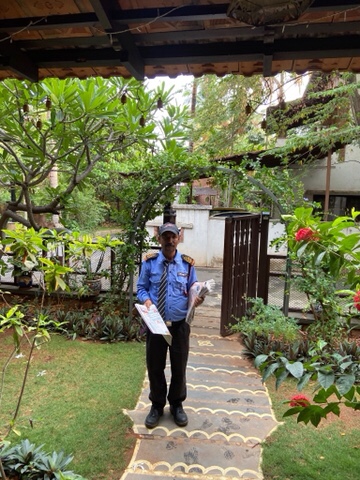
Each of us have a place in our society. Each of us has a role we play. We all try our best to live up to the expectations of our role. It is like every player in a football team has a specific role to play and they try their best to play their role to the best of their ability. Life is no different. Let us look at our daily life. We see people play different roles right through the day. It could be the newspaper boy who drops your morning paper. It could be the security guard, who guards your community premises. It could be your maid, your driver or even your cook. We cannot imagine our life to be complete without each of them playing their role.

Some of us have a tendency to belittle some roles in life. Even in the professional field, some people may consider their jobs more valuable than others. This is more of perception than reality. The best example are the fingers or toes in our arms. All the fingers have the same value although may play different functions in our daily chores. But, imagine the thumb thinking that she is superior to the little finger and makes us believe so. Then we realise the value of the little finger only when it is injured in an accident and we are unable to use it for doing our routine tasks.

It is like in the age old caste system in India. Some castes considered themselves upper castes and others were considered lower in the social strata. This is more of a mindset issue. In my view all human beings irrespective of their caste are equal in every possible way. They ability to add value to society depends on their knowledge, skill and attitude rather than caste. Modernisation has proved that caste has nothing to do with the growth of the human kind. But, traditionally people belonging to the upper castes did belittle the lower castes in society. This is a more psychological limitation of the upper castes in their mind rather than a reality based on scientific facts.

I sometimes wonder why do we belittle people around us. A child sometimes ends up even belittling his mother because she may not be as educated as the kid. The child believes that being more educated gives him the right to underestimate his mother. Time and experience teaches the child that education cannot make you superior to others. It could add value to your knowledge but cannot necessarily substitute experience or hone your attitude to life.

We see this behaviour within the precincts of the organisation too. People in particular positions think that they are superior to the people doing others jobs. It is like a white collared staff thinking that he is superior to the blue collared workman. The staff does not realise that he can never make the product a workman produces ever in his life even if he tries his best. This is not because he cannot ever but does not have the skills to do the same. It is true for all professions and all roles. We may be highly qualified from the best Universities but cannot compare ourselves with someone else, who has skills we do not have.

The truth is that societies also tend to value roles differently. Every society values some roles more than others. This could be due to historic reasons or due lack of adequate awareness of the different roles. But I do believe that evolved societies respect all roles with equal reverence. This is the true reflection for human development. This can be seen in developed societies where nobody is hesitant to share what they do since every role in the community is equally respected.

We need to learn to respect every role in life. There is no justification of belittling others and then justifying it. I would say that is human limitation to belittle others. It reflects more in our inability than ability to know others and their value in society. We need to learn to respect each and every person around us and their contributions to life. This is the only we learn and grow in life.

It may be belittling to dinosaurs to compare them with humans as in the photo above.

Let us start to respect everyone around us from today.

S Ramesh Shankar