Educated Illiterate !

The heading may look like an oxymoron. How can an educated person be an illiterate ? However, in real life we see this all around us. Educated people may assimilate educational qualifications by passing exams and obtaining degrees and diplomas. However, they fail to behave like an educated person is expected to do in their day to day life.

Let me share a few examples from every day life for us to believe that this is not an oxymoron but a reality in our lives today. Let us start with the driving on the roads. Of late, there is a lot of road rage in most metropolises and it is the so called educated elite, who are involved in most of them. They neither follow the road rules nor are willing to accept their mistakes if they do commit a violation. On the other contrary, they would like to muscle their way through or use their clout to get away.

Even if we take a basic etiquette like standing in queues in public places like bus stands, train stations or other public offices, it is the so called educated class who tend to violate the queues more than others. We the educated class do not have the courtesy to give our seats to senior citizens or women when we travel in public places.

The current pandemic is a good illustration of the illiteracy of the educated in public life. Most violations in terms not wearing masks, not maintaining physical distance or not sanitising hands are mostly done by people who are well aware and are educated and not the real illiterate.

The case study of Dharavi is a good example to illustrate this. Dharavi is probably Asia’s largest slum. I have personally visited this place. On an average, at least 8 members in a family stay within an area of 10 sq feet. Even in this densely populated space, when the local government worked with the volunteers to prevent the spread of Covid, the people living in this slum have cooperated and made it a successful eradication strategy. The average resident of Dharavi may not be the educated class in the classical sense of the word.

On the other hand, the so called elite of South Mumbai have violated all public health advisories and it spread like wildfire in many posh residential societies. So, the conclusion one could draw is that education may give a degree but may not necessarily make you literate unless you have the right attitude to life and living.

Interestingly many so called educated elite are in the false belief that the Covid virus is spread from our servants and workers. They want to wear the masks only when they are in the presence of them. This is another hypocritical belief of the educated. The virus does not discriminate based on social class or literacy and we have to wear masks whenever we are meeting anyone anywhere in the public space.

I would like to clarify that I am neither against the educated nor do I profess that all educated people are illiterate. I am only stating that the so called educated majority are violating laws more than the uneducated. It is our attitude which makes all the difference. Higher Education may be the privilege of the middle and upper class of society who can afford it. But public behaviour is the prerogative of each one of us and has no correlation to education.

We need to learn to be self disciplined. The best of efforts by the government and medical and health workers will not bear any fruit if people like us do not wear masks, maintain the physical distance or wash our hands regularly.

The lesson to be learnt from the current pandemic is that law breakers cannot build a nation. Education aids our growth and success in life only if we are willing to be disciplined. The distinction between the law abiding citizen and others is discipline and not education.

It is like my house help Sudha in the photo above, who wears her mask without fail voluntarily although she has not even a school pass out.

Let us lead by example from today at least to set the right precedent for our future generations.

S Ramesh Shankar

15th July 2020
How much is good enough ?

The results of the class X and class XII were declared by the central and state boards recently in India. The overall pass percentage was more than 90 % in most states and most children have excelled in their exams irrespective of tense moments due to the onset of the pandemic during the last phase of their exams.

One of my close relatives obtained 90% in her class X exams and I came to know that she was not very happy as she was expecting more. I was not surprised. Apart from academic excellence, she is a a natural artist and a devoted dancer. I was not surprised at her disappointment because the world is making children compete in every sphere of life. Luckily for her, her family is very supportive.

However the reality of today is that we live in a very competitive world. Everyday we want to compete with everyone around us. This child in spite of being so talented felt disappointed because some of her classmates had scored more than 90%. Imagine someone scoring 90% and feeling bad. If not for a supportive family, imagine the plight of this child or similar children in society today.

In my view, this is a wake up call for us. Do we live to live or do we live to die ? The current scenario amongst children and adults tell me that we are living to die early. We do not want live life every day and enjoy every moment. There is nothing wrong to be competitive. But competing for the sake of competing may be disastrous. We need to realise that life is multi-faceted. Every child is a talent and may have potential to do things which other children may not be able to.

As parents and elders we need to enable the child to realise her or his full potential in what they are capable of doing. Today most parents want their children to be successful professionals. The ability of parents and teachers to harness the hidden talent of a child is less seen. The day teachers and parents realise that every child is a gift of God and is talented, human potential will be fully harnessed. We need to enable every child to compete with themselves and make them realise that this is the path to excellence and not otherwise.

The situation is no different in colleges or even in organisations. Every leader has to realise that every employee is a talent. We need to assess what they their capabilities are and harness their full potential. If we put a square peg in a round hole, we may not get the best out of anyone. We tend to put creative people in analytical jobs and vice versa and then beat them up to realise their potential. This will only lead to fatigue and loss of talent in organisations.

As a society, we need to focus back on our children. It is not good enough to state that children are the future of a country and society. We need to enable them to succeed. The day every child is able to realise their strength and choose their field of interest to study will be the beginning of a new world. Then when they are able to work in a field of their own passion on their own volition without any societal pressures, we may have turned the corner

Families and societies have to learn to be tolerant and flexible. They need to challenge their own mindset and believe that potential is unlimited in every human being. This will lead us to a new world order where happiness will be the ultimate goal for everyone. Joy in what we learn or do and gratitude to everyone around us for enabling us to do the same will be our motto.

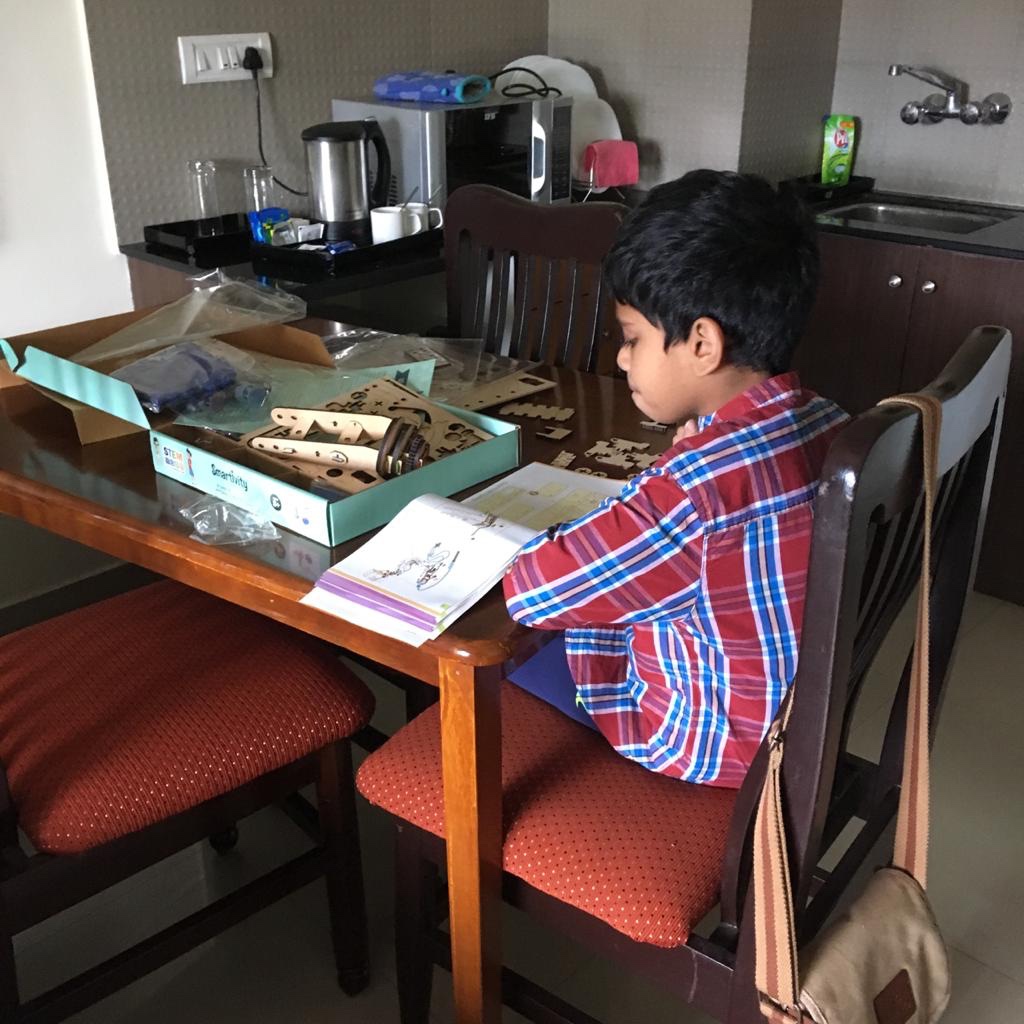
As in the photo above, we need to enable every child to realise their full potential and experience what they enjoy learning and doing.

Let us start today and create a brighter tomorrow.

S Ramesh Shankar

15th July 2020

If we can, we should…

I have always wondered as to why we don’t do what we should. It could be a simple routine of a morning walk or a more a bit more complex as completing a project on time at work. Either way, we always spend more time in finding excuses for our non performance than putting in efforts to ensure our performance.

Interestingly I have noted that this trait in us continues with us from childhood to old age. As a kid, we invent excuses for not doing our home work or for skipping school or college. We become more innovative as we grow into adolescence and take our parents and friends for a ride. We enjoy discovering excuses at this stage of our lives.

Then we we grow as adults and we start working and this trait is not left behind. We always have the traffic congestion for our late coming to office or even the internet breakdown for delay in execution of any work related project. On the other hand, we never miss a flight because of traffic when we go on a holiday or miss a movie online because the net breaks down.

So life gives us all the opportunities to excel in whatever we want to do. We find the silliest of reasons to give up on chances, which come our way without our even asking for it. So, what does this do to us and to others. We miss steps in our career growth and lose our personal credibility. Others lose their respect for us as individuals in the family and colleagues at work.

Now, let us look at what happens if we do what we can. This may appear simple but may be one of the most difficult things to accomplish in life. I find people not keeping their word to their kids to take them for a movie. Imagine you meet people who will always keep their word. I have met many of them in my life – both at work and in my personal life.

First, you have high respect for such people because once they commit, they deliver. Secondly, they infuse this positive energy in others. If you work for a leader who is always on time and always delivers on all her commitments, you tend to become like them. This is natural. If my parents were courteous to everyone around, I learn to be that way. Similarly if my manager does what he can, then I do whatever I can too.

Even in our personal lives we love people who keep their word and deliver. When our parents always get us what they have promised, we respect them. On the other hand, we have scant regard for friends or relatives who always forget what they can do and find reasons for their non delivery.

Interestingly this phenomenon is universal. It is not linked to state, country, religion, ethnicity, culture or language. Having worked in multinational organisations, I have experienced it across the globe. So the choice is simple. If we are determined to do we what should, we can.

Even in the current Covid times, they are asking us to do 3 simple things. Wearing a mask , keeping a metre distance and washing our hands. We can and we should if we want to prevent the virus attacking us.

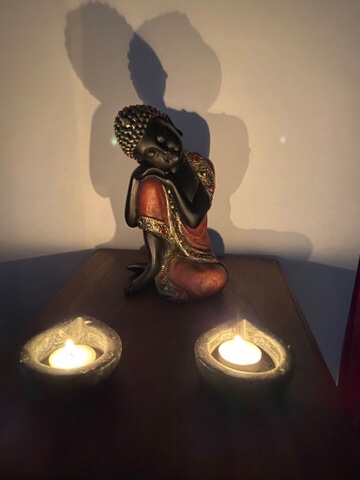
As in the photo above, if we can relax, we should. Gautam Buddha teaches us relaxation is possible at all times.

Life could be different from today if we make this small change.

Lets give it a try.

S Ramesh Shankar

14th June 2020