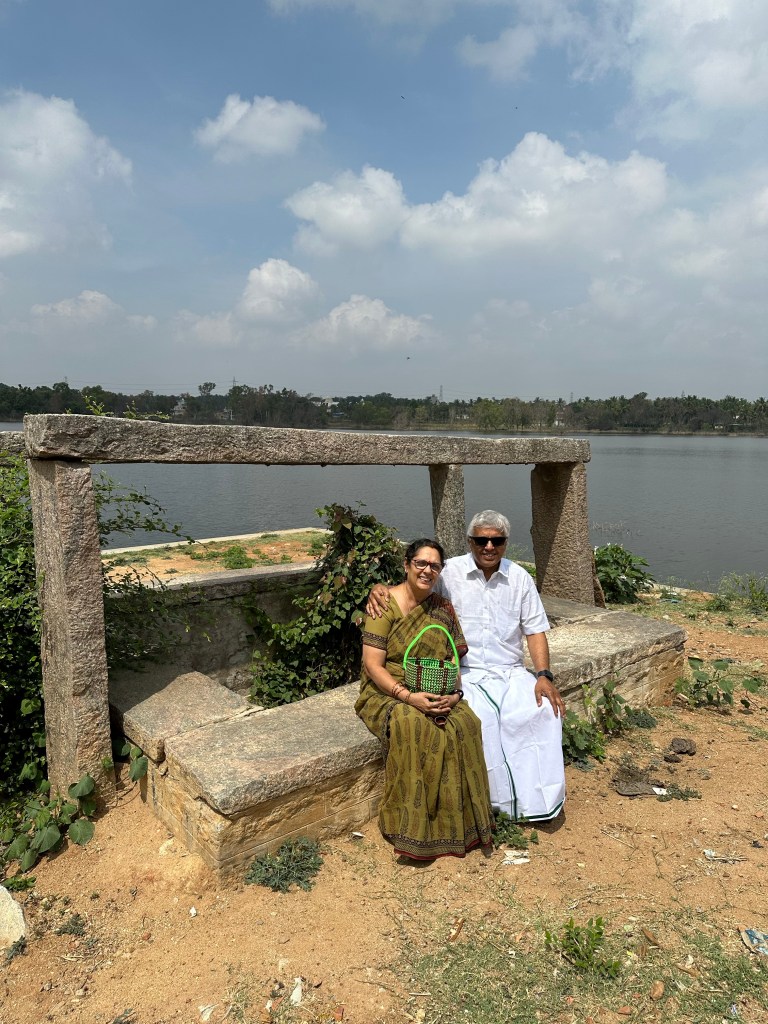
Steps vis a vis footsteps

Someone asked me “What is the difference between steps and footsteps ?“. I had no immediate answer but found it a good point to reflect on. All of us take steps in every stage of our lives. We study hard, work hard, take care of our family and society and always want to leave our imprints behind for the future generations.

While all of us take steps, not every imprint of our steps is followed. The ones which are followed by the next generation ,I may call footsteps. The difference between steps and footsteps is all about “Followership”.

How do we leave behind a legacy that generations after us ,want to follow us ? Our children do not follow us because we are their parents. We as students do not follow teachers because they taught us . Employees do not follow leaders because they were their bosses in their career.

Then what is the “X” factor in us ,which makes children, students, employees and even citizens follow us ,after we become past tense in our lives. In my view, it is this “X” factor which is difference between our steps and footsteps.

We can see in every walk of our lives ,that we have leaders who may be successful and very effective in whatever they do. It could be our own parents, teachers, friends, colleagues, sportspersons, politicians or corporate leaders. However, some we remember and follow while others fade away after their lifetime. What are the distinguishing factors between such leaders whom we remember and follow and others whom we forget ?

What are the qualities in human beings which makes people follow them during their lifetime and even after they are no more ,in human form ? Why do some people become role models for others and some do not quality for this title ?

The first quality which people look for ,in their role model ,is their behaviour. While excellence in whatever we do ,is considered a pre-requisite for being followed by others, it is our behaviour, which outlives our lifetime. People may forget what you taught them in life but never forget how you treated them.

The second quality which people want to follow is groundedness and humility. The people who excel in whatever they do, are always grounded and feel that their journey of excellence never ends in their lifetime. They always have their feet on the ground and are unassuming by nature.

The third quality of leaders in different walks of life, whose footsteps all of us want to follow ,is their selflessness. They live for others and are always willing to share all they know ,with everyone who could benefit from it. This makes followers fall in a bee line for such leaders.

So, in my book, the difference between “Steps” & “Footsteps” is “Followership”. The qualities which distinguishes whom we may follow or not ,are their impeccable behaviour, their humility/groundedness and their selflessness.

Let us try to leave footsteps rather then our steps behind us.

S Ramesh Shankar

23rd January 2023

Speech versus Silence

I read a quote which said – “ Speak only if it is more valuable than your silence.” But most of us practise it the other way around. We speak more than our silence. God has given us two ears and one mouth. But, in reality, we speak more than double of our silence.

Let us understand the power of silence. When we are silent, we do not hurt anyone. We do not talk when we are supposed to listen. We listen more actively as our mind is focussed on listening than on speaking.

On the other hand, while speaking, we do not listen actively. Our focus is on what we want to speak rather than what others are speaking. The noise of our speaking silences the talking of others. We sometimes miss the essence of what others are saying.

Some of the best examples of learning the art of silence is from kids and animals. Lets look at kids first. New born infants can speak only after they pass their first birthday. However, their communication with their parents especially the mother is to be seen to be believed. Their silence is louder than their words.

As they grow up they can speak but they use their silence to protest and get their things done from parents and siblings effectively. When a child does not speak, the parents are more concerned than when the kid is yelling.

On the other hand, animals especially pet dogs teach us great lessons on silence. We had a pet Labrador at home. She was very affectionate but would always protest more by her silence than her barking. If someone shouts at her or misbehaves, she may sulk and not eat food for hours till someone else cajoles her to eat.

Both children and animals teach us the power of silence. We need to learn to listen more than we speak. Silence is not only effective but helps us reflect and learn too. When we listen actively without speaking, we get to understand better. No wonder the popular quote goes as “Empty vessels make the most noise.”

The silence of the morning with birds chirping around makes us fresh all day. The evening silence on a full moon night makes us reflect and dream. The best of poets and authors become most productive when they are alone and in tune with nature. They can never give their best in a crowded market place.

We need to learn the power of silence and the value of our speech and use them appropriately to be most effective. We need to remember that on many occasions silence speaks louder than words.

Lets learn to be quiet when the world is noisy around us. Let us spread our wisdom more by our actions than our words. Let silence teach us more than the speeches given by others.

Let us learn to listen more to what is unsaid than what is being said. May be life could be more insightful.

S Ramesh Shankar

22nd Jan 2023


Gone with the wind…

There are many things in life which go with the wind and we do not even realise it. I wanted to share a few of my personal experiences and wanted to check if it is true for you too.

The first experience I have is that of lending books to family or friends. People are very excited to borrow a book they like as they want to read it . You do not mind lending the same since sharing knowledge adds to yours. But the beauty of many of these books is that it never returns to your book shelf. They take it, may or may not read it but mostly forget to return it.

One common experience is with pens. People forget to get their pens and borrow it from others when they need them. However, they never remember to return after they use them. I have lost a few expensive pens in this process. Nowadays I use only throw away pens so that you don’t feel bad when not returned.

The next experience is with clothes. As your kids grow up and start wearing your clothes, you feel good that your clothes have started fitting them. My son generally ventures into my wardrobe to see which T shirt is new and loves to wear them. However, some of these clothes taken by friends or relatives never return to our wardrobe.  

My wife is to embroider/knit special clothes for children. Then she used to share with relatives or friends to be used for their children as our kids have grown up. While giving she would specifically state that it was a unique piece of garment she had embroidered and wanted it to be returned after use But it never returns and people forget about it.

This experience may even extend to gadgets. I remember once I lent my infra red heating lamp to a friend who was in severe back pain. She recovered and was very grateful for the help. However, even after a few reminders she did not return the same.

It could extend to things in the kitchen. You want to share some food with your neighbours and send it to them in tiffin boxes. The food is consumed and appreciated as well but the tiffin boxes never returns.

It may be our possessive nature and our emotional connect to material things which makes us feel bad to lose them. But more than that one feels that on the one hand you lent a helping hand to someone in need and in return you lose your possession.

I used to feel quite upset at such incidents in the past. I then glanced through an old quote , which read – “ If you love something set it free, if it belongs to you, it will come back, if it does not, it never was…”. It is then I realised that one has to consider that your possession was possibly never yours in the first place. Alternatively, the other person needs it more than you.

While this may be easy to write about, it is a difficult emotion to go through. The first time you lose a book you love, you almost decide to never lend books again. Same may be true for other things. But as you grow and mature, you are willing to let go of your possessions although reluctantly.

As we can see in the photo above, we take time to realise that the value of the pen we lose may be less than the relationship we may lose in the process.

I sometimes wonder why people do not return things they took from you in time. I assume they have no ill intentions. It either could be forgetfulness or their attitude to life. I did realise that I would get impacted by such incidences only when I get too attached. If I let go, may be this will easier to overcome.

Time to “let go” in life.

S Ramesh Shankar