Never too late to resolve…

Another New year dawns on us. We wonder what new year resolution to make. I am no different. I sometimes wonder if it is too late in my life to make a resolution. But on reflection, I realised that it is never too late to resolve.

If we look back at our lives, we have so many imperfections embedded in us. We are not yet perfect in anything. Hence, the opportunities to makes resolutions to change and improve is endless.

Let me start with simple things in life. Am I good at making up my bed after I get up. I leave it to someone else to do it for me. So, may be the first resolution can be that I make my own bed everyday.

Then the next question to ask is “Can I make own coffee or tea ? If the answer is no, it is time to learn to do it yourself. So, the second resolution can be to make your own coffee or tea and may be make it for your partner or family members also.

Do we do some exercise every morning ? It could be a walk, a jog, cycling or playing any game. If the answer is no, which is most likely for most of us, that can be the third resolution. I commit to walk or do yoga every day.

Then we look for someone to help us with our clothes and office accessories. This could be our fourth resolution and we could learn to organise ourselves well so that we do not need someone’s assistance to pick our clothes or other office paraphernalia.

Most of us ride a bike or drive a car to work every day. We then blame the world for the increasing pollution around us. Our fifth resolution can be to take the public transport to work at least once in a week and there by contribute our bit to reducing pollution in the world.

Do we wish everyone with a smile at work ? We enter the workplace and find it difficult to wish the security guard. We do not think it is important to wish everyone around us at work and shake hands with them before we start our day. This could be the sixth resolution that we will start the day by wishing everyone around us with a smile.

At work, do we delegate things we can easily do ourselves ? If the answer is yes, then it is time to change. Delegation is a good management practise. However, we can do somethings ourselves, which when delegated may delay action and is not necessary. This could be our seventh resolution.

One thing which amuses me is that people do not return calls made to them. Yes, all of us are busy all day and night and we may not be in a position to pick up calls many a time. However, courtesy demands that we call back everyone who called us. It could be a junior colleague, family, friend or the CEO it does not matter. This could be our eighth resolution.

Our ninth resolution could be get back home on time. While working hard is a good idea, it does not add to productivity by sitting late at work every day. This neither improves our performance at work nor makes our family happy.

The tenth resolution may be to make at least one of the above nine resolutions and ensure we follow it through the year. My belief is that if we commit to do at least one thing and make it happen, it will be great.

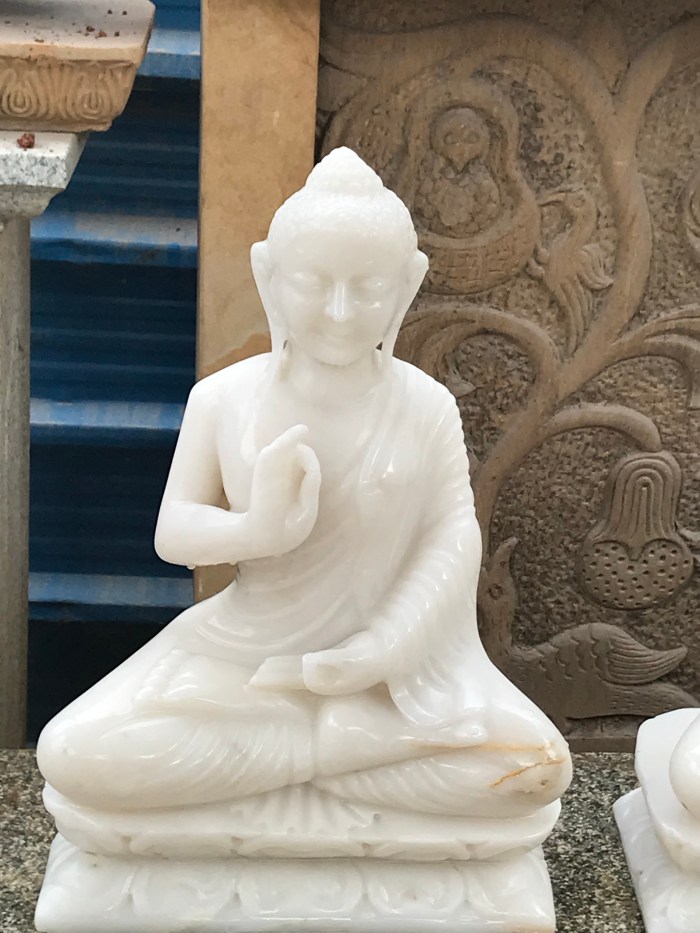
Let me wish you, your family and friends a wonderful new year. So, here are my Ten Commandments to myself for the new year. I was reflecting on them sitting in front of the Buddha in my garden.

What are yours ?

S Ramesh Shankar

1st January 2019
People – the competitive advantage for an organisation

Every company in the world tries to identify what is its competitive advantage ? They look at what markets they operate in ? Who are their competitors ? What are their sources of competitive advantage ? This leads to factors like Cost, Quality, Reliability , Service, Innovation, Products etc. But, I do not subscribe to this theory of management. In my view, all competitors ultimately catch up to your sources of competitive advantage today or tomorrow. Hence, it is only “People” working with you, who are your only source of competitive advantage, which is not replicable.

Hence, if we believe that we have to make our organisation a great place to work – we have to realize that “Managing People” is not nice to have but must have factor for organisational success. If we take the simple example of the auto industry, we will get our answers. Today, the cars produced by different companies in the same segment is not very much differentiated. They have the similar technology, features, price etc. What really differentiates them is the service, which that company provides you before or after the sale of the car. Service is delivered by people and people are the key differentiator.

We have evolved the concept of “Ownership culture” in our organisation. What does this mean – this means that every manager owns her or his people in every possible way. A manager is the friend, guide and philosopher for his team. We need to build the people management skills in every manager so that they take care of their team members.

We launched the “People Matter” programme and the manager fitness certificate to support this philosophy in Siemens. This would help us strengthen the ownership culture by creating highly motivated teams. This would in turn enhance our customer experience. Like they say, if you take care of your employees, they will take care of your customers.

In this intervention, we partnered with Great Place to Work(GPTW). The reason why we selected GPTW is because we wanted a partner, who understand India and also helps us understand the best people practises in the world. They have helped us customise the programme to suit our context. They have benchmarked us with the best in the world and are supporting us to become the best.

This has been an exciting journey for me personally. I travel across the company and have visited almost all locations of Siemens. Everywhere I have been since the launch of the People Matter programme, employees have told me that they see the significant change in the behaviour of their managers. This is very heart warming. They tell me that their managers listen more and spend more time with them for their own development.

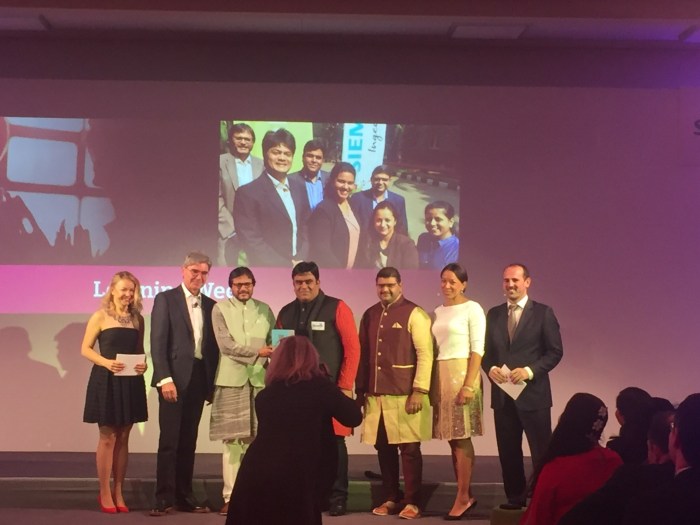
It is the people in the organization, who make a difference as illustrated in the photo above.

We would like to make this a way of life in Siemens. This is not a one of flavour of the season. We want every people manager to be the face of the employee in Siemens. We will empower them to take people decisions for all their team members. We will incorporate this in some way towards the “How” assessment in the PMP process. We will reward and recognise the best people managers periodically across the company.

We believe that it is “Customer first” but “Employee always” in Siemens.
 
S Ramesh Shankar
 

Why do I blame the world ?

We all have a tendency to blame everyone else in the world for almost everything. If things work for us, we take the credit and when something does not work, we blame others. This is the reality of the world. Lets start with ourselves and our lives. If I come first in the class we say it is all due to my hard work. If we fail in the class, it is due to teachers not doing their job or parents forcing me to take a subject I do not like and so on.

If we move to the work place, life is no different. If I do well on the job it is because of my hard work. If I do not do well, it is because of lack of support from my boss or from other colleagues at work. This again proves that everything going well at work is because of me and everyone else around me is responsible for anything going wrong.

If we move to society at large the situation is not very different. If the roads are flooded during the monsoon, we blame the government, municipalities or contractors. However, if the I choke the drains with plastic waste I am not responsible. If the city is not clean, the state has to be blamed. If I litter garbage around my house, we may blame the municipality for not having effective garbage collection system.

All this leads me to reflect as to why do I blame the world for everything that goes wrong in my life ? Why do I take the credit for all that I do well in my life ? Is this human psychology or our limitation and selfishness ? I would consider it human limitation and our selfishness. We as human beings always want to take the credit for everything positive in life and blame the world for all the negatives.

I was wondering how the world would change if we looked within ourselves and decide to reverse this trend. Imagine my giving all the credit to my teachers and parents for all my success in life. What would happen if I credit my boss and colleagues for my success at the work place ? How will society be different if I lead the change I want to see in my environs ?

I think it is time for us to lead this change and make a positive impact in society. I would like to take responsibility for all my actions. If things go right in my life I could give credit to the people who have made it possible. If I do something wrong I will take the responsibility and ensure that I own it up. This will ensure that the people who deserve the credit for my success in life get the due.

All this will also ensure that there is an attitudinal change in society. Change always begins with the individual. Like we say an organisation is not buildings or structures, it is a summation of people working in it. Similarly, change has to begin with the individual. Why blame the world for my sins ? If I smoke, I am responsible for it. How can I blame my friends or relatives and claim that they have got me into this habit ?

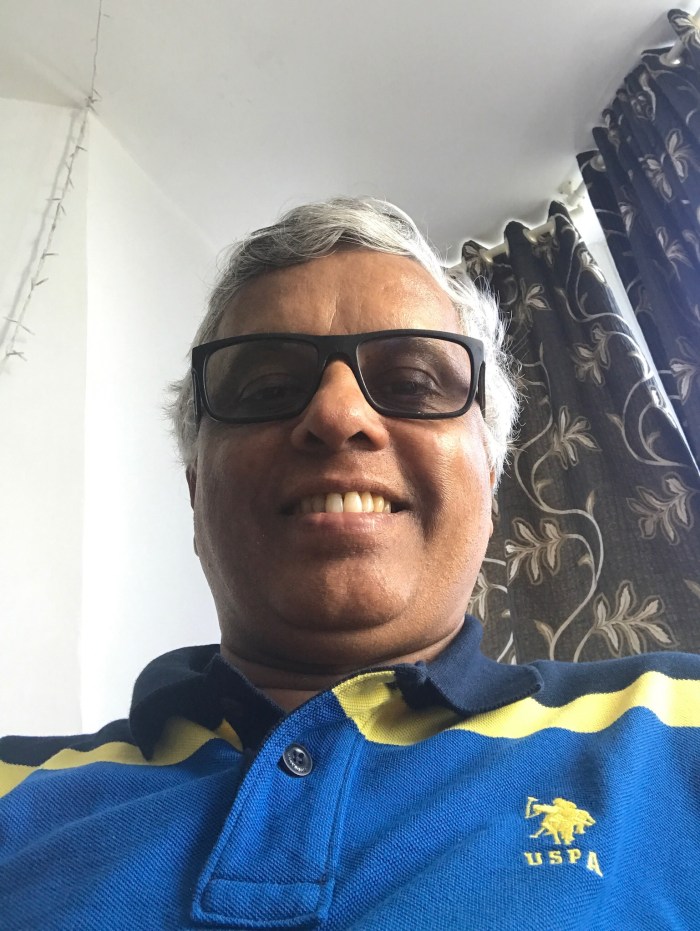
A selfie above is a good illustration that change begins with me.

We always tend to externalise a problem or an issue ? We want to blame the world for all our wrongdoings . We want to blame society for anything which happens to us. We want to blame the government for all inaction and evils in the community. It is time to reflect and change. It is time to introspect and act. It is time to look within oneself rather than outside ourself.

Change begins with me.

Let me start today.

S Ramesh Shankar