Complex – inferiority or superiority


We all have complexes in life.  Sometimes we call them inferiority complex and at other times superiority.  In my view, complex is only of one type and that is inferiority.  When we are not able to accept our inferiority, we project it as superiority complex.  This happens to us in all aspects of life.  It starts at home.  As a senior family member, we find it difficult to accept our mistakes. We find it more difficult to say sorry.  Most of the time, we use our status to exert our power.  We think we are superior to the other younger members of the family and hence can get away with it.  In my view, we are inferior and everyone including a child understands it although may not express it to us out of respect.

The best example of the expression of complexes is seen between spouses in a marriage.  Each of us think, we are superior and can argue till the end to justify our behaviour.  We many a time may realise that it is our mistake but our status and ego prevents us to accept defeat in an argument.  We may prefer to keep quiet and not talk to each other rather than accept inferiority or defeat in any situation.  All of us who are married may have gone through this situation many times in life.  I have gone through and have always found it difficult to reflect and accept reality.  It is definitely easier to write about it than display it in day to day behaviour.  

The work situation is no different.  As managers and leaders, we think our seat of power gives us a right of superiority.  We want to win every argument with our team and want to dominate in every discussion.  We think that if we listen more and give in to ideas, we may be perceived as less effective.  This sense of superiority in us is actually a weakness rather than a strength.  Hence my hypothesis that there is only one complex in life and that is inferiority.

The behaviour of individuals in society is similar.  We tend to behave as if we know everything in life if we are the oldest in a group.  We tend to believe that experience can make us a master of all situations.  While it is true that experience is a good teacher, it may not necessarrily answer all the questions in life.  It may be a good idea to listen to all shades of opinions in society. Everyone in life, old or young, senior or junior may have something to contribute.  It is up to us to learn from everyone in life.

The earlier we realise that all complexes in life are those of inferiority, the better it is for us.  Irrespective of family, work or civil society, there is nobody inferior or superior in life.  Everyone may have ideas and it is up to us to learn from all of them.  It may be useful for us to convert every weakness into an opporutinity to learn from others.  If we live in a dream of superiority, we live in a world of delusion.  

Just like in the photo above, being taller or shorter than the other person does not make you superior or inferior in life.

The earlier we accept the reality, the faster we grow up in life.

S Ramesh Shankar
Tomorrow never comes…


“Procrastination” is not a common word in English but we practise it almost every day.  There is a nice quote in Hindi which says “What we need to do tomorrow, do it today, what we plan to do today, do it now..”.  It is true that we tend to postpone issues on the slightest pretext. We do not need excuses as we invent them for anything and everything in life.

Our day begins and ends with excuses to procrastinate things.  We postpone the morning walk because it is raining.  We do not clean our room because we are late to work.  We skip breakfast because we postponed buying provisions for the kitchen.  As we leave for office, we reschedule the first meeting of the day since we are caught up in traffic and cannot reach on time. So, the day goes on by postponing one thing or the other and hoping that everything will get done tomorrow.

This habit of delaying or postponing things is not unique to a country.   Of course, it could be more prevalent in some countries than others.  But, I believe it is a human trait.  I am not sure if we are born with this trait or we inherit it.  I believe we develop it and let it blossom out of our own laziness. We always have reasons to justify it and if we don’t find one, we can always make someone else responsible for it.

I have been no different in life.  I always had reasons for postponing things. I was intuitive and innovate in inventing excuses.  One day I reminded myself that postponing exercises is not going to harm anyone else.  It will only impact my own health since I am a diabetic.  I used to skip my walk whenever I came late from work.

One day I realised that “Tomorrow never comes.. “.  If we think that we can make up in life by postponing things we are under an illusion.  Life goes on like a train without a destination.  It could give us opportunities to learn like the train stopping at various stations on the way.  But, it is up to us to reflect and learn from our mistakes.  Imagine a smoker thinking that he can give up smoking from tomorrow.  Most smokers believe that smoking is injurious to their health.  They resolve umpteen number of times to give it up.  Every time, they wait for that auspicious day or hour to start, which never arrives.

Life is no different.  It does give us reminders and opportunities to learn. But, if we decide to procrastinate and think that a better tomorrow will arrive for us to change, it may never come.  It is up to us to start today.  It is better to start now rather than wait till the end of the day.  It does not matter if it is a simple or a complex decision in life, the best time is now or never.

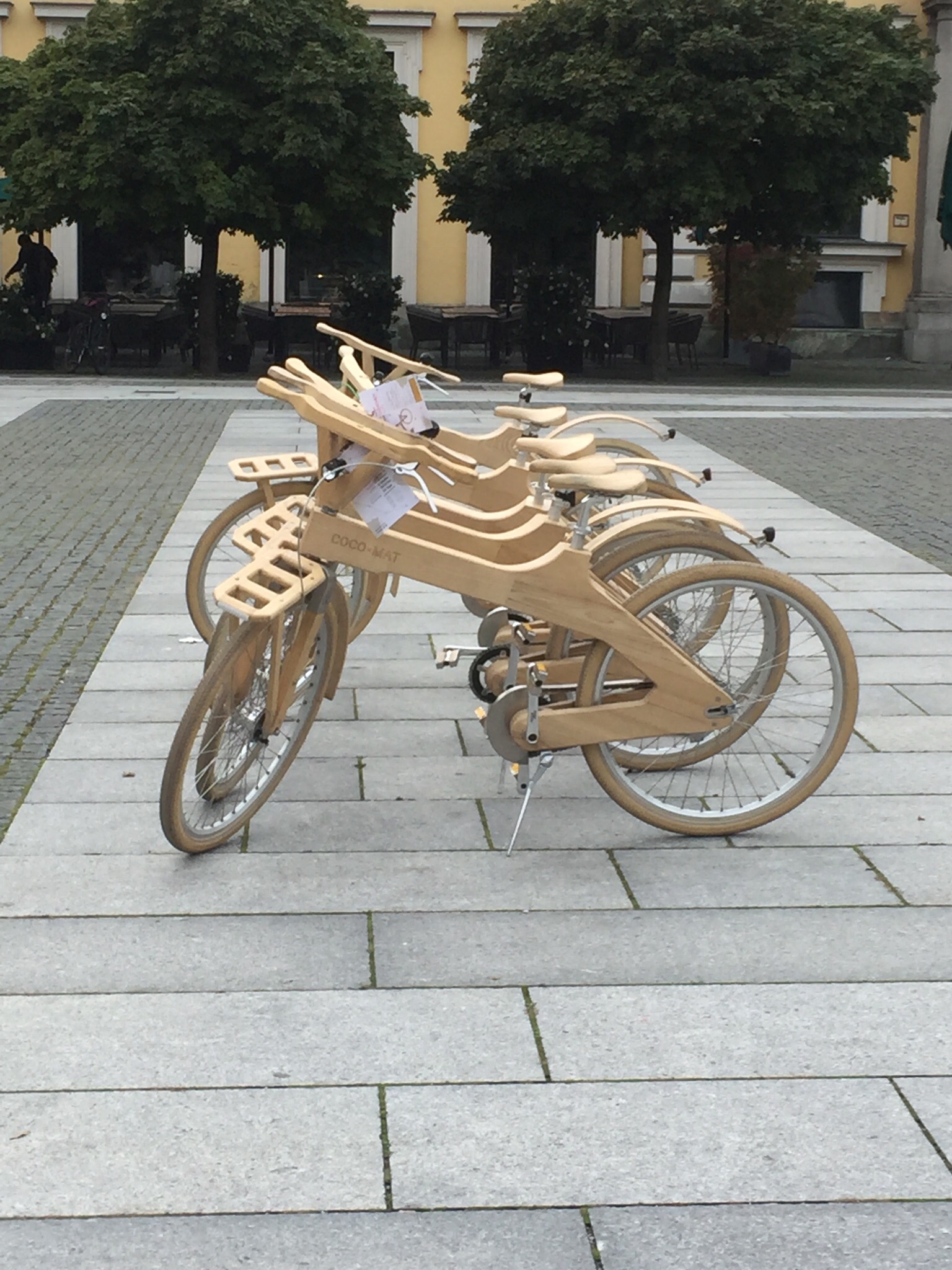
Like in the photo above, it is not good enough to buy a nice cycle and park it in front of your home.  The time to start cycling is now if you think cycling is the best exercise to keep you fit.

Why wait till tomorrow ?  Let us start now.

S Ramesh Shankar

Mirror


I wonder many times as to how my behaviour with others will impact me.  I have seen in my life and career that many people get away with rude behaviour.  Sometimes people in power and authority think that have a right to behave rudely.  This happens both at home, work environment and society. Let us try to explore why this happens and what is the impact. 

At home, as I grow into an adult and become successful in my career, I tend to believe that I can boss around in the house.  I tend to take my family members for granted and sometimes even my parents.  This further makes me short tempered and unpredictable.  In some families, irrespective of both husband and wife working, there is a sense of superiority in either of us.  We are intolerant to the success of the other person and live in a make believe world. We do not realise how our behaviour as adults impacts the psychology of our own children.

If we move to the work place, the situation is not very different.  As we grow in the organisational hierarchy, we tend to believe we become demi God.  We treat our colleagues with disdain rather than human beings.  We tend to show not enough respect to people down the hierarchy.  It can result in simple courtesies not being extended to our colleagues.  It could be like not wishing back to our colleagues, when they wish us.  It could also mean not listening to junior colleagues or dictating our way through key decisions.

This tendency reflects in societal behaviours too.  People in positions of power whether in organisations, politics or other institutions tend to get egoistic.  They take everyone around them for granted.  Pride and ego dominates their behaviour.  They get away with this sort of antics as long as they are in power.  The moment they lose power, they become cowards and they do not realise how much they have hurt people till they get hurt themselves.

In all these situations, what is common is that power and behaviour seems to be directly correlated.  As power seeps into the human body, our behaviour tends to get from bad to worse.  So, it is up to us to realise this change and keep ourselves grounded and humble.  You may get respected as long as you wield power.  But, it is critical to remember that people respect your position rather than yourself.  In real life,  people respect those with character and humility.  Your words are more important than your deeds.    

All these situations signify that as parents, leaders or citizens our behaviour impacts our future generations.  Our words and actions determine our character.  Our character determine our actions.  Our actions trigger changes in society.  It is up to us to behave in a way we want our future generations to do.  Our behaviour reflects and impacts the behaviour of the younger generation.  It is like our images are reflected in the mirror every time we peep into it.

Let us behave the way we want others to do with us every day.

S Ramesh Shankar