Power of Listening


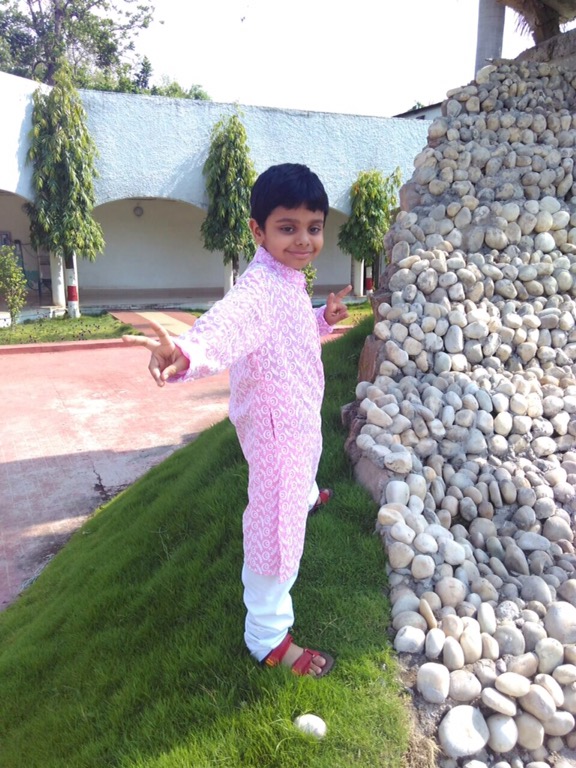
We are all born with two ears and one mouth.  But we generally end up talking more than listening.  Why is this so ?  May be it starts with the family, then the academic institutions and finally organisations and society.  We are always encouraged by our family, friends and society at large to communicate well and make an impression, wherever we are.  We have always been guided to outsmart everyone around us.  There is nothing wrong with this teaching.  However, it is important to realize that God may have given two ears and one mouth to all of us with a purpose, as illustrated by this kid in the photo above.

We possibly need to realize that effective communication in life means listening more and talking less.  Let us examine this from own life experiences.  Who in the family we like to spend our time most.  In all probability, it would be our mother.  This is because she would be the best listener in your family.  She listened to our non stop blabbering and the unending questions without losing her patience or cool ever.

If we move to the school or college, who was our favourite teacher ?  Its always the teacher with whom you can share all your stories – good or bad.  The teacher always created space for us.  She was ever willing to listen to us and our views .  She made us comfortable and let us experiment and fail in any situation.  On the other hand, imagine the teacher who advised you on everything in life even before you asked.  What would be your reaction ?

If we move to organisations, employees love peers or managers who lend their ears under all circumstances.  Such managers and peers attract you like a magnet.  You can laugh with them or cry with them and you can be your self.  They are non judgemental and always have the time and space for you.  On the other extreme, you meet managers who are instructing you all the time even on issues where you do not need any advice.  None of us like to work with such managers.

I have sometimes wondered as to why listening is more powerful than talking ?  I recall an incident, where I was conducting an interview of a candidate for the head of manufacturing position.  The interview lasted for an hour.  The candidate spoke for 50 minutes and I may have spoken for ten minutes.  At the end of the interview, I asked the candidate if he had observed anything in his behaviour during the interview.  He was puzzled.  When I explained to him that most of the time he was speaking and I was listening, he realised the power of listening.  I could listen to him and make my decision without speaking much.

Life is no different.  If we look at our kids.  Most of the time if we are willing to listen to their questions and chatter, they are happy.  They are more than happy even if you do not answer all their questions.  They appreciate your patience and listening skills more than your talking.  Listening is more effective in communication than speaking.

I can share another incident in my life.  My father was a government servant.  He was a very patient person.  He hardly spoke and never lost his cool.  But still his staff  adored him.  I was very curious.  I asked his staff one day as to what did they observe in him.  He responded by saying that he admired him for his calmness and patience.  This proves listening is much more impactful than speaking. 

Let us resolve to listen more and talk less from today.  It is worth a try.

S Ramesh Shankar

Language is not a barrier for kids


Language bridges people from across the world. It helps us to communicate with each other.  We can share ideas, solve problems and help each other succeed because of language.  But sometimes we believe language becomes a barrier between people and even communities and states.  Why does this happen ?  There is no logic to explain this nor reasons to justify it.

Let us look at children.  Have you ever seen children not mingling with each other because they cannot speak a common language.  I have never seen that.  On the contrary, I have even recently experienced my grandson and my nephew’s son play with each although they do not speak any language in common.  Children have a way to communicate with each other without any language.  Language is never a barrier for kids to share and enjoy together.  Why should it be for the elders ?

We have an opportunity to learn from children.  As elders, we make language a barrier between us. We feel it breaks down communication and will easily blame communication as a barrier.  How do children overcome this barrier ?  How do they communicate even without knowing the language of each other ?  I am reminded of a story, which happened in India a few decades back.  A french anthropoligist was visiting India to study in some part of rural India.  He neither knew english nor Hindi.  He was also not familiar with the local regional languages of that part of India.  When asked how he would do his research without knowing the local language, he responded that he would visit the villages and behave like children and then the villagers would respond.  This will help him study their behaviour.

Thus we need to realise that language can be an enabler for better communication.  It should not be a barrier to deal with each other.  It is also interesting to note that more than 70% of our communication is done non verbally.  Hence, how can we blame language as a barrier, which in any case only accounts to that balance 30% of communication between human beings.

It is fascinating to see children talk to each other without knowing each others’ language.  They are not only able to communicate with each other but even able to coordinate with each other seamlessly.  If you see them play a game together, you will see this in action.  What prevents the elders to not do the same? As we grow older in life, our ego becomes the barrrier between human beings and not the language.

We tend in live in own world and refuse to adapt ourselves to others as the situation demands.  Children are adaptive by nature.  They are always willing to give more than they take from others.  They listen more attentively.  This makes them communicate with each other bettter without blaming language or other factors as barriers.

It is time to reflect, un learn and re-learn this adaptive nature from kids.  Their ability to adapt is admirable.

It is time for change.  What do you say ?

S Ramesh Shankar

Sights and Insights https://www.amazon.in/dp/B072MGWCYR/ref=cm_sw_r_cp_api_i_XMMxzbH5PSM3E

The ‘Aha” moment


All of us go through various experiences in life.  Each moment is a unique one in life.  However, there are some moments, which we may call as ‘Aha’ moments,  when you suddenly feel that you have arrived in life or something special has happened to you.  These moments may be small events in life but have a lasting impact on you throughout your life.

Let me try to illustrate through some real life experiences.  I was vacationing near the western ghats of south India during summer of this year and suddenly I took out my IPad and started writing a blog.  It was a moment of revelation.  A moment to cherish – as words started flowing as if water was flowing through the river bed down the valley.  It was natural and unplanned.  But the joy within me was unique.  I shared this experience with my spouse and since then started writing a blog every week without fail.  This was indeed a “Aha” moment in my life.

Another interesting incident, which happened in my life was when I joined my current employer.  I had till then lived in Kolkota and worked in Delhi and Chennai.  After moving to Bangalore in 2005, I never dreamt of moving out of that city to work.  But, suddenly in 2011, I got an offer from my present employer and moved to Mumbai.  This was an “aha” moment since I always felt like living and experiencing this dream city in my life.

My wife had passed out of college and was working as a counsellor before we got married.  After we had our second child, I encouraged her to write the National Eligibility test (NET) to become a teacher in college.  She reluctantly agreed and gave the exam.  When she cleared it at the first attempt, it was a ‘Aha” moment for her.  She had lost touch with academics but even without much preparations, she cleared in the first attempt and hence was overjoyed. 

My daughter always had a desire to study mass communication.  When she completed her graduation in journalism from Delhi University, she started to apply for many colleges to pursue her masters in mass communication. Suddenly, one day she got a call from the most prestigious institute for mass communication in India and this indeed was a “aha” moment for her.  Her joy was boundless.

My son was always a automobile enthusiast from childhood.  He dreamt about cars and bikes even during childhood.  As he grew up, this hobby became a passion.  Then he went for his higher studies in marketing.  On return, he was applying for jobs and out of the blue, he got an opportunity to work for one of the most coveted brands in the world car industry.  This was a “aha” moment in his life since he got to live his passion every day.

All of us have our “aha” moments in life.  It is up to us to enjoy the moment and share the joy with others.

S Ramesh shankar