Gone with the wind…

There are many things in life which go with the wind and we do not even realise it. I wanted to share a few of my personal experiences and wanted to check if it is true for you too.

The first experience I have is that of lending books to family or friends. People are very excited to borrow a book they like as they want to read it . You do not mind lending the same since sharing knowledge adds to yours. But the beauty of many of these books is that it never returns to your book shelf. They take it, may or may not read it but mostly forget to return it.

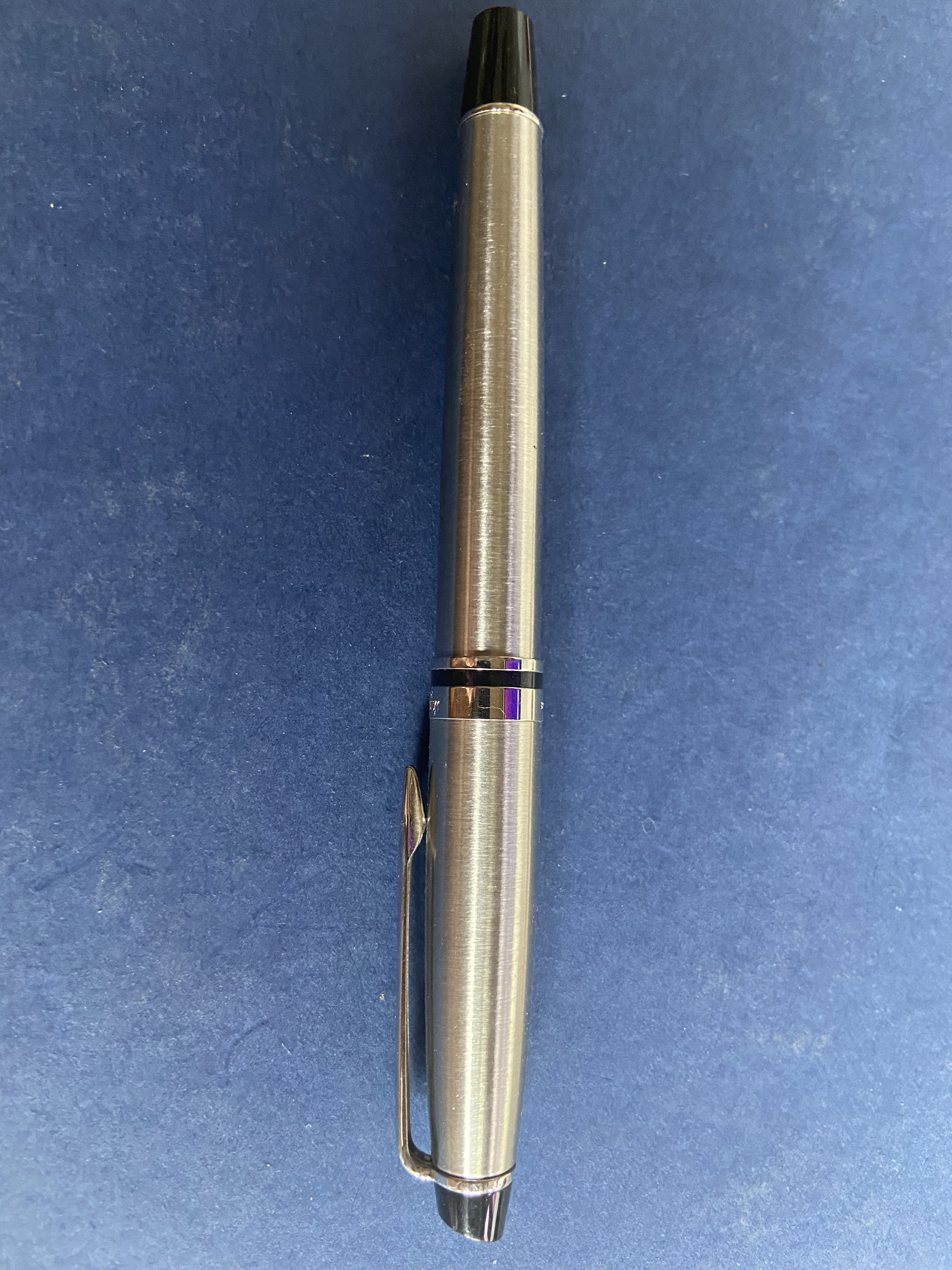
One common experience is with pens. People forget to get their pens and borrow it from others when they need them. However, they never remember to return after they use them. I have lost a few expensive pens in this process. Nowadays I use only throw away pens so that you don’t feel bad when not returned.

The next experience is with clothes. As your kids grow up and start wearing your clothes, you feel good that your clothes have started fitting them. My son generally ventures into my wardrobe to see which T shirt is new and loves to wear them. However, some of these clothes taken by friends or relatives never return to our wardrobe.  

My wife is to embroider/knit special clothes for children. Then she used to share with relatives or friends to be used for their children as our kids have grown up. While giving she would specifically state that it was a unique piece of garment she had embroidered and wanted it to be returned after use But it never returns and people forget about it.

This experience may even extend to gadgets. I remember once I lent my infra red heating lamp to a friend who was in severe back pain. She recovered and was very grateful for the help. However, even after a few reminders she did not return the same.

It could extend to things in the kitchen. You want to share some food with your neighbours and send it to them in tiffin boxes. The food is consumed and appreciated as well but the tiffin boxes never returns.

It may be our possessive nature and our emotional connect to material things which makes us feel bad to lose them. But more than that one feels that on the one hand you lent a helping hand to someone in need and in return you lose your possession.

I used to feel quite upset at such incidents in the past. I then glanced through an old quote , which read – “ If you love something set it free, if it belongs to you, it will come back, if it does not, it never was…”. It is then I realised that one has to consider that your possession was possibly never yours in the first place. Alternatively, the other person needs it more than you.

While this may be easy to write about, it is a difficult emotion to go through. The first time you lose a book you love, you almost decide to never lend books again. Same may be true for other things. But as you grow and mature, you are willing to let go of your possessions although reluctantly.

As we can see in the photo above, we take time to realise that the value of the pen we lose may be less than the relationship we may lose in the process.

I sometimes wonder why people do not return things they took from you in time. I assume they have no ill intentions. It either could be forgetfulness or their attitude to life. I did realise that I would get impacted by such incidences only when I get too attached. If I let go, may be this will easier to overcome.

Time to “let go” in life.

S Ramesh Shankar

Re-humanising the workforce

I was attending a coaching conclave and one of the panelist’s who is an expert on predicting the future talked about “ Re-humanising the workforce” as the fifth industrial revolution. It kindled my conscience and I thought I could share what organisations can do in the future to bring back “humanness at the workplace”.

Although I am not an expert on predicting the next industrial revolution or in generally predicting the future, I still believe that we could take the following actions to bring back “humanness” in organisations.

1. Focus on the individual : Today employees are not treated like human beings who are unique and talented in their own way. Most employees are considered a cog in the wheel and treated like commodities. They are further branded as bad, good or great and then their treatment in the organisation is linked to the type of categorisation. Organisations can bring back focus on every individual as a resource and build the organisation processes around her or him.

2. Family as a social institution : Organisations no longer value family as a social institution. The employee is considered as a unit of purchase to meet the goals of the organisation. Her/his value is determined by the market and is negotiable. An employee is no longer valued as a member of a family, which is part of the larger community around the organisation. Organisations need to connect with families and communities and involve them in development of the individual.

3. Equity & fairness : The principle of equity and fairness is no longer considered an essential norm in organisations. We tend to treat employees as units of consumption and individually negotiable in the market place. The need to be fair and equitable and perceived to be that way, is no longer valued by organisations. It is high time equity and fairness is not only a value within organisations but permeates across the society at large. This will reduce social tensions and crimes in society.

4. Team work : The focus on individual talent and the need to retain her or him has gone to the extent that team work is not considered an important glue in organisations. It is increasingly believed that excellent individuals can take care of lack of teams by bringing value to organisations. Organisations have to believe that team work is critical for organisational success in the market place. The best individual is as good as the team she or he works with. No individual is bigger or better than the team.

5. Purpose : Organisations no longer have a compelling purpose which is beyond product, service and profits and impacting the society at large. This results in employees’ inability to identify with the purpose and thereby employees leave organisations when their purpose in life does not match with organisational goals. It is high time , organisations rise beyond narrow boundaries of profit and work for societal well being.

6. Community connect : The fact that organisations exist to add value to communities around them is no longer valued. With increasing globalisation, the connect with communities around organisations is almost defunct. Today corporate social responsibility is more of a statutory obligation rather than a sacred duty of organisations. It may be time for organisations to remember that their growth and success in the market place is linked to the prosperity of the communities around them.

7. Valuation vs Value creation : Today most organisations are keen on working towards valuation of their brand and shares. They seem to look short term and not necessarily keen on value creation. Value creation could mean adding value to all stakeholders like employees, shareholders, customers, suppliers, communities around them and the government at large. It is time to wake up and realise this responsibility.

8. Technology & human connections: I am a great fan of technology and have always tried to use all forms of technology including social media to connect with employees and other stakeholders. However, today technology has made relationships impersonal. We do not know the birthday of our own team members and do not wish them in person. We are not aware of our neighbours and think that technology can bridge this gap. Organisations need to promote human interconnectedness through human relations and not only be dependant on technology.

9. AI & emotions : While artificial intelligence and machine learning may be able to do most of the jobs which humans are doing today, they may never be able to express emotions like humans do. We need to keep in mind that human beings are born emotional and hence organisations need to be more sensitive to human emotions in the future than they have been in the past.

10 Employee wellness & health : The focus on employee wellness much beyond employee health and safety is going to be critical for organisations in the future. We need to care for physical, social and mental health of employees. WHO has said “wellness is optimum state of health of individuals and groups and positive approach to living”. The pandemic has made organisations realise the importance of wellness. It is critical for organisations to proactively promote wellness in the future.

It is time for organisations to bring back humanness in all their dealings. They need to realise that employees like suppliers, customers, shareholders and governments are partners to their progress. If they do not deal with them with humane approach, their extinction will be sooner than later. However organisations which are humane will continue to thrive and grow in the future.

S Ramesh Shankar

29th August 2022


How to build relationships/partnerships ?

We wonder many a time what makes relationship work and partnerships click !. There may not be a magic wand with anyone to make this happen. So I decided to reflect on this subject based on my personal experiences of great relationships and partnerships in my career and life.

I have introspected my life long partnership with my spouse. I have also thought about great colleagues at work and also suppliers and customers with whom I have partnered and delivered great results. To my surprise, I found that the basis of all relationships whether personal or official were similar.

I have distilled five critical conditions to make a relationship/partnership work. They are “Unconditionality”, “Mutual-respect”, “Give & take”, “Let go” and “Open & flexible”. While they may not be listed in any order of preference, each of them are critical for the success of a partnership and building of a relationship.

I will dwell on each of the conditions and try to illustrate with an example of how to apply it and make it work. All my examples are based on my personal life experiences although I do not mention names of people involved to protect their privacy.

The first condition of “Unconditionality” can best be explained by explaining the relationship with your spouse. I have been married for 38 years and still counting. Although we have had our own share of joy, sorrow and tiffs, our relationship has grown and matured over the years. This is primarily due to this condition of “Unconditionality”. We do not live or relate based on any terms and conditions. Our reactions are spontaneous and straight from the heart. We enjoy together and fight easily but have the resolve to mutually resolve all differences by ourselves.

The second factor is of “Mutual respect”. I worked with a consultant two decades back on a project. Although we met for the first time as a supplier and a customer this relationship has evolved and grown into a life long friendship due to immense mutual respect we have for each other. I have not yet met a person, who is more knowledgable than him on his subject and still he deals with me with utmost respect and dignity.

The next factor is “Give & take”. When I joined a particular organisation in my career, I realised that our relationship with the unions was not very cordial. Both the union and management filed atleast one case against each other every month. I wanted to transform this relationship and volunteered not only to stop filing cased against the unions but also volunteered to withdraw all pending cases and sit across the table and resolve it cordially through discussions except for violence or unethical conducts by employees. The union reciprocated willingly and till the end of my tenure in this organisation we did not have a single case filed against each other.

The fourth factor is to “Let go”. Most of us carry our grudge for years, if not decades and this prevents us from “letting go” or forgiving someone. The art of forgiving can heal a relationship and build foundations for a great rebuilding of a broken partnership or a relationship. I have experienced this in many personal relationships, which would have ruined , if not for my or someone else’s magnanimity to “let go”.

The last factor is being “Open & flexible”. We drive ourselves to a dead end in most relationships or partnership , as we refuse to be flexible and adaptive and open to feedback and change. If we can build this into our day to day life , relationships would be enriched and partnerships sustainable. The best example I can think of is when teams start fighting on the playground over a silly fowl. It could sometimes even lead to physical tiff and violence. Just being open and flexible to accept a genuine mistake by the players or the referee , could build great relationships.

It may be worthwhile to try these five mantras to build great relationship/partnerships in our lives.

S Ramesh Shankar

4th Feb 2023