How to reduce employee cost without reducing employee numbers ???

I have always wondered as to why organizations tend to focus on employee cost reduction at the first instance under any crisis situation! While employee cost in most organizations especially in manufacturing sector will be a negligible as compared to material cost, the tendency is to focus on how to reduce employees in order to tide over any crisis.

    I was reminded of the famous British management thinker Charles Handy.  He once spoke in Delhi for the Economic Times summit and shared a beautiful formula, which can be depicted as follows :

                                              Business Success = ½# x 2*x 3$

Note ; # reduce employees by half, * double your sales and $ profits will treble.

He explained that most CEOs believe that in any crisis situation if they are able to reduce employees by half, their sales will double and their profits will treble.  He further went to state that as long as CEO’s remember that they could also fall in the half of employees who are let go, they would take the right decisions for their organizations.  This is the bitter truth even today.

     The Covid crisis will impact businesses adversely.  Many CEOs would think of ways and means of cutting employee numbers so that they can tide over this business downturn.  While that may be an easy way out, CEO’s may have to realize that employees win customers and employee loyalty sustains organizations.  With this premise in mind, I thought I could share ideas of how employee cost could be optimized even without having to reduce employee numbers.

    In this article, I will attempt to share a few ideas of employee cost reduction without having to reduce manpower :

a.     Employee Salary reduction :  While many organizations may consider this a taboo, it is fine in a crisis situation to reduce salaries rather than people losing jobs.  It has to start from the CEO and go downwards and not the other way around.  If possible, we should spare the lowest level of employees in this exercise.  

b.     Salary structure review :  This could another way of linking salary more to performance than level or designation.  Further looking at fixed to variable pay, review increments, promotions linked to role, salary bands etc.  There are multiple ways to do this and can be done without employees losing jobs.

c.     Benefits Review :  There are various benefits which organizations evolve over a period of time.  This is the time to review the same and monetise wherever possible or eliminate them.  It could range from leave, holidays, copay in medical insurance and so on.  There are again varied ways of dealing with this without impacting employees in any direct way.

d.     Review Organization structure:  It is the right time to make the organization leaner and more effective.  Invariably, in most organizations, layers get added just to create positions for people to be promoted or someone’s ego to be satisfied.  Every part of the organization can be reviewed and all unnecessary levels can be eliminated.  This will make it more efficient and responsive to customers.

e.     Employee involvement & engagement :  This is the best time to harness the full potential of employees.  Those who do the work know best where we could improve and reduce cost.  So, if we are able to find ways and means of involving employees in idea generation and execution, cost reduction can easily be achieved in different aspects of work in all functions.  We need to suitably reward employees for the same linking it to the savings accrued and the benefits to the organization.

f.      Hidden subsidies :  Organizations tend to build a lot of hidden subsidies which are neither visible to the employees nor to the organization.  It may be time to review all of them and again monetise them or eliminate them if they don’t serve the purpose for which it is created.  This could include canteen, transport, concierge, travel allowances etc. 

g.     Review office spaces :  Real estate is one of the biggest cost amongst all overheads.  Now that even the sceptics have accepted “Work from Home” as an option, it may be worthwhile to review the need for large office spaces and reduce cost.  We could consider 50% of field sales and service staff to work from home and visit offices may be once a week to submit claims or follow up on issues.  We could review offices, factories, guest houses and the like and rationalize the same.  We could also eliminate fixed seats for employees and make flexible offices spaces as a way of life. 

Employee will not mind any of these changes provided we communicate effectively and authentically.  Any employee will appreciate that it is better to take a cut in salary or benefits rather than lose a job.  If employees are told that all these measures will ensure job security for all, it will be highly appreciated.  The success of all these measures will lie in effective planning, communication, execution and rigorous reviews.

I thought about all this with only one objective of saving jobs.  I will be happy to consult with any organization pro-bono to plan and execute any or all of the above ideas.  I can detail them out for you in consultation with your internal teams so as to customize it for your organization.

I need not be paid a single rupee for this service.  If the organization is able to save jobs, my mission is accomplished.  If the organization saves employee cost without reducing its number of employees and is able to quantify savings, I will be delighted.

At the end, if organizations achieve their goals, we can find ways and means of contributing to my social cause of “Eradicating preventable blindness amongst children” and I will be highly indebted to them always.

I have committed to find ways and means of giving back to society in the second innings of my life and saving employee jobs in a crisis could be one way of accomplishing my mission.
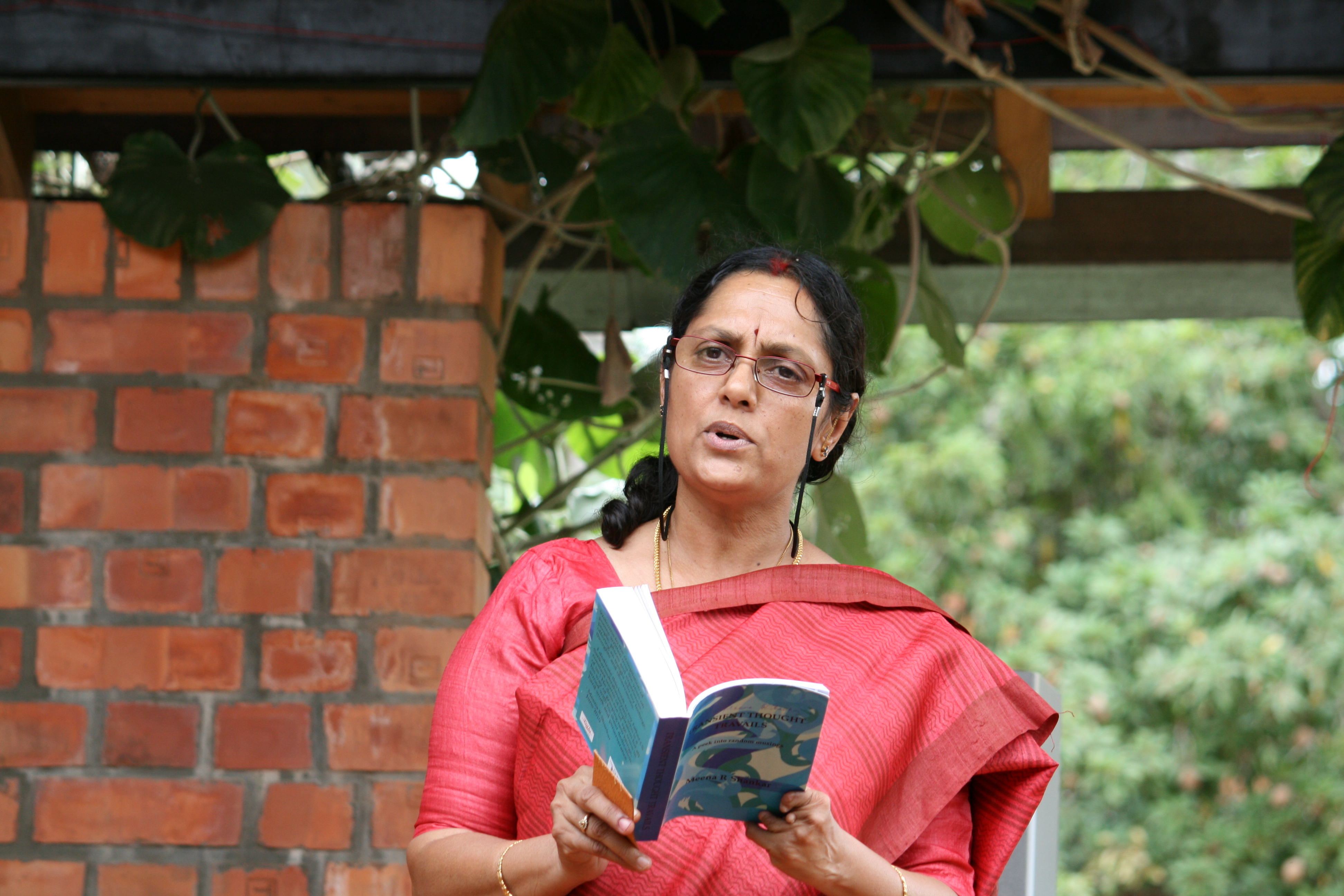

Critical eye

IMG_1092
I have met people in my life, who have a critical eye for everything around them. They will read the newspapers word by word and will always be in a position to point out a spelling mistake or language misuse. I am not one amongst them but I do admire them a lot. I have never been meticulous in my life. I am self-disciplined but live life leisurely and sometimes may slip up. I love the critical people around me as they add value to my life.

It is not fair to say whether critical people are good or bad. Each of us have our likes and dislikes in life and have a right to live life on our own terms. I love critical people as they can always point out areas for improvement in our life. They look at things from different angles than ourselves. They have the ability to see things you are not able to. For example if I write an article, I may not find any mistake in spelling or use of language. But they can read the same article and point out a couple of mistakes easily.

It is equally valuable in organisations. We need to have people of different thinking abilities in our teams. Some may think the same way as we do. We need others who think just the opposite way and some in between the two extremes. This not only adds variety to work but also challenges our limits. We are able to think on the same issue from multiple perspectives and this adds value to our work.

If we look at our family environment, it may be worthwhile to have members who think differently. A critical person is able to add value in the family too. It may help us improve ourselves and also our ability to take decisions in different circumstances. We may also sometimes not take wrong decisions because one valuable member of our family cautions us against it. On the contrary if everyone toes the line of the senior family members, we could end up in mistakes, which we could have avoided.

In a democracy, we need a critical opposition so that the government is on its toes. Unfortunately, we do not see this in our parliament nowadays. But one can recall outstanding speeches made by our own parliamentarians as opposition leaders. They have not only been critical of key government decisions but have enabled the ruling government to make mid course corrections.

Even in team sports, it may be worthwhile for captains and coaches to have critical team members in their teams. These members may help team strategise effectively in every situation. They may think differently or even question the team strategy. This may help the team to re craft their strategies or make mid course corrections. Sometimes, this may also help teams to renew themselves against tough opposition.

On the other side, it may not be easy to live with and deal with critical people in your life. One may feel irritated or defensive when one is questioned on everything every day. It may be easier to have like minded people in your family or team. Life is cosier and easy to navigate. We need to develop the magnanimity to encourage diverse thinking in our teams and appreciate the value of it. We need to learn to adapt to critiques.

As in the photo above, my wife Meena R Shankar has a critical eye and hence is my life long editor of all my writings. She is always capable of giving alternative perspectives.

Life may be boring if it is monotonous. Imagine watching a TV programme or movie in black and white all the time. Once in a way it may look interesting. However, we always like things to be colourful around us. The same is true in life. We need to have variety and spice to make life full. We need people thinking differently and diversely. We need to learn to respect them and deal with them effectively.

Life is fun with diversity.

S Ramesh Shankar

What others’ see, we don’t ?

IMG_0371
We need to continue to explore to see the unseen. A child may remind us of something in front of us, which we see every day but have not really observed. We sometimes miss the obvious and its not exclusive to us. All humans experience this phenomenon. This may be because we perceive things around us differently and hence tend to see what we perceive. After all perception is reality.

I have experienced this phenomena right through my life at all stages. As a kid, you tend to focus on things that interests you. You are oblivious of all other things around you. Then in the youth, we get influenced by your friends more than your family. This makes us look at things which excite us. As we move to adulthood, we tend to put a value to everything around us. We value things which we perceive as worthwhile to us.

It may be interesting to share some examples in this regard. We may be attempting to solve a puzzle for hours without any success. A kid may come in and crack it in a few seconds. We are perplexed. We wonder what we could not see which the child could do in seconds. As we grow up in life, logic takes over our lives. We forget our gut and our feelings. A child is more perceptible than an adult because they are always expressing themselves in emotions. They are not bothered how others are going to perceive them. We are worried how the stereo typed society will view us. Hence our behaviour is determined by the people around us rather than what we want to do.

It is sometimes interesting to note that a child can create multiple options within minutes. I was recently with my grand son who is 7 years old and he could pose in ten different ways within a matter of a few minutes. I might have struggled to even think of the possibilities before I could pose for similar photographs. I would have evaluated how others would perceive me when I am seen posing in such photos. That would have determined my behaviour. We are inhibited by our own limitations.

I have often seen that when I work with a group of young millennials at work, they can come up with multiple whacky options on any issue. The experienced employees tend to become prisoners of our past experience. We are worried that it did not work in the past and hence may not work in the future. We are bothered how are seniors will react to a crazy idea. A young employee is open, quick and spontaneous.

As in the photo above, the two langurs could spot a tiger nearby and cautioned us although we as tourists, who were looking for the elusive tiger could not spot it on our own. This happens in real life too. We do not see what others are able to see in every day life. It is either because of perceptions or because of conditioning of the mind. In a jungle, the langurs are the first to spot danger of a tiger and alerts all living being around them of a possible attack.

In reality, life is not different. We tend to see things which we want to see. It may be a good idea to challenge ourselves by the people around us. They can help us to see things, which we miss out in life. The time to explore the unseen is now. It is never too late to learn.

Let us start today.

S Ramesh Shankar