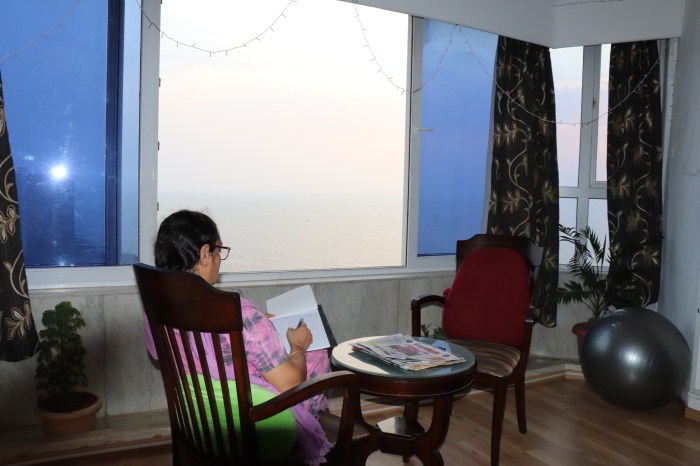
Work from home ?

“Work from home” ( WFH) has become a good option for organisations to combat the Covid crisis.  I am aware of many senior leaders, who always believed that work from home meant no work and no control over their teams.  They were not only sceptical of this concept but generally discouraged their team members opting for WFH.  Now with the Covid crisis, these leaders have not only accepted this concept whole heartedly but are willing to accept it as the new normal.

While  WFH is being lauded as the the way to go into the future, it has its own limitations.  We need to be fully aware of the pros and cons of working from home. Let us first look at the positives of this concept :

a. Flexibility :  It provides flexibility to the individual and the organisation in terms of time and place of work and also enables individuals to manage their day accordingly.

b. Time-saving : It saves a lot of time especially for employees working in the big metropolises of the world.  The commute time is generally waste of time and energy to say the least.  This option ensures that people do not waste their time in commute.

c. Family time :  Employees tend to spend more time with the family in this option as they are physically at home even during working hours and thereby can lend a helping hand to their spouses and family members

d. Cost saving :  It could be a potential cost saving measure for organisations in terms of infrastructure and real estate costs.  A part of this could be passed on to employees in terms of their salary and benefits.

e. Work-life balance :  It can promote better work life balance if we are able to manage it optimally at our end and managers are supportive of the same.

Now let us look at the negatives of this concept :

a. Over-working& Under-working :  Employees tend to work more and thereby get more exhausted mentally due to calls and video conferences.  With time zone differences, it could end up eating into personal time of employees. On the other hand, some employees may misuse this option and work less too.

b. Impact on relationships :  The WFH option could result in impacting workplace relationships as conflicts cannot be easily resolved through web chats, phone calls or video calls.  Face to face interactions help in resolving conflicts at the workplace.

c. Family relationships :  Over-working and mixed priorities of work and home could end up in avoidable family conflicts between spouses and other family members as well.  This could result in misunderstandings, which otherwise may not occur in reality.

d. Work life balance :  While most people would think that work life balance could be better, in reality it could be the other way around.  Family members may start believing that they were better off when you were going to the work place rather than working from home.

e. Team work :  Team work at the workplace could be unplanned causality of the WFH option.  When team members do not meet face to face or talk to each other, their productivity is likely to dip and conflicts may increase.

Having looked at the pros and cons of the WFH option, it may be prudent for organisations to take a balanced view of the same post the Covid crisis.  It is neither desirable to swing from one end of the pendulum to the other and make all employees work from home nor stop this as an option when we get back to our old ways of working.  It could be provided as a flexible option and gainfully utilised by employees and organisations to strike the right balance between employees’ needs and organisational priorities.

It may be useful to remember that “Work from Home”(WFH) should be a means to an end and not an end in itself.

S Ramesh Shankar

26th May 2020

Role of HR post Covid crisis

Work from anywhere

What could be the role of HR in the post Covid scenario ? This is a question, which may be lurking in the minds of many people. I would state that HR could evolve their “Ten Commandments” post the Covid crisis is over and employees gradually trickle back to the workplace.

1. Job Security : In the post Covid scenario, most employees would be worried about their jobs. This would mean a lurking fear that their organisations would have lost revenue for more than a few months and this could result in job losses for many. So, the first duty of HR could be to make the CEO communicate to all employees how they plan to get over this crisis and assure employees at all levels that they would not lose their jobs.

2. New Workplace : The new workplace will have a new normal. It will not be the same place of work like in the past. Apart from physical sanitisation of everything, there would be silence and loneliness at the workplace. There is need to make people adapt to this new work environment through effective communication and counselling by the managers and leaders at all levels.

3. Cost optimisation : While HR leaders should try their best to save jobs, they could be the champions of cost reduction efforts in the organisation. They could engage with employees at all levels and enable formation of teams so that cost reduction is in everybody’s radar and the organisations are able to make up for the losses incurred by this pandemic.

4. Employee engagement : In the post Covid scenario, employee engagement actions become all the more critical. It is important to make employees adapt to the new workplace and at the same time realise that we need to continue to serve our customers, suppliers, employees, shareholders and all other stakeholders as we did before.

5. Work from anywhere : While the Covid crisis forced organisations and employees to adapt to the work from home option, it may be an opportunity for HR in organisations to enable employees to work from anywhere. This means no fixed workstations, laptops for everyone and they could work from any office or any place of their choice in the future.

6. Re-engineering processes : This is a great opportunity for HR to facilitate all the functions in the organisation to challenge all their existing processes and eliminate unwanted ones, simplify those needed and automate wherever possible. The shop-floor could also be digitised and automated so as to minimise human interface in routine operations and use employees for human value addition, which robots or machines cannot do like listening to and attending to customer grievances.

7. Rewrite the HR manual : Just like the Constitution of a nation gets amended from time to time based on the needs of the nation, this is a great opportunity in the history of the organisation to re-write its HR manual. It may be helpful to keep it simple, eliminate unnecessary bureaucracy and all paper work if possible.

8. Productivity : While many of us may not realise that India still has one of the lowest labour costs in the world but our productivity is not on par with the best in the world. This reset post Covid gives us an opportunity to rejig our productivity levels at the shop floor, in our offices and also in all our processes with suppliers and customers. For eg. is it possible for all employees to deal with all HR processes through their mobile phones and eliminate all paper work in the future.

9. Digitalisation : The ability to go digital in all aspects of work is a real possibility in the new workplace. Sales can happen online and service can be remotely handled. This means manufacturing can be digitilalised and automated and so can be all other processes. If banks can provide all their services through digital means so can all other organisations and this is the best time to transition and go digital, wherever feasible.

10. Employee Health & Safety : This crisis provides the best opportunity for organisations to rewrite its health and safety standards. It is not only physical health but mental and emotional health and wellness, which will get tested post this crisis. So , it is the best time for organisations to prepare for similar unknown crises in the future.

While I may not have listed down all possible things, which HR leaders could do post this crisis, I have focussed on the most important and called them the “Ten commandments for HR”.

Do let me know if I have missed out anything ? You can make your own “Ten commandments for HR” based on the needs of your own organisation.

S Ramesh Shankar

12th May 2020

The plight of decision makers in a crisis

Pond Heron

I have always wondered how difficult it would be for decision makers to make decisions in a crisis. The current Covid crisis is not an exception. Every country is trying to deal with the crisis in their best possible way. However the citizens are unhappy with the decisions being taken by their respective governments.

In a democracy, it is much more difficult to take decisions as compared to other forms of governments. Here, if you decide you are criticised and if you don’t, you are criticised. Either way, there will be people waiting for you to take a decision and then they are ready to pounce on you as to how bad a decision it was.

I sometimes wonder if these critiques ever put themselves in the shoes of those who decide. If there is a lockdown, they say livelihood is lost and if there isn’t one they say lives are lost. Those in governance are finding the right balance between protecting lives and saving livelihoods.

The beauty of a situation like this is that everyone becomes an expert on everything. We have common men and women advising us on how to deal with preventive health to deal with the virus. Whereas, even doctors and health workers are finding it difficult to deal with an unknown virus.

We have arm chair economists advising us on how to revive the economy and save livelihoods at the cost of lives. Some business honchos have even gone to the extent of saying that the economic downturn will result in more loss of lives than the Covid crisis.

The governments in the centre and the states are trying their best to decide what they think is in the best interest of its citizens. However, we all are restless and are ready to pounce on any decision taken by the state or the centre in our country. We do not realise that the people we have elected to take decisions supported by smart and knowledgable bureaucrats have more information than we have to decide on matters to deal with this crisis.

While we all have become public health experts, economists, administrators and futurologists, we forget our duties as citizens. We are the first to violate a guideline set by our local government on the pretext of being educated and knowing what we are doing. We go out to buy things which are not essential or demand for services from others risking their own lives for our comfort.

We do not realise how difficult it is for the urban and the rural poor. The situation is tough especially for the urban poor and most developed cities today run on the work of the migrant labourers. As citizens, we need to find ways to support these people during this crisis and not sit back and blame only the government in power for not doing anything. Are we capable of taking care of our security staff, our maids, our gardener’s, housekeeping staff and so on. If each of us commit to take care of people who touch our lives every day then the problem is simpler for the government to handle.

In a crisis, the most important factor to remember is that there is only one leader and all of us have to be diligent followers. Like in the Army they say, the word of the commander is their religion. So, we need to behave. We have elected governments at the centre and the states and we need to trust our people in power including politicians and bureaucrats to deal with this crisis effectively.

Let us learn to be trusted followers rather than quack experts in every field especially in a crisis. If I can put myself in the shoes of those in governance, I may realise how difficult it is to decide. I am an office bearer in our community association and can tell you that it is very difficult to deal with community decisions in a crisis like this. We have only 25 families living in my community. Imagine someone deciding on behalf of a billion people or even a few millions in a state.

As in the photo above, it is wiser to sit at home and admire the pond heron eating fish in your pond rather than sit in your arm chair and criticise the decision makers in a crisis.

Trust is key in a crisis. Follwership is our duty. Let us empathise and appreciate the difficult role of the decision makers by being self disciplined and following whatever guidelines are given to us.

Let us make a difference by being positive always and being enablers rather than detractors in a crisis situation.

S Ramesh Shankar

2nd May 2020