Customer First, Employee Always

Our Customer pays our salary – every employee needs to understand this reality. This a bitter truth that many of us do not realise as the organisation grows and our brand matures in the market. We had a similar experience and hence launched a Customer first programme in our organisation. The objective of the programme was to keep our “Customers” in the centre of everything we do within the organisation.

We evolved five modules in this organisational intervention. They were Customer Intimacy, Customer First Culture, Reliable Execution, Service Excellence & Lean Processes. Each of the modules was led by a leadership team member and supported by a team. This led to our Customer Engagement scores more than trebling in 3 years. We focussed back on the customer within the organisation.

Now that the customer centricity was established, we shifted our focus to employees. We realised that while it is critical to focus on customers, it is equally important to keep employees highly engaged. It is true that if we treat employees well, they in turn would ensure that customers are happy always.

We launched an intervention and called it “People Matter”. We had a long tradition of training and certifying our project managers using global processes and standards. We took a leaf out of this experience and decided that we will train all our people managers and then certify them through a three stage process.

We identified a professional external partner and then trained more than 800 people managers and certified them. All of them went through a two day class room training. They they had to work out an action plan in three people management areas impacting their team and submit it. Then they had to implement their ideas and a feedback was taken from their team on their leadership style. This was followed by implementation and a follow up feedback from their team members to measure impact of their actions.

We found a cultural transformation permeating the entire organisation. I got phone calls, emails and personal feedback whenever I visited locations from team members. Many of them were positively surprised at the changes in their manager’s behaviour. It appeared that the program was making a impact in changing leadership behaviours.

We shared the best practices of various people managers across the organisation through newsletters and other communication channels. We invited the best people managers, who scored the highest to our annual business conference and enabled them to share their experience with the rest of the people managers.

The journey has just begun. We have supported this initiative by empowering people managers to decide the increments and promotions of their team members. We encouraged them to reward and recognise their team members in innovative ways. All new initiatives in the organisation were channelled through these people managers.

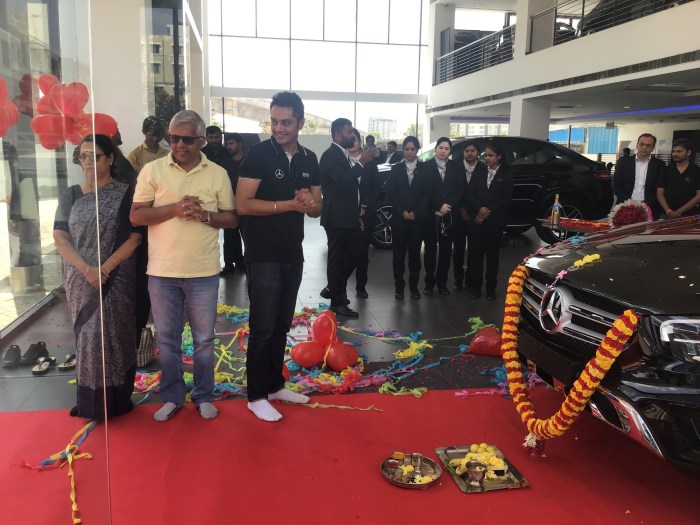
Great companies  believe that if they take care of their employees, they will take care of their customers as in the photo above.

Hence, customer first, employee always.

S Ramesh Shankar

25th August 2018

Rituals in our lives…

Most of us have been following many rituals from our childhood without even knowing the reasons for following them. We follow rituals because our forefathers handed them over to our parents or elders and we inherited them.

A ritual is an action determined by tradition more than any other reason. It may or may not have any religious connotation. It could be like fasting during solar or lunar eclipses or even during certain festivals amongst some religious groups. Rituals go beyond religion too.

I am aware of some rituals, which are followed by individuals cutting across different faiths in India. It is like determining the auspicious time to inaugurate a new venture. Even the date and time to admit a child to a school. This gets more entrenched as it turns out to be lucky for some in their actions.

I have nothing against rituals. In my view it is each individual’s personal preference. What I am against is when a society tries to impose its rituals on everyone irrespective of their personal preferences. We recently had some controversies when the highest court of the land ordered that men and women have equal right to visit religious places. I fully support this view.

I cannot understand how religion can prevent a man or a woman to visit a religious place of his or her choice. I am aware that some religions prohibit women to enter religious places. I am against such religious dictates too. No religion should prevent a human being to enter a religious place of their choice.

I do agree that sometimes rituals were designed to discipline human beings. For eg., washing of hands before having a meal may be considered a ritual but it is more for hygiene rather than a ritual. Similarly washing of legs before entering a place of worship may have been prescribed more for hygiene than for ritualistic belief.

On the other hand, women not being allowed to a funeral ground to pay their last respects to their elders may be a ritual with no scientific basis. I am not even questioning anyone’s right to follow a ritual. What I am against is making it compulsory for someone against their wishes.

Every ritual will have a story. Many of the rituals may also have a scientific reason behind it. So, it may be unfair to say that all rituals are blind faith. My belief is that every human being is capable of making a choice. If the individual chooses to follow a ritual, so be it. If they do not want to follow it, let us respect that too.

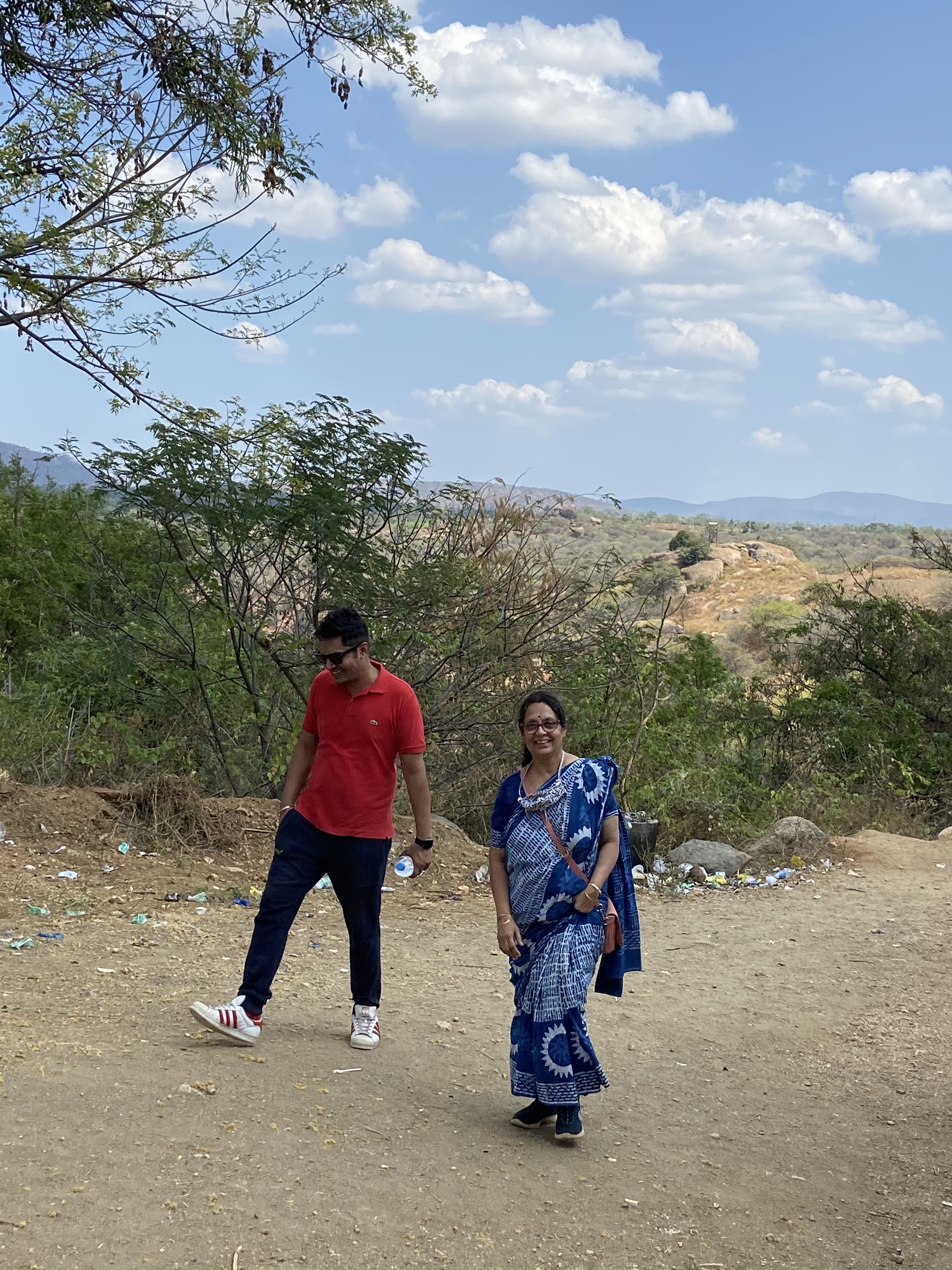
As in the photo above, I learnt pranayama almost five decades back, but considered it a ritual those days as a child, while now I think it is a good breathing exercise for my wellness.

Every one of us learn rituals from our family, friends or society. Even organisations have rituals, which get embedded in the minds of their employees over time. Let us allow the individual to have the liberty to choose their rituals. No individual, family, community or organisation has a right to impose it on the individual.

Let human beings individually choose their rituals and not the other way around.

S Ramesh Shankar

1st September 2018

Leadership transition – Analog to the Digital age

One of the intriguing questions leaders ask me today is ” What has changed in leadership styles ? Why is there a need to change ? It is important to realise that we have moved from the analog to the digital age. The world around us has changed and so have we. If we have changed as humans then those who lead us have to change. There is a generational shift and expectations from leaders are different. The earlier we realise this, the better it may be for our effectiveness as a leader.

I have attempted to list six clear trends in our transition from the analog to the digital world and how it impacts us as employees and leaders. These trends are:

A. Sequential to Parallel – All our planning in life and work was sequential. Today we do not have the luxury to do so. Our thinking has to be parallel. A good example would be the time taken to launch a new car. In the best of times, it took 2 to 3 years from design to launch of a car. This was mainly because each step of design, development, prototyping, testing and launch was in sequential order. Today concurrent engineering, virtual reality, augmented reality etc ensures that we are able to do most of these steps parallelly. This has crunched the new product development time to months rather than years.

B. Hierarchical to Team based – Organisations were pyramidical. All the wisdom was believed to be residing at the top. The seniors led the way and the others mostly followed. It was inappropriate to think bottoms up and so on. Today, it has almost reversed. Organisations are team and project based. Hierarchy is minimal and ideas can be generated from anywhere. All attempts are made to take decisions at the lowest possible level and closest to our customers.

C. Perspirational to Inspirational – Leaders led by power and authority. There was a chain of command . Fear may or may not have been explicit but was existent in most organisations for the people in leadership positions. Today a successful leader has to be inspirational and lead by example. The moment we try to wield our power by status or position we are bound to be rejected by our team members. This is a soft change but critical to be understood.

D. Clarity to Ambiguity – All efforts in organisations were made to transition towards clarity and perfection. We had programs to achieve zero defect and six sigma in quality. Now these things are taken for granted. Our ability to deal with clarity is easy but it becomes more complex when we have to deal with ambiguity. Leaders who are not hassled by ambiguity are likely to be more successful than others.

E. Long term to Short Term – I used to work in a public sector organisation which had made a strategic plan for 25 years way back in the eighties. All organisations evolved vision and mission with at least a decade in mind. Today, most of us think from one quarter to another. In a lighter vein, it is called the QSQT ( quarter se quarter tak – meaning from one quarter to the next quarter). It is difficult to anticipate what is likely to happen in the short term and hence it may be unimaginable to think long term.

F. Known to Unknown journey – Today organisations are plagued by an uncertain and unpredictable environment, unlike the past. It is a journey for leaders from one unknown to another unknown. It is the ability of a leader to steer their team into the realms of the unknown, which could make them successful. It is like leaders who can show the beacon light in darkness, who will succeed not the others.

Leadership has moved from predictability to managing uncertainties. If one is able to thrive in chaos, the chances of success are higher than failure. Further, if failures are considered as learning journeys, leaders are likely to be more effective than in the past. The analog world was sequential and predictable. The digital world is disruptive and uncertain.

As in the photo above, the leader has to lead by example by showing the way rather than telling it.

Let us learn to lead the different way in the digital age.

S Ramesh Shankar

23rd August 2018