Leadership transition – Analog to the Digital age

One of the intriguing questions leaders ask me today is ” What has changed in leadership styles ? Why is there a need to change ? It is important to realise that we have moved from the analog to the digital age. The world around us has changed and so have we. If we have changed as humans then those who lead us have to change. There is a generational shift and expectations from leaders are different. The earlier we realise this, the better it may be for our effectiveness as a leader.

I have attempted to list six clear trends in our transition from the analog to the digital world and how it impacts us as employees and leaders. These trends are:

A. Sequential to Parallel – All our planning in life and work was sequential. Today we do not have the luxury to do so. Our thinking has to be parallel. A good example would be the time taken to launch a new car. In the best of times, it took 2 to 3 years from design to launch of a car. This was mainly because each step of design, development, prototyping, testing and launch was in sequential order. Today concurrent engineering, virtual reality, augmented reality etc ensures that we are able to do most of these steps parallelly. This has crunched the new product development time to months rather than years.

B. Hierarchical to Team based – Organisations were pyramidical. All the wisdom was believed to be residing at the top. The seniors led the way and the others mostly followed. It was inappropriate to think bottoms up and so on. Today, it has almost reversed. Organisations are team and project based. Hierarchy is minimal and ideas can be generated from anywhere. All attempts are made to take decisions at the lowest possible level and closest to our customers.

C. Perspirational to Inspirational – Leaders led by power and authority. There was a chain of command . Fear may or may not have been explicit but was existent in most organisations for the people in leadership positions. Today a successful leader has to be inspirational and lead by example. The moment we try to wield our power by status or position we are bound to be rejected by our team members. This is a soft change but critical to be understood.

D. Clarity to Ambiguity – All efforts in organisations were made to transition towards clarity and perfection. We had programs to achieve zero defect and six sigma in quality. Now these things are taken for granted. Our ability to deal with clarity is easy but it becomes more complex when we have to deal with ambiguity. Leaders who are not hassled by ambiguity are likely to be more successful than others.

E. Long term to Short Term – I used to work in a public sector organisation which had made a strategic plan for 25 years way back in the eighties. All organisations evolved vision and mission with at least a decade in mind. Today, most of us think from one quarter to another. In a lighter vein, it is called the QSQT ( quarter se quarter tak – meaning from one quarter to the next quarter). It is difficult to anticipate what is likely to happen in the short term and hence it may be unimaginable to think long term.

F. Known to Unknown journey – Today organisations are plagued by an uncertain and unpredictable environment, unlike the past. It is a journey for leaders from one unknown to another unknown. It is the ability of a leader to steer their team into the realms of the unknown, which could make them successful. It is like leaders who can show the beacon light in darkness, who will succeed not the others.

Leadership has moved from predictability to managing uncertainties. If one is able to thrive in chaos, the chances of success are higher than failure. Further, if failures are considered as learning journeys, leaders are likely to be more effective than in the past. The analog world was sequential and predictable. The digital world is disruptive and uncertain.

As in the photo above, the leader has to lead by example by showing the way rather than telling it.

Let us learn to lead the different way in the digital age.

S Ramesh Shankar

23rd August 2018
Freedom at various life stages

Freedom could mean different things to different people. It could mean completion of exams for anxious students. It could be the end of tumultuous marriage for a married couple. It could mean transfer from a harassing boss for an employee and so on. Each of us cherish our freedom and want it our way.

Let us examine freedom from a child’s point of view. Every child wants to express oneself without any restrictions. A child wants to study, play or talk depending on the mood they are in. They hate the restrictions on learning through compulsory home work or the system of exams. They also hate parents restricting their play time or hobbies and when they are forced to study. They find it restrictive when they are asked to be quiet by elders especially when they are keen to express themselves.

As you grow into youth, one tends to become a rebellious radical. Every norm of society is a challenge and you feel like drawing your own rules and norms in society. As young adults you want to be the director of your own destiny. You do not like advice unless sought for. You feel better off when you are alone and charter your own future.

Adulthood imposes responsibilities on you. This also feels like needless restrictions on a free flowing spirit. The competitive spirit of the environment around you makes you feel that you are not in control of your future. While you want to work hard, you find it difficult to balance dreams and reality. The inability to pursue your passion makes you disappointed at times.

As you have kids and move to the next generation, you tend to believe that the next generation has more freedom than you ever had. This may not be actually true but one finds it difficult to accept to let go of things you could never do in your childhood or youth. As your kids rebel, reality knocks on your door and you blame the society and environment for this change.

Then as your children grow into adults and have their own kids, you tend to think that they are restrictive on your grand kids. This means a generation gap has already emerged. You re enact what your parents did to you. The cycle of life takes a full circle. It may be time to reflect and restart your view on life.

As we experience life, life teaches you the true meaning of freedom. Is freedom absolute or relative ? In a democracy, we tend to believe that freedom is absolute. However, in reality freedom tends to be relative. Do you have more freedom than your friends, relatives or family members. Even some members of the family tend to believe that they have more freedom than the others.

Even at the work place, freedom is perceived differently by different people. Some feel empowered and take decisions effortlessly. On the other hand, some people in the same organisations in similar roles, feel disempowered. This means empowerment is taken, not given. It takes time and a positive attitude to life and work to understand this concept. Sometimes, by the time one realises this concept, it may be too late.

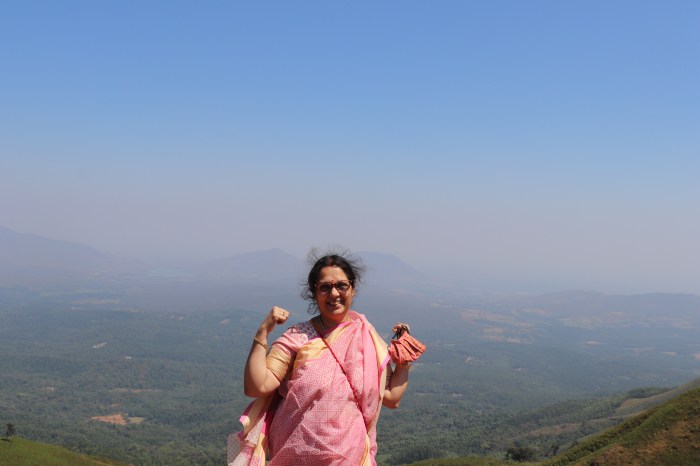
As in the photo above, freedom could be to be just alone in the hills.

Lets define what freedom means to us and live it the way .

We are born to be free.

S Ramesh Shankar

15th August 2018

Technology & HR

IMG_0997.JPG

Everyone today is talking about technology and its impact on people. The impact on people could be from different perspectives. Let us examine it from the angle of impacting life and living.

I grew up in an era where the computer was not around nor the television in homes. Both these appeared in our offices and homes post the eighties in most countries and homes. How have they changed our lives ? Our quality of life has improved materially and physically although may have deteriorated emotionally ?

I remember many unions especially in banks were worried about introduction of computers and had resisted it for some time. Today a bank cannot imagine its existence without computers. We as customers do most of our banking ourselves on computers or mobiles. Has it impacted bank employees ? I would say it has helped the bank employees to improve the quality of their work and their productivity.

I believe the impact of technology will be similar in the future as well. Technology may develop more rapidly in the future than in the past. The quality of our lives and living may improve further. However, the same technology may be helpful if we are willing to use it prudently.

Let us examine the impact of technology on employees from a Human Resources perspective across the employee’s life cycle process – from recruitment to retirement. Technology may help in screening and assessing candidates more objectively and much faster. But I cannot imagine whether even artificial intelligence will ever be able to substitute human judgement in the future.

While it is true that a “Alexa” or IBM Watson may be able to derive logic from tons of data available to them but still may not be able to beat human judgement. It is like the development of technology, which brings the best of cameras in the world every day but none of them have been able to beat the human eye as a camera in its capacity and delivery.

We could trust computers and artificial intelligence to help in addressing routine tasks and also developing them in employees. However, the ability to respond intuitively like a human being may not be a reality in the near future. Even today the Alexa and Watson depend on inputs from human beings and programmers to derive logic from data fed into them.

Now, if we move to assessing and motivating employees, we need to examine the impact of technology. Technology can help us in objective performance assessment but the ability to empathise may not be replicable like a human being. I am aware of robots performing all types of tasks including love making but all of it will be without any emotions.

Similarly technology may help in making more precise decisions including in exits. However, human judgement is a combination of logic and gut. Logic can be built in by technology but not the gut. Most of the times in our lives, our decisions are based on gut and not by logic.

I believe technology will change life for the better in the future. But, no technology can substitute human emotions. We need to use  technology for improving our quality of life without getting impacted on our emotions. Today, we are willing to embrace technology and are increasingly losing the human touch.

Its like technology enables you to take a beautiful selfie without much effort as in the photo above. However, if we end up getting drowned in the sea taking a selfie on the beach, whom should we blame ?

Let technology lead us to a better tomorrow and we continue to trust human relationships to improve both technology and ourselves.

S Ramesh Shankar

16th May 2018