Transforming engineering education in India


Many of us working in corporates continually complain about the quality of engineering education in India. We state that the students are not industry ready and the syllabus is outdated. The question to ask ourselves is what are we doing about it.

We have some German multinationals leading the way in this space. They have launched scholarship programmes for engineering students across the country. They go to more than 22 states and to the remotest government engineering colleges and select meritorious students from the poorest of families.( annual income less than Rs. 2 lacs per annum). They are selected through a objective technical and psychometric evaluation process.

These students then join the “scholarship programme”. This scholarship covers the cost of their engineering education. They are provided a laptop, mentor from the company and internships every year during their engineering education. Further they are trained on the latest technologies and also on soft skills like communication, presentation skills etc so that they become industry ready from the day they join corporates after their engineering education.

The highlights of the programme is that it is designed based on the reliable German dual education system. This is a holistic development plan with soft skills training, internship in company locations, functional and technical training including certification. This not only ensures industry ready students but also ensures that students are trained and certified in the latest technologies so that they are future proof.

The scholarship programme is different from other similar programmes in that it is much more than a financial assistance programme. It provides the following inputs to the students and enables them to be fit to work from day one of their joining an organisation post their engineering education.

A. Holistic development : The training over the period of 4 years comprises of technical training, functional skills, personality development, soft skills training, communication skills and ably supported by mentoring.

B. Mentoring : Every student is mentored by a senior manager from industry so that they can be moulded in both their functional skills and personality development. They are also inculcated withe values and ethics of business.

C. Technical training : Most industries complain that the engineering education does not train students in the latest technologies and make them industry ready. Our programmes cover the latest technologies and also certifies them in areas like mechatronics so that they are better equipped with practical inputs before they enter industry as engineers.

D. Soft skills training : The biggest challenge engineering students face when they enter industry is on soft skills and business etiquette. This programme ensures that by the time they finish their engineering course, their communications skills are sharpened and they are groomed with business etiquette’s. They can confidently present their views verbally and also through presentations and reports. They are also given inputs on Smart study techniques, effective conversations and time management. They are also made aware of emotional intelligence and self awareness. They are trained for effective participation in group discussions, personal interview

E.Personal vision & career management : They are trained to evolve their personal vision and manage their career so as to reach their life goals. This enables them to evolve as confident and responsible citizens.

F.Interpersonal skills : One of the challenges while entering industry is to work effectively in teams. Hence, they are trained on interpersonal skills, assertiveness and social skills so that they can contribute effectively as team leaders and team members.

G.Cross functional training : They are given inputs in sales and service, manufacturing, quality, supply chain and finance. This ensures that they get multi functional exposure and understand inter dependencies in an organisation.

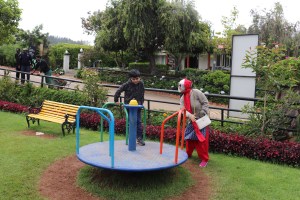
As in the photo above, the child may learn laws of motion in a park better than in a classroom if demonstrated through practical experiments.

This model of training engineering students by these organisations are a practical and sustainable approach to transforming engineering education in India and making them industry ready. It is time other organisations follow this or similar models so that we can contribute to transofrming societies at large. We can bridge the gap between industry and academia and play our role responsibly to make the impact.

S Ramesh Shankar

Founder – “Hrishti”
14th May 2019

Everyone has an expiry date

Today I read in the morning newspapers that a senior bureaucrat in the government is retiring at the end of this month and neither is keen on an extension nor an alternate role in government. I salute this bureaucrat. All of us have to realise that we have an expiry date. Unless we give way, we cannot give opportunities for others to excel and prosper in all fields.

I have seen this phenomenon quite prevalent in corporates. The senior managers starting from the CEO think that they are indispensable and never want to let go. We all have to realise that there is a pre determined expiry date for all of us. It is like a medicine when manufactured has a pre printed expiry date. Life is no different.

When we are born on earth, God has already decided our date of death. Similarly when a food item is produced the expiry date is printed on the packaging itself. We need to realise that in our careers too this is applicable. We all have to come and go. We may be excellent in whatever we do but we need to give way at the right time for the next generation to take over.

This is equally true in sports. We find many senior sportspersons reluctant to hang their boots even when their talent is fading. They want to live in the past glory and do not give space for the younger talent to prosper. It is better to realise that we need to give way when people ask – ” Why now ? ” rather than “Why not now ?’.

Even in the family, we need to realise when our role expires and we need to give way to the next generation. We should not hang on to power as if nobody else can do better than us. We may be surprised that the next generation may do better than us. They are smarter, more energetic and may work differently.

This is equally true in our political system. Our political leaders never want to retire. I recently read about a veteran politician changing political affiliation just to get a parliamentary seat. It is true that our political system does not specify an age of retirement. However, all political parties should decide that everyone should retire and give way to others at a particular age.

It is more about our inability to accept the reality of age and cling on to our positions and roles. We have seen this in organisations, sports and politics that the gen next always surprises us positively.

All of us have a responsibility of giving way and letting go. We need to realise that everyone has a start date and an end date. While we can continue to excel in whatever we are doing, we need to give way when the time comes to retire. We should not find ways and means to delay this decision. This will harm the organisation more than we can imagine.

I have always believed that when working in an organisation I was aware the day I joined as to when I need to hang my boots and enjoy life as in the photo above.

Life is fair to everyone. We all need to realise that there is a beginning and end to everything in life. We can do everything to begin well, work hard and excel in whatever we do. But the day when we feel we have reached our peak, we should learn to give way.

Let us learn to give way always.

S Ramesh Shankar

18th November 2018

The generational transition

All of us grow up hoping to study well, settle down and fulfil our life goals. Then we want to get married, have kids and be happy in life. This a natural human phenomenon. The relationship between parents and children is special. It is fun to spend time with your kids and play with them and see them grow up.

The real test for us as parents are when they grow up as adolescents. They turn rebellious and challenge us in our role as parents. We feel threatened because they question our role and even the support we provide them as parents. The feeling is like someone removing the umbrella from your head during a heavy downpour. We find it difficult to cope with this transition and try to manage the situation to the best of our abilities.

Some of us tend to look back at our own lives and recalling our teen age behaviourand accept this as the cycle of life. We believe that we did the same with our parents and now it is our turn. Others find it difficult, when challenged by their own children. Our values are threatened and questioned. Their habits, behaviour and social company becomes almost unacceptable to us. Our teenage children believe we are living in the past and are not willing to accept the present.

If you talk to psychologists or counsellors, they guide you to be friends with your kids. This is easier said than done. It is like a fire fighting drill. As long as it is a drill, all of us enjoy it and have fun. But, if a fire really breaks into our homes, we may not find it easy to handle. We feel as if the counsellors and psychologists are making us believe that dealing with adolescent or young adults at home as kids is like a fire fighting mock drill. Fun as a drill but difficult to practise in reality.

Life is different. The realities of this transition in your child’s behaviour is to be experienced to be believed. It is almost like a consultant giving advice on how to deal with a crisis in a class room. When the real crisis hits us neither the consultant is around nor we remember the strategy he taught us in the class. It is like all organisations have crisis management manuals prepared and certified by quality auditors. But when the real crisis hits us, neither the manual is readily available nor do we have the time to read and act as prescribed.

Then how do we prepare for this crucial stage of our life. Some of the tricks, which we have tried and tested are as follows. As parents, one of us can get closer to the child, evolving as a friend over a period of time. It may or may not work but it is worth a try. It is also useful to find out who in the inner circle of relatives and family friends is closest to our kids. We need to find the person whom the child trusts blindly and will be willing to confide in. This may help us enable the kid to share their concerns openly with them and thus minimise tension and perceived misbehaviour at home.

This phase of life teaches you that there is a generational shift. You suddenly realise that you have grown up and have children, who are from a different generation. It may also be useful to be in touch with the realities of today. The needs, wants, behaviours and motivation drivers for our kids is different today. We may or may not appreciate them but we need to accept them as our current reality.

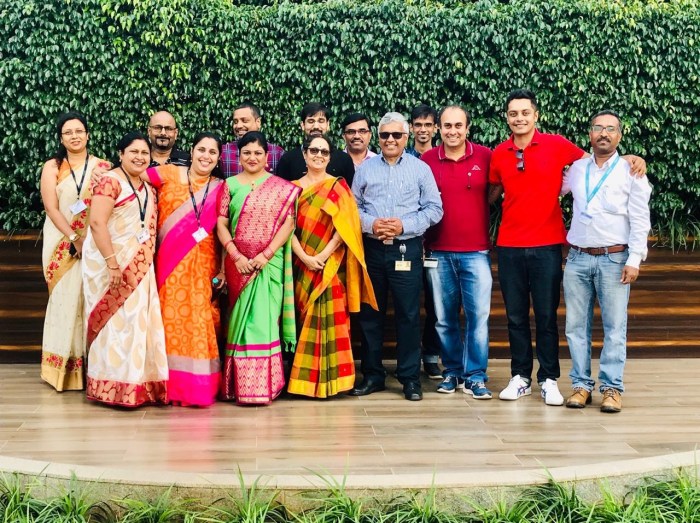
As in the photo above, the generational shift is visible even in the organisational setting.

The earlier we face this reality, the faster we are likely to adapt and change. If we live in the past, the future may hit us harder. The future will become the present sooner than we realise. So, it is better to co create the future along with our kids by adapting to this changed phase of life rather than be a victim of the change.

Together , let us create the future.

S Ramesh Shankar

12th September 2018