Outside is green and inside serene…

If you are surrounded by green all round you and it is serene inside, then what can you complain about in life ? I was enjoying the greenery of the environs around my home and serenity inside. Nature has its unique ways of cooling your senses and I felt it that way today.

This led me to think and reflect more on life and living. I realised that if we live a life of being “green” in every aspect of our lives and being “content” with what we have, will it not be wonderful. I realised it would be but wondered why is it so difficult.

If we have to lead a green life, we need to be sustainable in every action of ours. We should give back to environment a little more than what we take from nature. This would seem a tough challenge. Imagine the paper, water, fuel, power and other valuable resources we waste every day. We kill trees, ensuring drying up of rivers, power cuts and degradation of nature by use of fossil fuels in every way.

Imagine a life where we could have our own well for water needs, generate our own power using the sun, recycle and reuse resources thus creating no waste, how would life be. There would be no pollution. There would be no climate change and no shortage of water, power or any other resources needed by human kind. We will leave behind more for our future generations than we have inherited from our fore fathers.

Similarly I was wondering how life would be if all of us were content with what we have. Contentment is a state of mind more than a balance between wants and needs. When want exceeds needs, it becomes greed. This is possibly again easier said than practised.

Why do we get greedy even when most of our needs to live a happy life is fulfilled ? This may be because we live a life of comparisons. We accumulate wealth more for establishing or proving our status in society as compared to others than what we need to be happy. The day we live for our own happiness, we may live a life of contentment.

I may appear philosophical in my hypothesis. But, to be honest this is what most of us spend our life doing. We want to buy a second bigger car because our neighbour has one. We want to buy a second house since that’s a style statement we may want to make in social circles. We use more than one phone because we want to be seen with latest phone in the market as that it determines our social worth.

None of the above are impacting our daily needs in life. We can live only in one house. We can drive only one car at a time. We cannot improve our communication with others by having more than one mobile phone. By the time we realise that we are chasing an illusion, our health is impacted and we do not have the time to enjoy life anymore. So, the cycle continues.

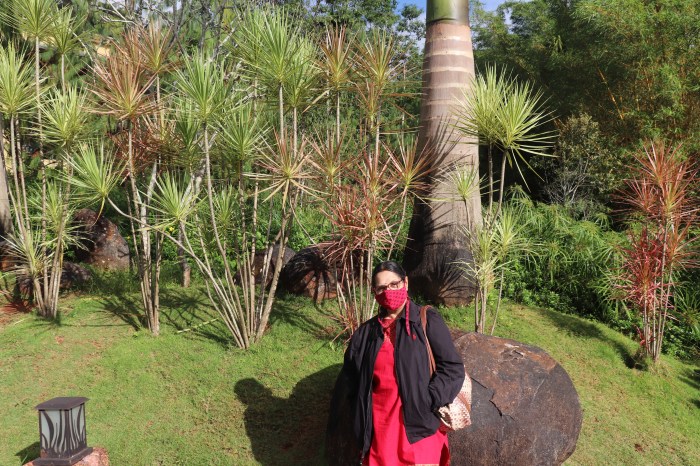
One can experience both the green and the serene in the photo above.

It is time to pause and reflect. It is time to sit back and take stock. It is time to fulfil our needs and not our greed. It is time to live a sustainable life. Let us learn to contribute to the greenery around us by giving back to life more than we take from it. It is time to change our attitude to life and living.

Time to change is now.

S Ramesh Shankar

16th September 2018
Darkness to light …

Every festival teaches us some life lessons. I was wondering what the Festival of Lights can teach us. First we need to understand that it is celebrated across India by the name “Deepavali” but it has different folk lores. In the south of India and parts of west and east of India it is celebrated for the killing of demons called Narkasur & Mahisasur by the Gods. On the other hand in most of north India, it is celebrated as the return of Lord Rama from the forest after serving a 14 year deportation term.

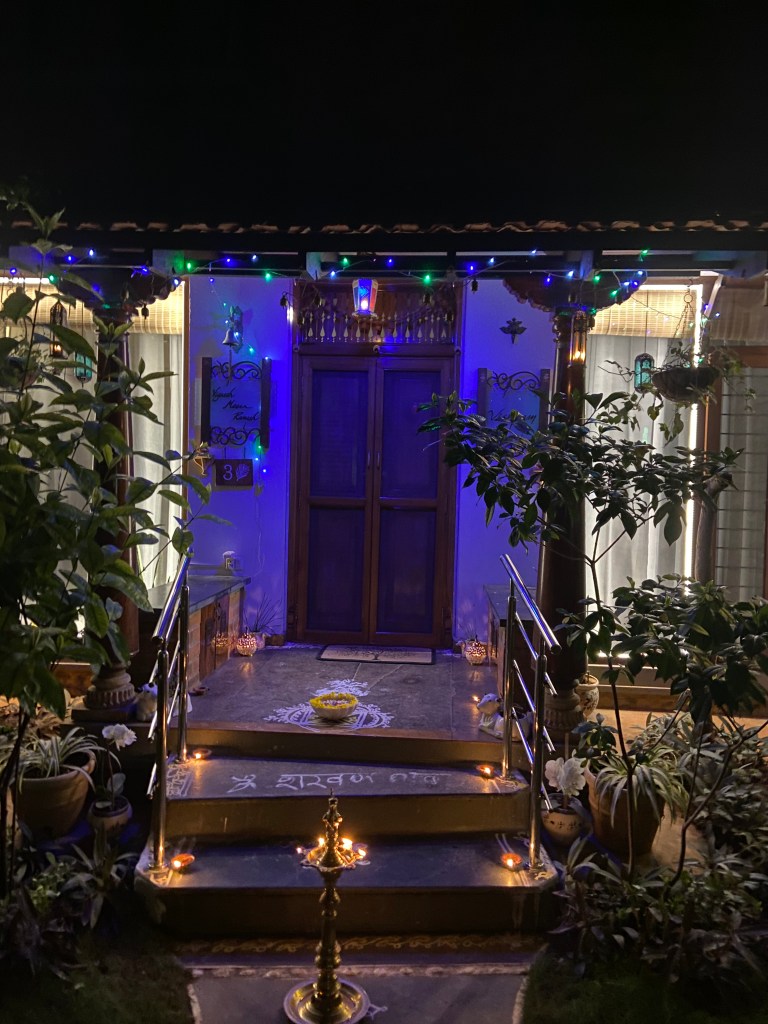
Either way it is celebrated with the bursting of crackers , creative expression of design forms on the entrance of homes called rangoli and lighting of lamps to decorate homes. In the south of India it is celebrated at dawn and in the north it is celebrated at dusk. Either way the decorative lamps and the bursting of fire crackers transforms the environment from darkness to light.

Diwali or Deepavali as it is called is the Festival of Lights, colourful rangolis and bursting of crackers. It signifies the victory of good over evil and the return of a popular king to his people. While most of the traditions of the past continue with festive fervour, the lessons of this wonderful festival is forgotten in some way.

In my view one of the best learnings one can carry from the Festival of Lights is cleaning your home and your mind. Every household spends a lot of time in cleaning their home, painting them and decorating them much before the festival arrives. It may also be a good time to clean our minds of the unwanted memories stored in them. While we may be superficially cleaning our homes today, it is a great opportunity to make our environs more hygienic and our minds clearer and more peaceful.

Another important lesson one can learn from this festival is to enlighten ourselves and bring light into the life of others. This is an opportunity to transform ourselves. We can sit back and reflect on our own lives. We can bring fresh thinking into our minds and let our inner selves to get more illuminated. This festival also gives us an opportunity to bring light into the lives of other human beings by being of some help to them. In a way, we can illuminate the life of others through our deeds.

The third and the most important significance of this festival is to drive away evil thoughts from our mind. The bursting of crackers today may be polluting the environment due to the chemicals used in them. But, the spirit of this practise was more to drive away the demons and welcome the good in us. While we have fervently continued to burst crackers, we have forgotten the purpose of it and the spirit of this ritual.

We tend to remember the physical part of the rituals and practise them. We conveniently forget the spirit and purpose of these rituals. It may be time to reawaken ourselves. It may be the right time to kindle our spirits. We need to enlighten ourselves by living the rituals in letter and spirit.

It is time to clean our environment as much as our minds. It is time to think afresh and forget all the bad memories of the past. It is an opportunity to forgive the people who have hurt us and befriend them again. The joy of forgiveness is to be experienced to be believed. This way we can enlighten ourselves as much as bring light into the life of others around us.

Time to enlighten ourselves is today.

S Ramesh Shankar

7th November 2018

The generational transition

All of us grow up hoping to study well, settle down and fulfil our life goals. Then we want to get married, have kids and be happy in life. This a natural human phenomenon. The relationship between parents and children is special. It is fun to spend time with your kids and play with them and see them grow up.

The real test for us as parents are when they grow up as adolescents. They turn rebellious and challenge us in our role as parents. We feel threatened because they question our role and even the support we provide them as parents. The feeling is like someone removing the umbrella from your head during a heavy downpour. We find it difficult to cope with this transition and try to manage the situation to the best of our abilities.

Some of us tend to look back at our own lives and recalling our teen age behaviourand accept this as the cycle of life. We believe that we did the same with our parents and now it is our turn. Others find it difficult, when challenged by their own children. Our values are threatened and questioned. Their habits, behaviour and social company becomes almost unacceptable to us. Our teenage children believe we are living in the past and are not willing to accept the present.

If you talk to psychologists or counsellors, they guide you to be friends with your kids. This is easier said than done. It is like a fire fighting drill. As long as it is a drill, all of us enjoy it and have fun. But, if a fire really breaks into our homes, we may not find it easy to handle. We feel as if the counsellors and psychologists are making us believe that dealing with adolescent or young adults at home as kids is like a fire fighting mock drill. Fun as a drill but difficult to practise in reality.

Life is different. The realities of this transition in your child’s behaviour is to be experienced to be believed. It is almost like a consultant giving advice on how to deal with a crisis in a class room. When the real crisis hits us neither the consultant is around nor we remember the strategy he taught us in the class. It is like all organisations have crisis management manuals prepared and certified by quality auditors. But when the real crisis hits us, neither the manual is readily available nor do we have the time to read and act as prescribed.

Then how do we prepare for this crucial stage of our life. Some of the tricks, which we have tried and tested are as follows. As parents, one of us can get closer to the child, evolving as a friend over a period of time. It may or may not work but it is worth a try. It is also useful to find out who in the inner circle of relatives and family friends is closest to our kids. We need to find the person whom the child trusts blindly and will be willing to confide in. This may help us enable the kid to share their concerns openly with them and thus minimise tension and perceived misbehaviour at home.

This phase of life teaches you that there is a generational shift. You suddenly realise that you have grown up and have children, who are from a different generation. It may also be useful to be in touch with the realities of today. The needs, wants, behaviours and motivation drivers for our kids is different today. We may or may not appreciate them but we need to accept them as our current reality.

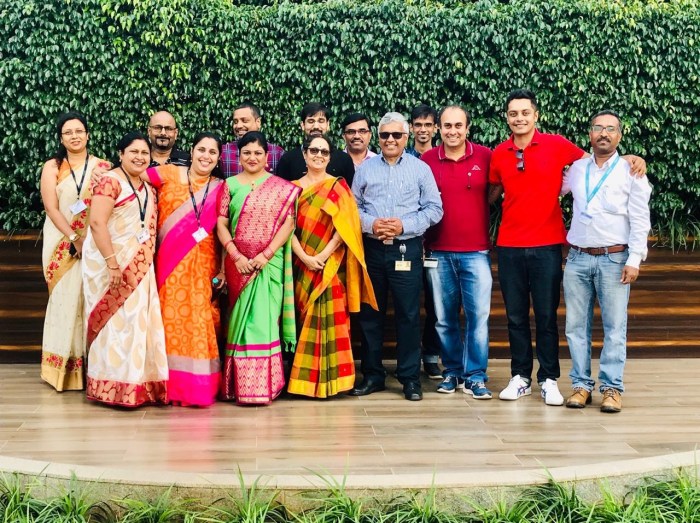
As in the photo above, the generational shift is visible even in the organisational setting.

The earlier we face this reality, the faster we are likely to adapt and change. If we live in the past, the future may hit us harder. The future will become the present sooner than we realise. So, it is better to co create the future along with our kids by adapting to this changed phase of life rather than be a victim of the change.

Together , let us create the future.

S Ramesh Shankar

12th September 2018