Religious fanatics

I have lived and worked in different parts of India – east, west, central, north and south. Although I belong to south of India, I am an Indian at heart and have learnt to respect all religions, caste, creeds and nationalities with my upbringing in family and society.

One thing which I hate is the fanatics in every religion. It cuts across religions and these people make ordinary men and women lose respect for religions. Who is a religious fanatic ? In my view, any person who uses religion to fulfil his or her selfish personal goals is a fanatic. Such people misuse religion for their personal benefit. No religion in the world promotes hatred towards another religion. But it is these fanatics who make people believe it and create discord in society.

I am a Hindu by religion and I am proud of it.(  as in the photo above).  Hinduism does guide us to respect all religions and beliefs. In my view, all religions lead us to the same destination. The path adopted may be slightly different but we reach at the same goal. It is like the skill of a soccer player. Some may dribble the ball while others may use their brute power but ultimately all players want to hit the goal post.

The religious fanatics create misunderstanding and disbelief amongst their followers about other religions. In order to prove that their religion is superior to other religions, they may end up creating hate and violence in society. Sane people in society should isolate such deviants in society and ensure that they do not succeed in their actions.

I personally believe that all human beings want to live peacefully and co exist with others in a harmonious way. Every society promotes peace until such fanatics spread their venom. We need to be guarding against such evil men and women in every part of the world.

Even in India, since Independence our Constitution guarantees a secular democratic republic. It encourages each of us to follow any religion of our choice and respect all others. However, there are fanatics even here who create a deliberate doubt in the minds of their followers towards other religions. We need to boycott such people and condemn their actions.

As a Hindu, I have always believed in the peaceful co existence of all religions. It is like the dress we wear. Every part of India, the dress and fashion is different. It is possibly guided by the weather conditions and peoples likes and dislikes. Nobody is forced to dress the way others do in some other state of India. The same is true for religion. We can follow what our heart says and without any fear.

If the fanatics come in our way, we need to crush their actions and ensure that they never succeed in any of their evil designs for society. We need to promote men and women who respect all religions and beliefs. We need to ensure that every citizen of the world has the freedom to chose what they want to pursue and the liberty to change if they so desire at any point of their life but on their own volition without coercion or force.

Let all religions coexist peacefully and lead us to the same goal.

S Ramesh Shankar

22nd November 2019
How to make unbiased decisions in life ?

We make decisions every day in every aspect of our lives. Many people have asked me as how to have to make unbiased decisions. I have also been reflecting on this subject. Then suddenly a few incidents happen in your life and you realise that the best way to make unbiased decisions is to put yourself in the position of the person or persons for whom you are taking a decision before you decide.

This may appear simple but may be the most difficult thing to do in life. I recently came to know of an incident where a HR manager hired an employee and offered her 10 percent less salary then she was earning with her previous employer. I was stunned when I heard of this incident. When I enquired as to how this happened I was told that the employee joined a new organisation in a new place. The average salary in this place was lesser than what the employee was already earning so the new employer offered lesser salary to the potential employee stating that the market offered lower salaries.

One may argue that the contract is between the employee and the potential employer. This may be factually true but ethically wrong. It is exploiting the situation of an empoyee. We have to ask the question if we would be happy if someone did that to us. Of course, if an employee is losing a job or voluntarily taking a cut to move to a new location or market of choice then it is different. But if an employer offers a lower salary to a potential employee on the pretext of lower market wages, this could be a biased decision.

We make such decisions every day. How do we become unbiased ? Let’s take the situation in the family. We decide for our kids. Are we able to put ourselves in the shoes of our daughter or son before we decide ? Or do we decide based on our own assumptions and are least concerned on how it would emotionally impact our kids. In most situations it is the latter than the former. I am not advocating here that we need to make all decisions in favour of our kids to be unbiased. I am only stating that before we decide, if we can put ourselves in the kids’ shoes, our decision could be less biased.

The situation is not very different at the work place. We decide for our teams or our customers and suppliers as if we are least bothered about the impact of our decisions. If we are again able to empathise before we decide, it may help us to be less biased. I am aware of leaders very disappointed on getting lower increments for themselves but for the same year want to give lesser increments then even they have got for their team members and argue unabashedly that they deserve only that.

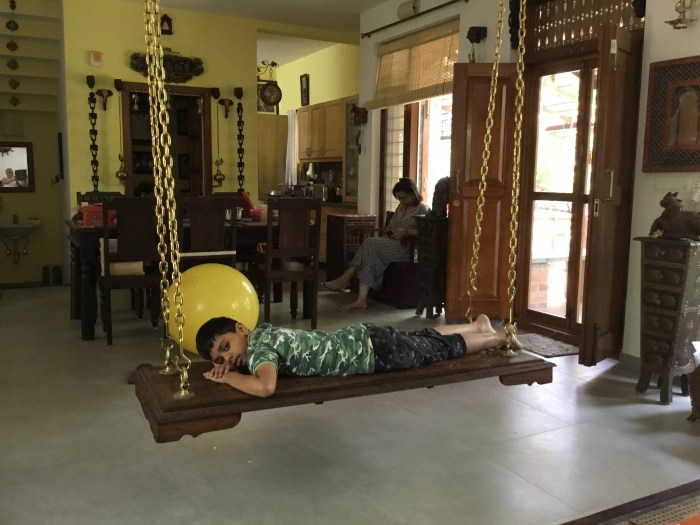
It is like advising a child to sleep on a swing without trying it ourselves as in the photo above.

It is time to realise that life is better when we are able to look at the world through the eyes of others before we look with our own eyes. Let’s try it.

S Ramesh Shankar

6th May 2019

Caring comes from within

I was watching a Kannada movie, where the heroine tells her hubby that he could have taken up a job offer to work abroad and that may have helped him to take care of his old mother and ailing uncle. The hero responds that caring is about taking your mother to the temple and spending quality time with your ailing uncle. It cannot be compensated by money. It really struck a chord with me.

Many of us may be thinking that we can provide anything to anyone with money. We do not realise that money cannot buy everything in life. Money cannot buy time for us. Money cannot get us happiness. Money cannot ensure good health for us.

Our parents sacrifice everything they can so that they give us the best of education and health. They hide their miseries to keep us happy. They ensure that we are not burdened by their life struggles and get bogged down in our education or our career.

So, when we are done with our education and our career, it is time for us to care for them. Interestingly many of us may think that if we provide enough financial support, we are fulfilling our duties towards our parents or elders. It may not be fully true. While money can buy material things in life, it can never substitute for emotions and care which the elderly long for.

The other day someone was narrating to me an incident of how his uncle repeats the same story again and again every time he meets him. He just listens to him and that gives him joy. We may not realise that we as kids may have asked our parents stupid questions or even repeated the same thing again and again till our curiosity was quenched. Our parents, teachers and elders never lost their patience to answer all our inquisitive questions. Today it is our turn. Paying back is the time we spend with the people we care.

Paying back cannot be done always with money. Expressing gratitude is not like repaying a bank loan. While a loan can be repaid and closed, expressing gratitude is timeless. The people who have helped us while we were walking up the mountain of our life may not wait for us when they are walking down their mountain of life.

Each of us will go through the same cycle of life. What we sow, we may reap in the future. If we are grateful to the people who helped us stand up in life without expecting anything in return, we may get support from unexpected quarters when we are slipping down the path of life. I have always believed that we need to be selfless in helping others and God will take care of us when we need it most.

Our ability to remember that relationships are not “transactional” is the key to life. Life is a zero sum game. Life is not always about repaying debts – financially or otherwise. Life is about unconditional gratitude to the people, who have made us what we are today. Life is about the realisation that what happens to someone today may happen to us in the future.

Life is about spreading joy in the life of others. If we can bring a smile to someone we care, we have made their day. This may not be possible always by spending money. It could be the time we spend their them. It could be by being there when they need us most. It could be doing something for them without their even knowing about it.

We need to remember that our parents did not do what they did for us expecting anything in return. The last thing they expect from us is money. The most important need is to realise that our needs go down as we age. We do not care for the material things in life. What we long for is quality of time, relationships, love and care.

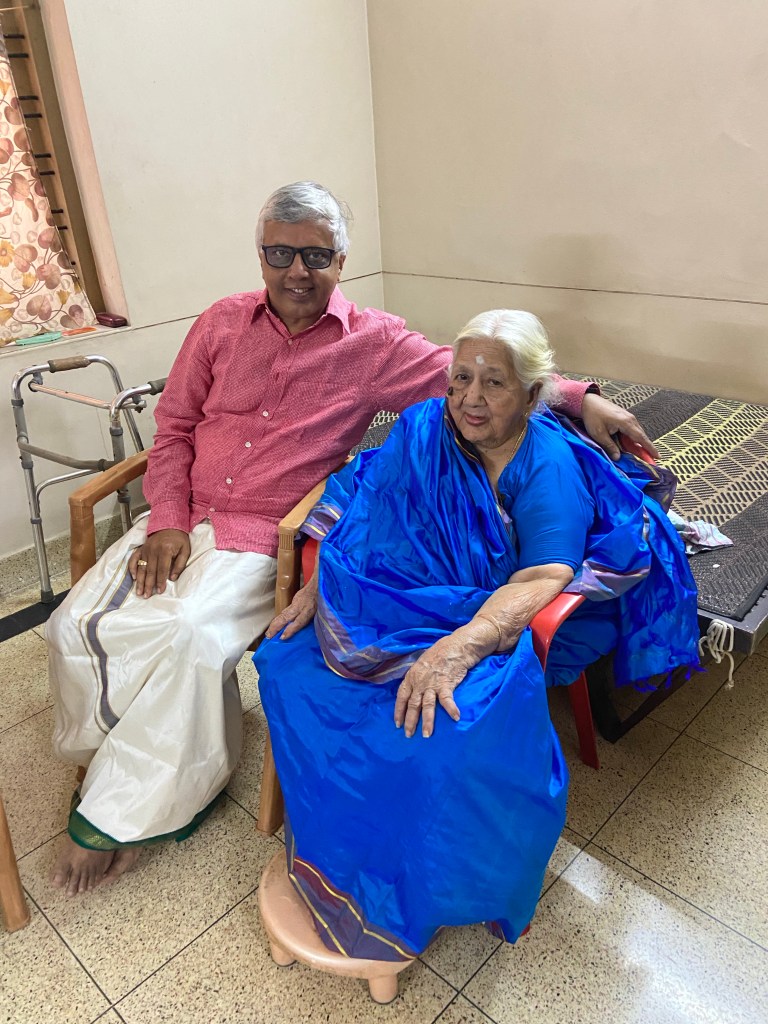
As in the photo above, every time I spent quality time with my nonagenarian aunt, I have learnt more about life and living and understood the meaning of love and care. Her unconditional love and patience has always made me realise the value of sharing and giving without expecting anything in return.

Let us commit to look within. Life is cyclic and if we do not realise it today, it will make us realise when we are at the receiving end of life.

Time to realise is today.

S Ramesh Shankar

6th February 2022