Whom should I blame ?

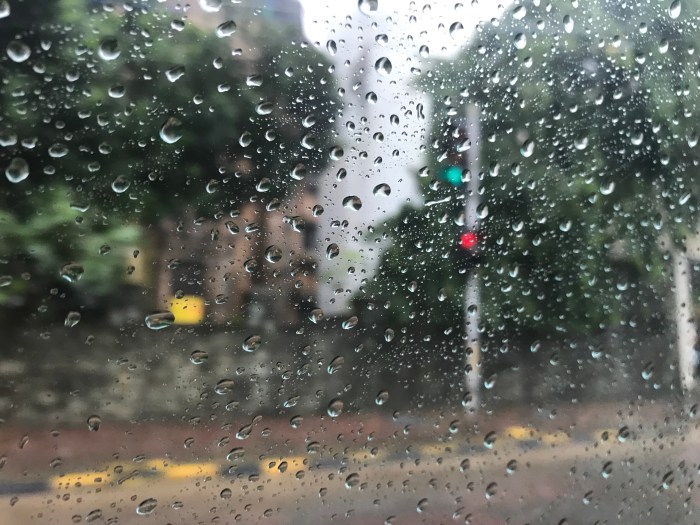
The monsoon is here and it is pouring cats and dogs. The roads are choked. The traffic is crawling. Trains have been interrupted and there is water logging everywhere. Everyone is badly impacted. Whom do I blame ? We want to blame the state government in power ? We want to blame the city local body ? We want to blame the central government and so on.

The local body, state and central government have to take responsibility for the state of roads and monsoon preparedness in general. There is no doubt about it in my mind. But, how about blaming myself for this state of affairs, at least partially ?

While it is fashionable for everyone especially the elite to blame the state and everyone else, we refuse to look within us. I was reflecting on this question today morning and thought about the following :

Why does my milkman, who is 75 years old not complain of rain and deliver milk without fail at 530 am every day ?

Why does my newspaper boy deliver my newspaper at 7 am every day even in this heavy rain ?

Why do my maid and driver not bunk their work and report regularly every day ?

All the above people come from the lower strata of society but do not shirk their responsibility by blaming the environment or the state while discharging their duties. Why do I want to blame everyone around me except myself ? What can I contribute to prevent this in the future. I have ten ideas to share and I commit I will personally try to follow the same.

A. Prevent the use of plastic and disposal of waste over drains in office and at home near my neighbourhood

B. Segregate waste into organic and inorganic and ensure safe disposal.

C. Ensure rain water harvesting is done sincerely in my community

D. Ensure storm water drains are clear and cleaned before the monsoon in my community and at my workplace

E. Report manholes and water logging to the municipal authorities in time

F. Ensure that everyone around us uses dustbins in public places

G. Carry cotton bags for all types of shopping

H. Recycle everything possible at home and at work

I. Dispose of e waste appropriately in designated places

J. Take responsibility for my community and my workplace for all of the above.

If you agree, like my post and say yes. Your ideas can add to mine too and will useful to all of us.

Enjoy the rains and let us inculcate a habit of “I can” contribute to changing the environment rather than blaming and cribbing at all times.

S Ramesh Shankar

10th July 2018
Humility versus Arrogance

IMG_1101
Life is full of choices. One of the choice we need to make is between “Humility” & “Arrogance”. It is not that the choice is between black and white. It is most of the time grey. While most of us like to be humble and modest in our day to day behaviour, its the effectiveness of arrogant people around us, which tempts us to review our choice. We sometimes feel that humble people are ignored and walked over. On the other hand, the arrogant ones are noticed and people do listen to them.

Many of my colleagues at work at all stages of my career have always expressed this dilemma in their life. Is it a good idea to be humble and ignored sometimes or be arrogant and get noticed always. I do not have a ready made recipe. But can share my learnings from life and its consequences. One can get away with arrogance as long as you are seated in a position of power in family, work or society. The day you give up your position, you are neither respected nor remembered.

If someone was to ask you to recall your favourite teacher in school, you would always remember the one who was kind to you and grounded. We never remember people who were pompous and arrogant in their behaviour. Life is no different. While it is true that sometimes arrogant behaviour may appear more effective in getting things done in the short term, nobody will every cherish your company in the long term.

Let us examine this phenomenon from various angles. The first angle is that of history. We adore people who were humble and generous in their thought and actions. We do not like to study about the arrogant and pompous types. This is not because we know either of them from the past. It is more because we would like to have role models who are modest and not abrasive in their behaviour.

If we look back at our work life, we will always cherish to work with people who are simple, modest and willing to learn and share with others. We may sometimes feel that they are not assertive enough but their humility bowls us over. If you are humble does not mean that you cannot be assertive. It means that you know where your feet are and are always willing to learn from your own mistakes. Pride is like anger. It can only destroy you today and tomorrow. On the other other humility is like honey, it will always make you a sweet person to adore.

If we look at our family and friends, we always like to be in the company of those whom we respect. We respect those who are our role models. Our role models are people who are grounded and kind. People who are humble will always be good listeners and effective coaches. Their actions teach others. Even if they do not actively coach anyone, others learn even in their company every day.

On the other hand the arrogant people spread venom. They may appear very aggressive and effective in the short term. But they spoil all their relationships in the long term. Their day to day behaviour repels people around them. Everyone tries to avoid such leaders. If given a choice, team members would prefer to join other teams rather than suffer in the hands of an arrogant leader.

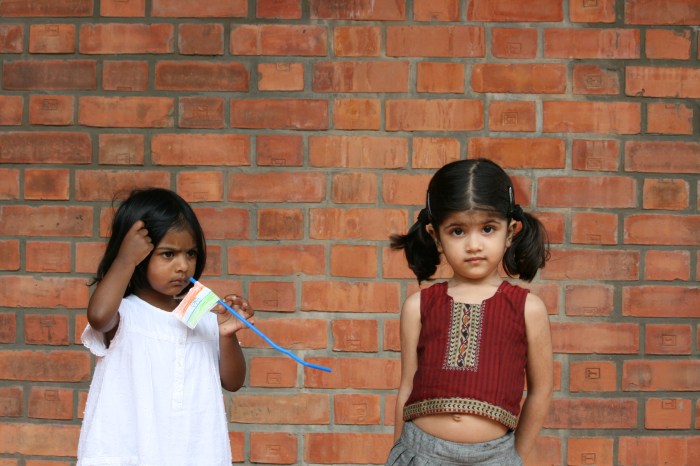
The best thing to learn from kids is that they do not have to make a choice. They are natural in their disposition as in the photo above.

It is true that sometimes it may appear that humble leaders may look less effective. However such leaders are always better in the long term. Their leadership is sustainable and focussed on the future. They would never cut corners or look at short term benefits. On the hand, they may sometimes be willing to sacrifice short term gains to create long term sustainability of their people and organisations.

What would you prefer ?

S Ramesh Shankar

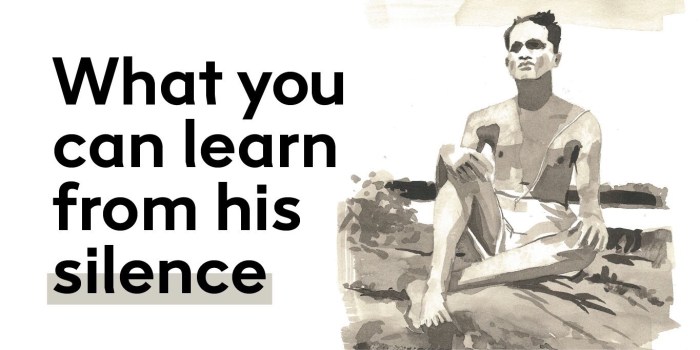
Patience Unlimited

I have always been in awe of my father for his unlimited patience.  I have wondered as to how did he have so much of limitless patience.  In my entire life time, I have seen him losing his cool only twice and here I am who loses his cool atleast twice a year.  I also need to give some credit to myself as I have graduated from losing patience twice a day to twice a month and nowadays it is only twice a year.

It has been a journey of life long learning.  In this blog, I would like to reflect on how I learnt patience from my father.  The first thing I have observed in my father is his ability to mind his own business at all times.  I have never seen him interfere in the life of others and this may have enabled him to keep his cool under all circumstances.  We tend to lose our patience when we get involved.  Impatience is in a way reacting to a situation, which we cannot accept.  There is no need to react if you do not get impacted by others’ incidents.  In all our family matters, I have never seen him talk about others or interfere in others’ matters.

The second learning has been that he was very self disciplined.  He was a government employee and served in the telecommunications wing of the central government for more than three and a half decades.  He was a self made man and worked very hard day in and night out.  He was always on time to work and never made anyone wait at home or at work.  This was possible only due to his self discipline and his ability to be organised.  Thus there is little scope to lose his cool for things which were not in place as he wanted them to be.

The third attribute which made him patient was his ability to be an active listener.  I have hardly seen him speak.  He was a man of few words but always a good listener.  It is easier to keep talking than to listen.  If you are a good listener, you have the time to assimilate and not react as the way we do most of the time.  This means less impatience and more maturity in our interactions.  Thus listening helped him to be patient at all times.

The fourth quality I learnt from my father was his ability to be self dependant.  I have never seen him depend on others for anything.  Even after his retirement from service and after my mother’s death, he did not depend on anyone for his living.  He cooked his own food, did his own shopping and maintained the house and the garden with his own hands.  This self reliance enabled him not to depend on others and thereby lose his cool when others do not deliver.

The fifth characteristic of my father which stuck to me was his ability to share happiness with others and keep sorrow to himself.  I have never seen him in my life time cribbing about anything.  He has never shared his distress with others but was always willing to share his joy.  This made him an endearing person to all.  I am yet to meet anyone in my family or friends circle who was not in awe of my father and his patience.

My father’s patience is like the endless water of the sea and me like a bird flying across to feel it.

All these qualities of my father left lasting impressions on my mind.  I was short tempered as I began my career.  But, as I grew up, I realised the value of patience and have tried my best to learn from the interactions with my father and live life the way he did.  I may have only achieved 10% of patience he had but still consider it worth an effort as it has helped me immensely in my career and life.

It is never too late to start.

S Ramesh Shankar