Our past may not determine our future…

Adapting is the key to the future

One of my ex colleagues called me up to check on how to deal with the current crisis. I told him that “ I don’t know” and that’s the truth. Although I have spent almost four decades working for the best corporations of India and the world, I have not come across a crisis of this type.

This is symptomatic of what the future has in store for us. Our future challenges cannot be solved based on past experiences. Our past may not be able to help us to solve the complexities of the future. It is as simple as the seasons in a year. In the past, we could predict, summer, winter, monsoon, spring and autumn. We could also predict when it will rain in our region. Now with climate change, nothing is predictable. It snows in Middle East and its hot in Europe, which nobody would have even dreamt.

Our life is not going to be very different. We may not be able to anticipate the future. The best of corporations with their intelligent employees and the best of artificial intelligence cannot anticipate the future. Someone has beautifully said that “ The future has a habit of suddenly and dramatically becoming the present..”. That is what is likely to happen. Who imagined a 21 day lockout in a country like India ?

Economic power or technological power may not be able to enable nations to find solutions for human problems. We can find a solution to a problem provided we understand what it is and how it going to impact us. What the current Covid crisis has taught us is that we neither can predict the future nor anticipate it. We have to adapt to the future as it evolves in front of us.

One of things we always talk in corporates is adaptability. It is this ability to adapt to change,which could enable organisations and individuals to cope with it. Even though we may not be able to anticipate or predict the change, we can develop the ability to adapt to it and steer it to our advantage.

All of us may have gone through multiple crises in our lives. Some of us manage it well and get over it fast and move on. While others may get sunk by the crisis and get stuck for the rest of their lives like sinking in quicksand. They can neither pull themselves out nor help others stuck in a similar crisis. The successful people find ways and means to adapt to the crisis and move on.

Organisations are no different. They are like a summation of individual behaviours. That is what we call the organisation culture. HR specialists and managers need to develop this adaptability as a special skill in their teams. If members panic and get sunk, then the organisation may never survive and thrive.

The other quality one can think of is Resilience. This is our ability to withstand a crisis without getting ruffled too much and bounce back. While we may not be able to anticipate a crisis of the Covid type even in the future, we can show resilience and bounce back sooner than others. Organisations which bounce back faster than their competitors are the ones who will succeed and not the ones who keep analysing what went wrong and how to deal with it in the future. This is because the future is no longer going be a reflection of the past.

As individuals, one great lesson this crisis has taught us is to be close to nature. Everything we have done to move away from nature has harmed us. The more we cut forests, build on lakes, dump garbage in the oceans, the more we may have to pay in the future. Individuals in the past fought for survival and growth. On the other hand, individuals in the future will fight for clean air, drinking water, healthy food and so on. These may appear basic today but may become extinct tomorrow if we do not get back to respect nature as we did in the past.

I am a born optimist. I believe this crisis will wake up the world forever. As nations, communities and individuals, we will be more conscious of our duties and responsibilities than in the past. We will create a future of our choice and try to evolve it to become predictable again.

Time to start is today. Let us as individuals commit to make one change in our personal lives. It could be as simple as carrying a cloth bag for all our purchases rather than dumping single use plastic, which is used as carry bags even today. It is not for governments to mandate anymore. It is for individuals to change our own behaviour.

As in the photo above, if you are rowing a boat in the ocean, adapting to the waves will be the key to success as a boatman can never anticipate the wind or waves on the sea.

S Ramesh Shankar

28th March 2020
What do I do post retirement ?

IMG_8450

Today it is exactly a year since I retired from corporate life. One of the oft repeated questions I am asked post my retirement from a professional career in March 2019 is “What do you do nowadays ?”. While it is a fair question to ask, my answer may bemuse you certainly. I seem to be more busy and occupied than during my corporate days.

Now to be specific on how my day is spent, let me share a typical day of mine nowadays post retirement. I get up up around 6 am and then after my morning ablutions, do yoga along with my spouse for about 45 minutes. This is followed by my morning coffee and then a nice nature walk in my campus along with my partner for half an hour.

Then I return home and after a sumptuous breakfast, I read three newspapers. This is a habit, which I pursued thanks to my daughter, who is a student of journalism. This habit is to get different perspectives on the same issue. So I read a business news paper and two newspapers – one generally supporting the government and one opposing it. This helps you get a balanced view of things happening around you. This takes about an hour.

Then I sip a cup of fresh brewed coffee and go to my study room to check my emails and also respond to any issues I am supposed to during the day. I also check my social media and linkedin account and post my responses. I tend to read a bit, when in mood to do so. This I do in a room facing green trees and the wind whistling past me along with birds singing their tunes.

I also meet young professionals in person or on call or video to answer career questions or any conflicts they are facing in their profession. This helps me to share my learnings with them.

It’s time for lunch and both me and my wife have home made lunch together and share our stories for the day. We also exchange information we may have got from different sources since morning which the other person may not have read or heard.

Then I check the news and other updates I get from friends and relatives on my social media accounts and also watch some videos etc before I soak into a healthy afternoon siesta for an hour. This refreshes me for the rest of the day and make me energetic again.

I now go around taking photos of my garden, birds, animals and plants and post some quizzes on social media to share my limited knowledge or to seek answers about things I do not know from my friends and relatives. Some days I skip the afternoon siesta if I have some interesting things to do.

I may also go out to the city for some shopping or meeting partners for my professional engagements. This helps me to be in touch with happenings in the professional world in which I spent the last four decades.

Now it is time to give back to society in some way. So I am busy with my residents welfare association doing some volunteering to improve our quality of life. Further to save water and power in our campus, we are also experimenting with some new techniques.

Nowadays, I have the time to visit friends and relatives in my city and other places and attend all family and social events. I also call on all elders and enquire about their health and well being. Spending time with my life long partner and helping her in her daily chores helps her relax and also gives me joy.

Then it is time to share my limited knowledge. So I am tutoring school kids of our neighbourhood on English, maths and science subjects. They are children of employees working in our campus and I love the sparkle in their eyes, when they speak to me in English. It is indeed a gratifying engagement.

Then my evening coffee and it is time for some sporting action on TV. It could be cricket, tennis, badminton, hockey or any other sport where India is participating. It gives me joy to see Indian sportspersons excelling around the world nowadays. On some days, I am watching a play or some music or dance programme to quench my interests in arts and culture.

I then go for a stroll again for another 30 minutes in the evening to relax and listen to nature at night. This also helps us share our insights during the day and plan for the next day.

Then dinner time followed by some and news and analysis on tv if it is of interest to me. I generally avoid tv except for sports nowadays. Then I also like to see news on cars and bikes from around the world and business updates.

Now it is time for bed and we do pranayama again together and thank God for bestowing us with everything in life and pray for the wellness and happiness of mankind before we have a good night sleep.

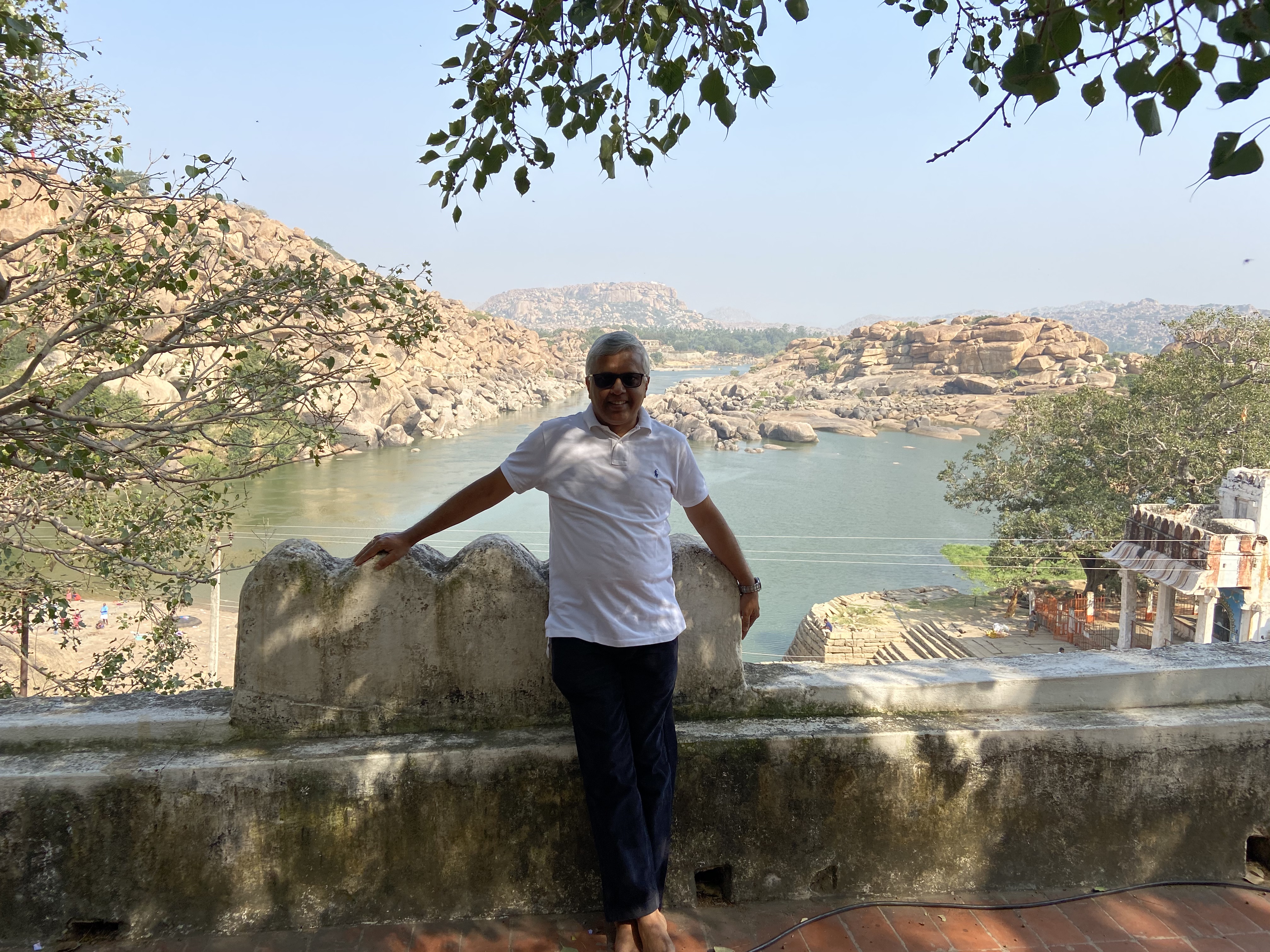
Now , you may wonder as to where I have the time to waste even post retirement. I should add that on days I travel out of station, I am driving my car for hundreds of kilometres a day and enjoying nature and environment around me as in the photo above at Hampi.

Is it time for you to retire and join me in this joyful life ?

PS: This blog was written of a typical day before the Covid crisis hit us.

S Ramesh Shankar

10th August 2019

Time to be human again…

The world is hit by a virus. The best of technology and human power is not able to combat this deadly virus. Human lives are being lost every day in thousands around the world due the impact of this virus. What lessons we can learn from this human catastrophe.

I decided that every day I will reflect on one limitation of myself and explore how I can change for the better in the future. Today, I will focus on the innumerable human beings who serve us from morning to night. Do we treat them as humans on equal footing like us or do we still continue to live in our glass houses ?

The outbreak of this virus taught us a lesson that social distancing is applicable for everyone. This virus does not discriminate based on nationality, caste, religion or state you belong to. It randomly impacts people who violate the guidance given by the medical professionals and the government authorities.

On the other hand, we as human continue to discriminate based on caste, religion, social status and nationality. Today let me go through a day in our lives and help us reflect on how many people impact our lives positively sacrificing their own welfare for the societal good.

Our day starts with the morning newspaper boy. He may be working beyond his education hours to earn that extra buck to support his family. We say let us stop the newspaper boy because he may spread the virus. Then the milkman. Imagine the milkman stopping supplies as he is worried about spread of the virus. Our day will begin on a sour note.

We stopped the maids, drivers and Gardners in our community when the lockdown began yesterday. There was a big hue and cry. The members felt that they could not survive without maids for a day. They wanted the maids to sanitise a million times a day but were least concerned about the maids getting impacted by the same virus. We have become so self centred that we want all services possible under the sun but we are least concerned about the health and welfare of maids, drivers and Gardners. As if, they are not human beings like any of us.

We want the sanitary workers to visit us everyday to collect the wet waste. We cannot find an organic way to compost the waste for a few days in a garden or even a pot inside the house. We may get impacted by wet waste inside the house but the sanitary workers are fully immune to all such infections.

Our lives are incomplete without cooks. How can we imagine cooking our own food or cutting our own vegetables ? How does it impact us if cooks are travelling in crowded buses and trains to help us out in our homes. After all it is their duty to serve us and not ours to care for them.

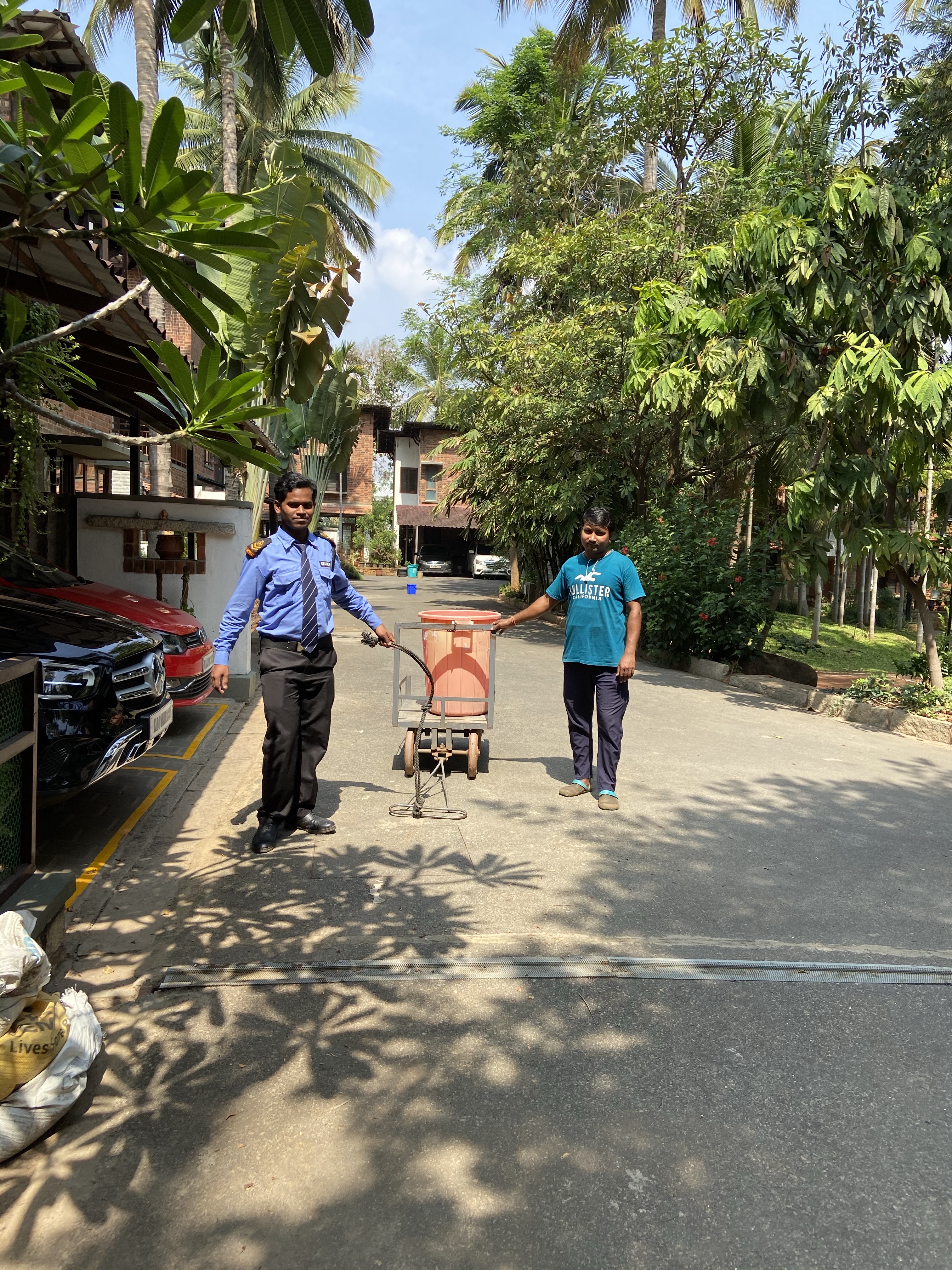
The list can go on. We have our security guards in our campuses who are working 24 x 7. We have municipal employees serving us. We have the utility employees, the police and most important the medical and health workers working round the clock to keep us safe and healthy. What are we doing in return ? In some communities, we are ostracising medical personnel and airlines staff as if they are coming back home only to spread the virus to us. We do not realise that they are putting their lives on the line to serve us day and night.

We as humans have to learn to be grateful to other human beings every day of our lives. No job is menial. No human is high or low. Everyone contributes to the happiness of mankind. We realise only when we pick up the brooms as to how difficult it is to clean the garden in front of our homes. If we put the wet waste in compost bins, we realise how much these workers sacrifice to keep our environs clean.

It is time to look within and change. Let us commit to treat every human being around us as human beings and respect whatever they do and be grateful to them.

S Ramesh Shankar

25th March 2020