Are all relationships commercial?

In my experience, relationships are the bedrock of life. We can get anything done or not done in life because of a good relationship or the lack of one as the case may be. This is true in our personal lives and work lives. If there is one quality which each one of us have to develop right through our life is “How to be build life long relationships ?”.

Some people differentiate between personal relationships and work relationships. However, in my book all relationships are sacrosanct and are no different. Relationships are based on trust and mutual respect. They are developed through our efforts, actions and personal credibility. They need to be nurtured to become strong and sustainable ones.

One question which may lurk in our minds as to why we need relationships if we are capable of handling our own affairs. We need relationships because we are living in a inter dependant world. No country however mighty it may be can think of surviving and sustaining by themselves. We all depend on each other to succeed. This is equally true in our lives. None of us however brilliant or capable we are can achieve everything in life all alone. We need to depend and collaborate with others to succeed in life.

After spending many years in the corporate world, I can vouch for the value of relationships in every sphere of life. I have seen many brilliant employees who are intellectually smart and have great pedigrees to be proud of but fail in their careers primarily because they are not a team player and cannot sustain relationships at the workplace.

This aspect is equally true in our personal lives. If we recall the people we admire in life, we may recollect the names of people whom we enjoy interacting with and learning from. We may not recollect the most intelligent teacher of our lives but the most friendly one. We may remember colleagues who cared for you and not your best performers. Similarly you remember neighbours who were around for you whether you needed them or not and not others.

Today we find a deterioration in relationships. In my view, this is primarily because we have tended to use people and love things. While being materialistic per se may not be a bad thing but if we love our things and use people, relationships can never be built. We have started believing that we can buy relationships and have started putting a value to every relationship possibly in monetary terms. In other words , we have started behaving as if all relationships are commercial ? In my book, this can be the last nail in our our coffins.

We need to realise that everything in life is possible only by building, nurturing and sustaining great relationships. If we do not understand this basic theorem of life, we may lose more than we may win. Even the victories may not be sustainable in the long run. The day we realise that relationships can make or break our lives, we may have turned the corner.

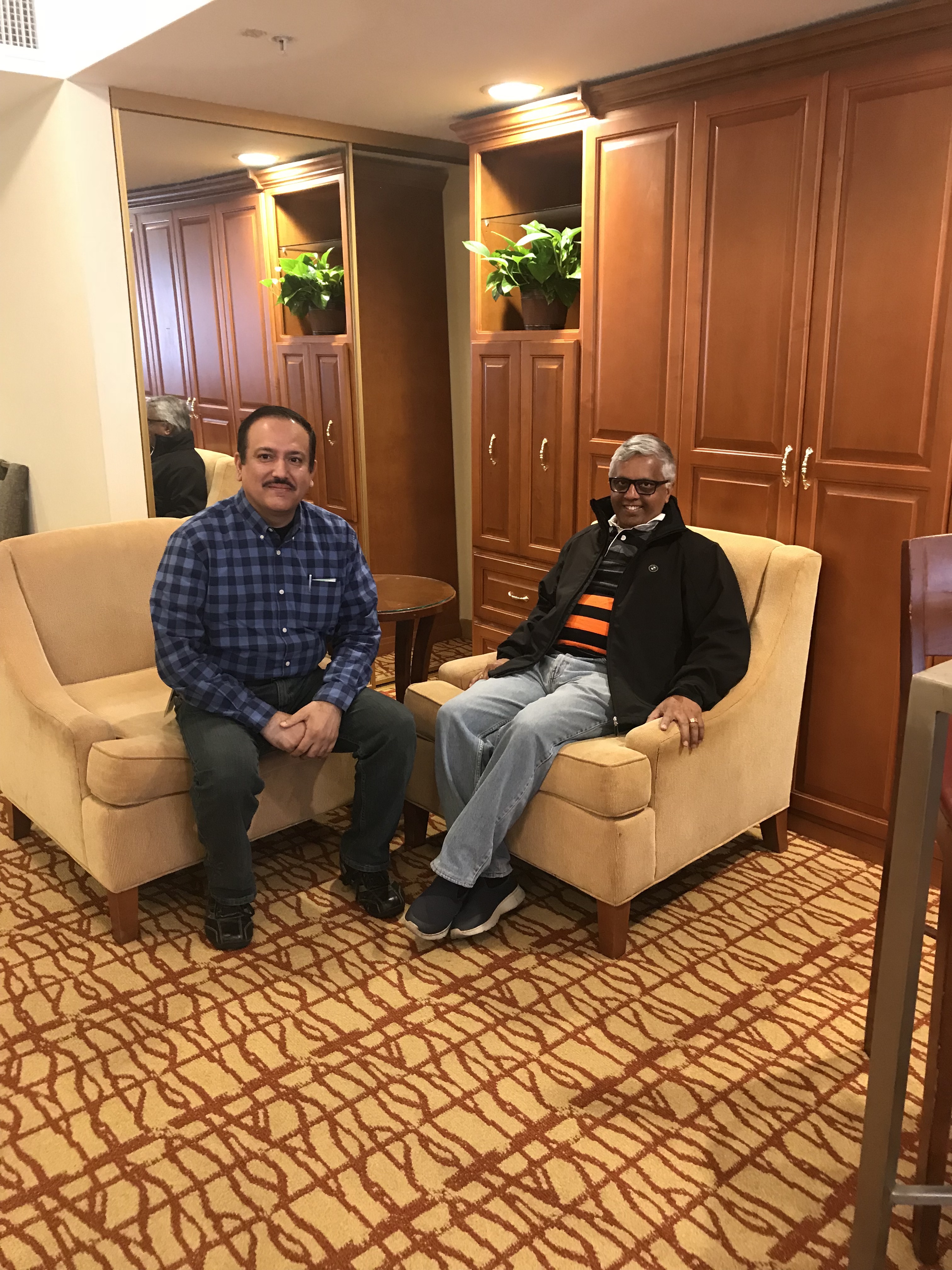
As in the photo above, all relationships are not commercial and the earlier we realise the better for us to enjoy life to the full.

Lets learn to build sustainable relationships from today.

S Ramesh Shankar

23rd July 2020

Journey or destination – which is more important ?

A friend of mine sent me a cartoon, which depicted a tiny dragon sitting on the back of a Big Panda and the dragon asking the Panda – “Which is more important – the journey or the destination ? The tiny dragon replied – “The company”.

We spend our whole life working to reach an elusive destination. It could be a goal in our personal or work life. While it may be a good idea to have goals both at personal and work level so that we may evolve our strategy and plans to reach them, we sometimes forget to enjoy the journey.

On the other hand, there are some of us who keep enjoying the journey but forget about their destination. I have come across both types of people in my life. Rather even I have been both types at different phases of my life.

But this cartoon made me think differently. The answer of the dragon that “the company” neither the journey nor the destination is important set me thinking. I got a new perspective to life and thought it was worth sharing with everyone.

Many of us have chased destinations and some of us have enjoyed our journey. But the question to ask ourselves is “ have we enjoyed the company” along the journey. The answer may be yes, no or may be.

I assume most of us have taken our company for granted. Be it family or friends or colleagues we assume they exist for us. We have taken them for granted to say the least. Lets begin with our parents, siblings or friends. Then our colleagues at the work place, our neighbours and so on. We have so many people for company in our journey called life.

The question we need to ask ourselves is “how much are we enjoying their company and learning from them ?”. We consider it the duty of our parents and siblings to support us. Then we think our colleagues at work get paid for what they share with us. Our neighbours and friends are around because of their fate or their choice. So our life journey continues assuming the company exists and we have no time to enjoy this company and learn from them.

This is the insight and the learning from this cartoon for me today. We need to enjoy the company more than the journey and the destination. If we learn to enjoy the company and learn from all people around us , our life may be more enriched and fulfilling. We may have more people to be grateful to and learn from.

The day we realise that we need to worry less about the destination and the journey and enjoy our company more, life may look more enjoyable to us. Life is an enjoyable journey with surprises everyday. We meet so many wonderful people along the way. We also meet birds and animals and other living beings along the way. May be it is time to hit the pause button and reflect on this perspective of life.

As in the photo above, we may be focusing on the journey or the destination rather than enjoying the company we have in a long drive through a picturesque landscape.

Life is a journey. Let us learn to enjoy it every day rather than waiting for our ultimate destination.

S Ramesh Shankar

7th August 2020

The Appraiser & the Appraisee

XI4ylrdrRle6QS04qh%kpw
It is performance review time in most organisations.  The year is over and the appraiser has to review the performance of the appraisee. In most organisations, the appraiser is expected to have a pre-appraisal dialogue before she appraises her reportee to understand how the year has gone and what went well and what could have been done better.  Many appraisers do not take this step seriously and even give it a slip. In this step, the employee is expected to speak and the manager listen.

The appraisee fills in the form and based on the understanding of the same, the appraiser assesses the employee.  This then becomes a one sided appraisal as the manager has not been able to return to the other side of the story.  It may be said that principle of natural justice, wherein you give a chance to defend yourself before being judged has not been followed.

In the next step, the manager assesses the performance of the employee and fills in her comments and feedback to the employee.  This could possible be discussed in an appraisal group and then it is time for the manager to give feedback to her employee.  The manager is expected to fix a date and time and preferably do a face to face feedback session.  Most managers do it casually and in an informal setting like a canteen over a cup of tea.  I recently met a manager, who stated that his boss met him for breakfast and gave him feedback in exactly five minutes.  This negates the very purpose of a feedback session. In this step, the manager is expected to speak and the employee listen.  The manager is expected to give feedback with real life examples of what went right and what could have been done better.

The appraisal is expected to be complete, when the manager sits with the employee and agrees on the targets for the next year and also the development actions.  This enables the employee to focus on key areas during the next year and also helps the employee to take ownership of his development.  This could be reviewed periodically with at least one review every six months.

The real conflict arises when the appraiser and the appraisee have opposing view points on the performance of the appraisee.  This conflict could be resolved by asking for clear examples of high and low performance.  It can also be substantiated by feedback from peers and internal or external customers.  This may help the employee to get a realistic feedback and also take necessary steps for the next year to improve.

In most organisations, performance appraisal becomes a ritual and not so liked phenomenon.  This is mainly because managers are not trained and do not possess the necessary skills to listen, appraise and give feedback.  Both the appraiser and the appraisee dread this process and want to get over it more to tick a box then to celebrate the process.

As in the photo above, two way communication is critical for a successful appraisal dialogue. Listening more than speaking by the manager may facilitate a rich conversation.

One can make a performance management process rich in content and delivery by honing the skills of the employee and the manager.  Each has a distinct role and has to play it effectively to ensure overall development of the employee.  The real test of a good performance dialogue could be if it is inspirational or perspirational. The day the performance dialogue becomes inspirational, we have achieved the end as much as the means to the end.

S Ramesh Shankar
December 2016