Knowledge is for sharing


All of us assimilate knowledge and skills as we grow in life.  Some of us are willing to share it, while others want to conserve it.  In my view, knowledge is for sharing.  Some of us believe that if we share knowledge, we may lose our uniqueness and our mental wealth. I think it is the other way around.  The more you share, the more you learn and the more you grow in life.

Let us first try to understand from the organisation context.  Let us assume we have great people practices in our organisation.  Some of us are reluctant to share our best practices with other organisations thinking that we may lose our competitive edge.  With many years of working in the corporate sector, I can confidently state that no organisation can cut, copy and paste the best of practices of any other.  An organisation culture evolves over years and can never be copied by another organisation just by aping it.

Similarly, the culture of a nation is built over centuries.  No other country can come in, learn and adapt this culture to their society.  It is like you may be able to copy and paste a photo or picture from one source to the other.  But, you can never transfer the beauty of nature in reality by copying photos of nature.

Now let us come down to the family as an institution.  Is it possible to imitate the values of a family by just trying to follow them.  It takes generations to institutionalise values in a family.  Even, if we generously share our values and beliefs, it is not possible just to transplant the same without evolving our own values.

Just like organisations and institutions, individuals are also worried about sharing knowledge and skills.  Let us imagine the world’s best batsmen trying to teach batting to any of us.  Even if he is willing to spend his lifetime sharing his knowledge and skills, we can not expect to become the world’s best batsman without putting in hard work and honing our own skills.  If knowledge sharing could lead to knowledge assimilation so easily, the world would have geniuses all around.  

Knowledge is for sharing.  The more we share knowledge and skills, the more we evolve and grow as an individual.  Let us look at the geniuses around us.  Whether it is a sports person or a musician or a scientist,  they are always willing to share their knowledge and skills with others.  The more they share, the more they learn and the more they are respected in society.

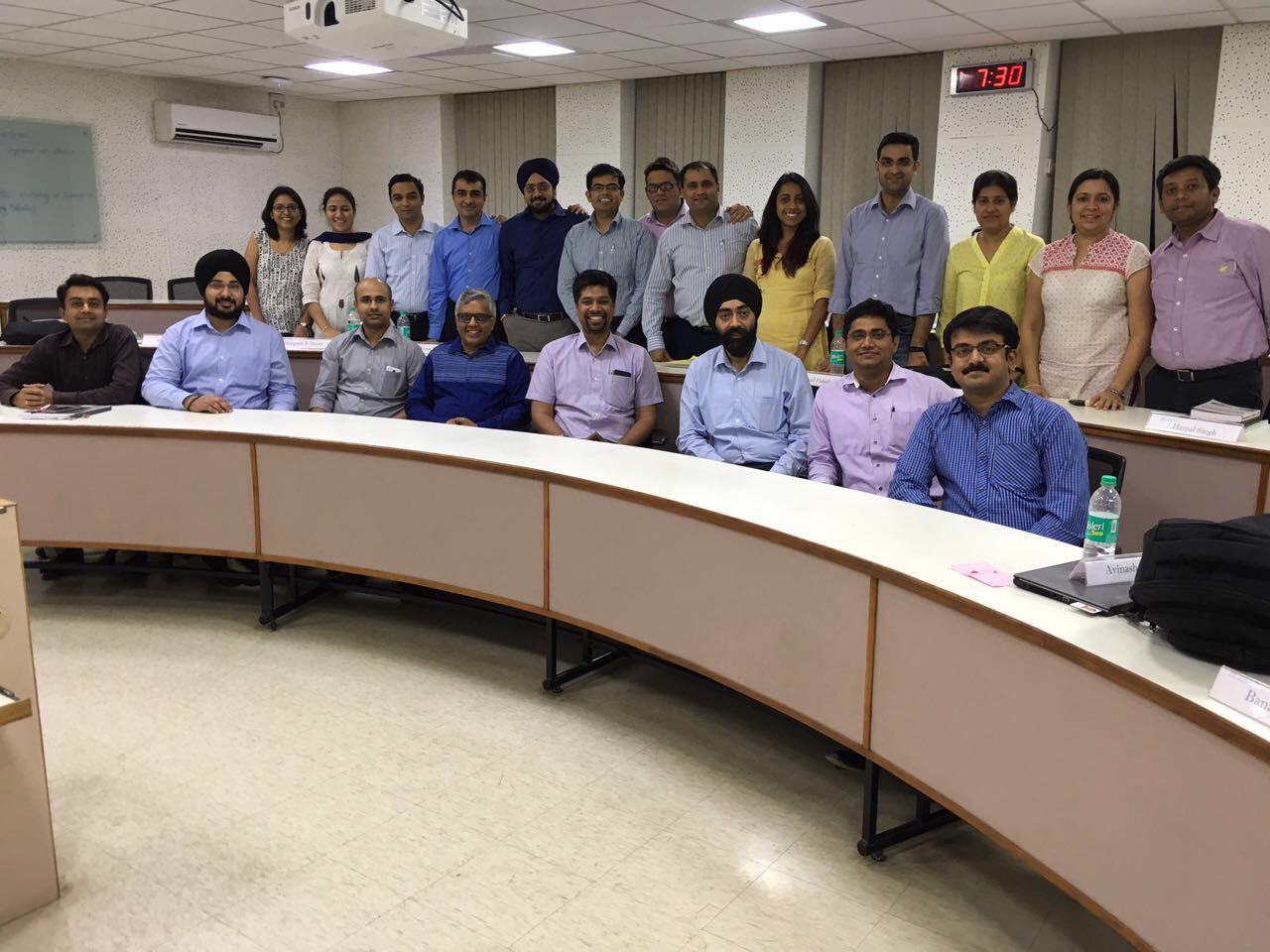
Like in the photo above, I met with a group of young talents in my organization, who were more than willing to share knowledge and skills with one another.

So, let us share whatever knowledge we have from today.  We will gain more than we are likely to lose.  Try it.

S Ramesh Shankar

Patience Pays


Is patience necessary in life ?  I am not sure but I am willing to examine it.   I recall I was a short tempered guy when I grew up.  This made me impatient in life.  I was not happy at my own pace of doing things.  As I ventured out of home and got into work, I realised that my impatience turned into anger.  I lost my cool at silly things and wasted more of my energy than others.  This made me less productive in life.

If I then move to the work place, I observe that all of us are in a hurry all the time.  We are competitive and hence want to outdo our colleagues each and every time.  We take up more than we can chew at work.  We want to prove that we are smarter than others. We are impatient for results every day.

If we move to our families, the situation is not different.  We want our children to grow up fast as we cannot deal with the tantrums of kids.  As children, we want to grow up fast we want to stand on own feet.  As newly married couples today we are so impatient that we are not ready to wait for nine months to have a kid and are willing to adopt or go for alternate methods.

What does all this teach us in life ?  It tells us that we want the results without investing in the efforts.  We want to win the game without playing the game.  Imagine winning a football match without playing for ninety minutes. We want to be the CEO within days of our joining the organisation.  If we feel, there is less chance, we want to start a start up so that we can become the CEO from day one.

All this implies that today the end is more important than the means to the end.  While Gandhiji said that ” The means to the end is more important than the end itself”.  If someone quotes Gandhiji to us, we may get impatient.  We may even say that this guy is outdated.  He needs to take a break or retire from work. I do not blame anyone for this since each of us are to blame ourselves.

If I look back, I realize that “patience pays”.  I have no doubt that if you put in your best, you will get the best.  The Japanese have always taught us that “fix the process, not the problem”.  We need patience to perform.  We need patience to be the best.  We need patience to excel.  We need patience to evolve as a good human being.   Some may turn around and say that one may realize this after one goes through a life of impatience.  It may be true for some and not for others.  Life teaches us many lessons along the way as we go through many events.  It is up to us to learn and become patient. Alternately, learn it late and be patient till you learn.   The picture of the two birds patiently waiting to catch the fish in the lake explains why patience pays.

The choice is always ours.

S Ramesh Shankar

“Pole Star”

IMG_0629

A young aspiring professional recently approached me to seek some guidance at work.  He was a bit agitated because he had more questions than answers to what he saw and felt on happenings around him at his workplace.  I think this is quite a common phenomenon amongst the youth today.

When a young professional starts his career after completing his education from a good university, he or she gives their best to grow faster than others in the organisation they join. They are willing to work hard and also contribute beyond what is expected from them. Their attitude to work is ” work hard and party harder”. I envy them for this attitude since I believe this lays the foundation for them in their career. It also helps them to strike a good balance between work and personal life.

This young man told me that he was happy to work hard and extend his contributions much beyond what is expected of him. However, what irritates him is when he sees other colleagues at work, who in his perception or qualified less but get paid almost equal if not more than him. What irks him more is that these colleagues do not work hard nor do they contribute as much as he does. I think this is a fair issue to be concerned with.

After listening to the frustrations and anger of this young guy, I shared some axioms of organisations and how performance is measured in them. The first premise is that your pedigree is only useful at the time of joining an organisation. After you enter the precincts of an organisation, it does not matter where you have studied from. What matters is what you bring to the table. If a person brings more value to the table than you, then that person would be assessed as a better contributor irrespective of which university he or she has come from.

The second axiom in organisations is that you need to prove your worth without comparing yourself to others. Many a time individuals tend to compare themselves with other co workers and make a judgement for themselves. Instead, individuals should be encouraged to talk to their managers about their goals, their aspirations, their development,  their achievements and their rewards. The moment we are able to de link ourselves from the rest of the colleagues, the feeling of disproportionate contributions of others and their rewards will not affect us and our motivation.  It is our duty to focus on our performance and trust the judgement and fairness of our manager whose job it is to compare and contrast our performance with our peers.

The third and the most important axiom for a young aspiring professionals to follow is to excel in whatever they do. If you are the best in what you do, you can never be ignored by anyone in the organisation, least your boss. Sometimes, you may feel let down but patience and perseverance is the key to excel. It may even be a good idea to strive to better yourself with every passing day in your career. It is good to be competitive with yourself rather than others and be clear on what you want to achieve in your career. This focus and quest for excellence will enable you to have inspiring conversations with your boss and thereby will lead to self confidence and success.

We need to strive to be like the “Pole star” in the sky, which shines in darkness irrespective of millions of others stars which are present.  The mantra could be “How do I outshine myself every day and shine like a pole star amongst my peers?”

S Ramesh Shankar