I am the past, you are the future…

IMG_0701
One of the best lessons I have learnt in life is that the more your share, the more you learn. It starts from our childhood. As a elder sibling in the family, we have to learn to share with our younger siblings and be willing to learn from them. Then you grow into an adult and have a lot to share with younger ones around you. You get into a job and work in a team to share and learn.

As you get married, you learn from each other all the time. Then as you have kids, it is time to give back again. This is the time I realised that the best attitude to share and give back to the next generation is to believe that ” I am the past, you are the future..”. If we live our life with this attitude, we will always be willing to share more, learn more and give back more. We have to realise that we create the future of our choice.

I have to believe what happened in my life is history. I may have succeeded or made mistakes. But the future is with the next generation. Hence, if I believe that I am the past and the next generation is the future, I will happily share my knowledge and skills without expecting anything in return. Many of us conserve our knowledge, skills or experience thinking that if you share you erode your value.

I would argue that it is the other way around. The more you share, the more you learn and grow. I have respected all the people who have shared with me in life and career. I have seen them grow and become more knowledgable and respected in society. On the other hand, people who have conserved knowledge or experience are neither respected nor do they blossom in life.

There is a reason for me to believe that our attitude to life and living should be – ” I am the past, you are the future..”. If we believe, we have experiences of the past, we have a responsibility to share with the next generation as they are the future. If we share our failures and successes, the chances are they will not have to go through the same issues in their lives. If we do not believe in this, the next generation will do the same mistakes we did in our life and their learning curve will be longer than ours.

In corporate life, we always believe that the lessons we learn from our failures are much more valuable even than our successes. Life is no different. We should have the courage not only to accept our failures but the willingness to share what we learnt from them so that the future generations benefit from it. If all of us conserve our knowledge, skills and experiences and take them to our graves, we neither benefit from it nor does the future generations.

This is true in every aspect of life. We need to share and learn in a continual way. We need to believe that the more we share, the more we learn in life. We need to believe that we are the past and the next generation is the future. We are responsible for the past but we also have a responsibility to create a brighter future for the next generation.

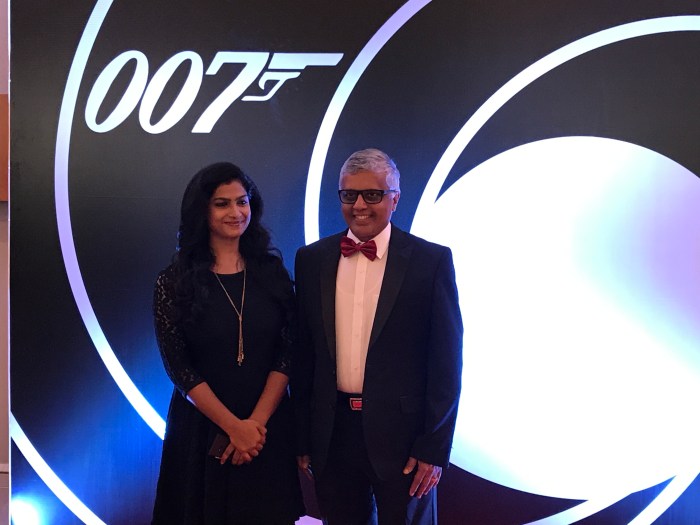
We have a responsibility of developing the future generation as in the photo above.

Let us live life king size. Let us learn to give back to others more than we have got in life. I can share that this could be a wonderful way to be happy and grateful in life. We have neither inherited knowledge nor can we take it to heaven. It is this realisation, which will make us give back in abundance. Let us learn every day of our life and let go all that we have learnt to others so that they benefit as much as we did.

The day to start is today and the time is now.

S Ramesh Shankar

Leadership lessons from Prime Minister Vajpayee

India lost its three time Prime Minister Atal Bihari Vajpayee on 16th August 2018 at the age of 93 after a prolonged illness. The nation received the news with numbed silence. I have personally been a great admirer of this person. I do not have any political affiliations but the personality of this human being was magnetic to say the least and that made me a ardent fan. I was saddened by his death and decided to list ten learnings from this statesman, which any human being could try to imbibe in their daily life.

Inclusiveness was in his blood. He had expressed in thought and action through his speeches, poems and actions. I have not heard or met anyone who has known him complaining of his ignoring them. Even the common man felt he was accessible and was never felt excluded in any public actions or policies.

One of the most difficult tasks of a leader is to balance the team, especially when you have members with opposing ideologies to manage. He had the ability to manage diversity and foster inclusiveness through his fairness and equity. Such was his stature and credibility that his silence spoke more than his words.

Even after balancing a team, it is important for a leader to carry along every member of his team. He was a master of listening to all shades of opinion and still being decisive. He had the ability to carry along people with opposing views gracefully. This is difficult to practise especially in a diverse political spectrum when you are running a coalition government.

His ability to build consensus was par excellence. If we look back on the decision to go nuclear or win a war against an erring neighbour was built on political consensus. He was diplomatic but firm. He could place national interests above narrow political considerations and influence people of all political shades to support his views in the overall interest of India.

We hear stories of how he fell on the feet of a tribal woman entrepreneur, who gave employment to hundreds of needy women. His outreach on the Kashmir issue has no parallels in Indian history. He could extend a hand of friendship even to his rivals provided it was in national interest. Humility and humaneness was felt in his thoughts and actions.

He was one of India’s best known orators. He could make his critics laugh even while made a scathing attack on their stance. Such was his stature in parliament and outside that even the opposition listened to him in rapt attention when he spoke. I have repeatedly listened to his speeches to learn the art of differing without hurting others.

His sense of humour had to experienced to be believed. He was an inspirational poet. He could use words, gestures and even pauses to silence his critics. He could sway the sombre mood of any audience with his humour. Even in humour, he had the grace of being dignified.

A statesman is judged by his actions and not by his words. His ability to reach out and contribute to international issues without compromising on India’s interests raised his political stature. He did not give up on resolving international conflicts even when all his humanitarian gestures were snubbed. Such was his personality that even the government in power made him India’s leader in the United Nations although he was only the leader of the opposition.

India’s interest was the basis of all his decisions. He never entertained any action, which was against national interest. We hear instances wherein he even declined suggestions even from his cabinet colleagues if it was not in overall national interest. He was also willing to invite suggestions from political rivals on national issues.

One of his best qualities I would love to imbibe is his ability to criticise respectfully. I have heard many of his speeches in parliament – both as prime minister and as leader of the opposition, wherein he has been scathing in his criticism but without crossing the line of dignity. No politician could ever raise a finger against him for his language, delivery or content although they may not have agreed with his views on any subject.

I have attempted to illustrate a short list of ten qualities, which I admired in him. I am too small a person and have never met him so do not know much about him except from information in the public domain.

This is just my tribute to PM Vajpayee as a common man on the day when his body was cremated in New Delhi and the entire nation paid their last respects to him.

RIP

S Ramesh Shankar

16th August 2018

Travelling around


One of my passions in life is to travel.  I love visiting new places and meeting people.  I also love to understand the culture and crafts of that new place.  I have been lucky to visit different parts of the world and of my wonderful country as well. Every time I have travelled to a new place, it has been a new insight for me. The place, the people and the practices indeed teaches me many life lessons, which no education in the world can.

It does not matter which part of the world I am visiting or during which time of the year.  Every new place has a new meaning for me in life.  Every new location teaches me new things.  I wish I could have been a travel writer, visiting places around my country and the world and sharing my experiences with everyone.  Although, I have almost visited all the states of my country , I am yet to cover all the treasures of my native country.

I remember my first travel out of my country.  It was way back in 1989, when I visited UK for a three month training programme.  Apart from the learnings in the programme, which changed my perspectives on being a trainer, it was indeed great insights into a different country with varied cultures, norms and behaviours.  I still remember how I enjoyed the Big Ben to see the UK parliament or the Buckingham palace and these brought back vivid memories of my limited knowledge of history studied in school.

Another wonderful visit was my first visit to the state of Jammu & Kashmir, the northern most state of my country.  It was way back in 2004 and many of friends cautioned me against the travel since there was tension between ethnic groups and also the state was seized with terror attacks.  Both me and my wife felt that terror is a world wide phenonomenon today.  It can happen in your backyard where you are staying and hence we decided to go ahead.  This was one of the best decisions of my life.

This state gives you the best glimpses of nature.  Its warm and flat at Jammu, cold and chilly in the valley and solemn and snowy at Ladakh(as in the photo above).     As you land into Srinagar, you feel you have arrived in a fairy land.  You can see snow capped mountains around you and the warmth of the people you meet is unbelievable.  All the people you meet here are hospitable and are always keen to make you comfortable.  They call it “Kashmiriyat”.  It means the culture of secularism in simple terms. It is such lessons, no book in management or psychology can teach you.

One of the best states I have visited so far is Sikkim, one of the smallest states of India.  The capital Gangtok is again surrounded by snow capped Himalayas and the city is spotlessly clean.  You have foot paths all around the city and you can enjoy walking around without worrying about any road mishaps.  I sometimes wonder why all of us living in different parts of the country in other states cannot learn from this wonderful state.

Last but not the least, I would urge everyone to travel around whenever you can.  I would urge parents and elders to take your kids around the world and around India whenever you can.  A visit to a new place and meeting new people can never be substituted by books or the television.  My wife and kids have travelled around with me in my country and around the world wherever I could afford to go.  Each visit has brought in a new lesson for each of us.

Lets start our learning journey today.

S Ramesh Shankar