Change is good

Change is the only constant in today’s world. The most interesting aspect is the rate of change. Earlier, we would be happy to anticipate a change once in a few years. This became months, days and now life changes almost every minute. One of the reasons could be technological breakthroughs in society. I remember in the eighties we would get an update of the world news on television only once a week. Today, we are updated every minute through news apps.

Organisations and individuals are constantly dealing with change every day. Let us first examine it from an organisation perspective. Every organisation is confronted with change at every stage of its evolution. If it is a startup, dealing with change is the foundation of its existence. After an organisation matures and becomes stable, change in the environment helps the organisation to shake itself out of slumber and learn and grow.

The story of change is no different for us as individuals. In the earlier years, we had the luxury of following age old practises without being challenged. Today the rate of change of the environment is faster than we can believe. It changes very rapidly and impacts us in multiple ways. Our success lies in anticipating the change, accepting it as our current reality and learning to adapt to the change to our best ability.

Our society is also dealing with change in every way. Nations, communities and societies are experiencing unprecedented change. The boundaries of nations get blurred with economic unions cutting across countries like the European Union. This makes change inevitable. Both suppliers and customers benefits from such changes. It also impacts regulations and taxes across countries.

The biggest challenge of change is our ability to accept it and adapt to it. If we resist change, then we get overwhelmed. I remember the first days of the computer and the email. Senior managers were wary of this change and felt powerless without their secretaries sorting out snail mails for them. They even resisted the use of computers for word processing and database management. Today the computer is gradually getting replaced by the mobile phone. Our office resides in the mobile phone and every activity can be done on it if we are willing to learn to do it.

I am aware of grand parents attending computer classes to learn to send emails and chat on video platforms with their grand children who live across the ocean in different continents. Age, sex, religion or nation will not matter to adapt to change. It is our mindset to unlearn, learn and relearn. It is important to remember that change is the only constant in an ever changing world around us.

The earlier we are able to anticipate this change and adapt to it, the more successful and happy we would be in life. Most of us spend time in denial. We then try to postpone an issue claiming that a particular change is not for me. It is this attitude we need to change. The moment we realise it, we become a winner. We are able to lead the change and reap the benefits from it much better than others.

Playing football in the pouring rain made me realise that change is good. If I could play in pouring rains, I could do better during normal weather.

It is important to realise that change does not wait for us. It encircles us and moves on. If we do not learn to change, we may get changed forcibly and that experience may not be good. It is better to master change then be engulfed by change. This is true as individuals, communities, societies, organisations or even nations. As someone nicely said, ” The future has a habit of suddenly and dramatically becoming the present.” If we learn to foresee this future, we lead the change.

Lets change today.

S Ramesh Shankar
Nothing is permanent..


I recently came to know of two tragedies. In the first case, a mother lost her grown up son in a fatal accident. In the second, a daughter lost her father in a hospital bed. While the first was a young aspiring student preparing himself for the travails of life in a business school, the second was an aged father who had fought cancer and was healthy and self dependant at 85 till he fractured his leg by falling from his bed and succumbed to his post operative trauma.

If we look at both the incidents the affected people were shattered. A mother in the first case was heart broken to get up one day to know that her son is no more and has met with an accident in front of his college gate. In the second instance, the daughter had nursed her father in the hospital for a week and his fracture was operated successfully and within days of her proceeding to help her daughter in another city, her father breathed his last as he could not fight back from the post operative stress.

I can imagine the state of the mind of the mother and the daughter in both these cases. It would have been like a glass sculpture shattered into pieces. While condolences may pour in from around the world, no word can console you. No assurance can build back the belief in you. It is like you can never put together the shattered pieces of the beautiful glass sculpture even with the best adhesive in the world.

Time is the only healer and it takes time to realise it. I have personally gone through a few tragedies in my life and I have experienced this vacuum. It neither can be explained or can be consoled. It shatters your foundations. It makes you lose faith in yourself and even lose faith in God. No power on earth seems to have any impact on you. You are tempted to give up even before you given in.

Let us try to understand why this happens to all of us, who go through such tragedies. I remember someone told me that when you lose your father at a very young age, it is like someone pulling away the umbrella from your head during a thunderous downpour. It is something like that. Life is good and we are treading along. Suddenly a tragedy of this magnitude engulfs us and we are shattered. It comes like a Tsunami and leaves us homeless. We may not have lost our physical belongings but we become emotionless for some time.

We do not know the difference between laughing and crying. There are no tears left in our eyes. We want to be left alone and feel restless in a crowd. Family, friends and society are no longer a source of solace. We look at the sky with blank eyes and no emotions. Music is no longer soothing to our ears. Our life literally comes to a stand still. Days become longer and nights shorter. We do not want to see or meet anyone.

It takes weeks, months or even years to recover from such a shock. It took me more than year when my father died when I was 25. After a few years, I realised that time is the only healer. I recovered slowly but surely from the slipping ground below me. I started believing in myself and others after a while. I visited a temple after a year to assure God that I was now standing on my own feet.

This is the time one realises that “Nothing is permanent” in life. Neither joy nor sorrow. Everything is ephemeral. It will come and go. We need to have the courage and the patience to weather the storm. We should neither get carried away by the joys of life and float in the air, nor buried by the sorrows of life and sink into the earth below. We will realise that time is the best healer.

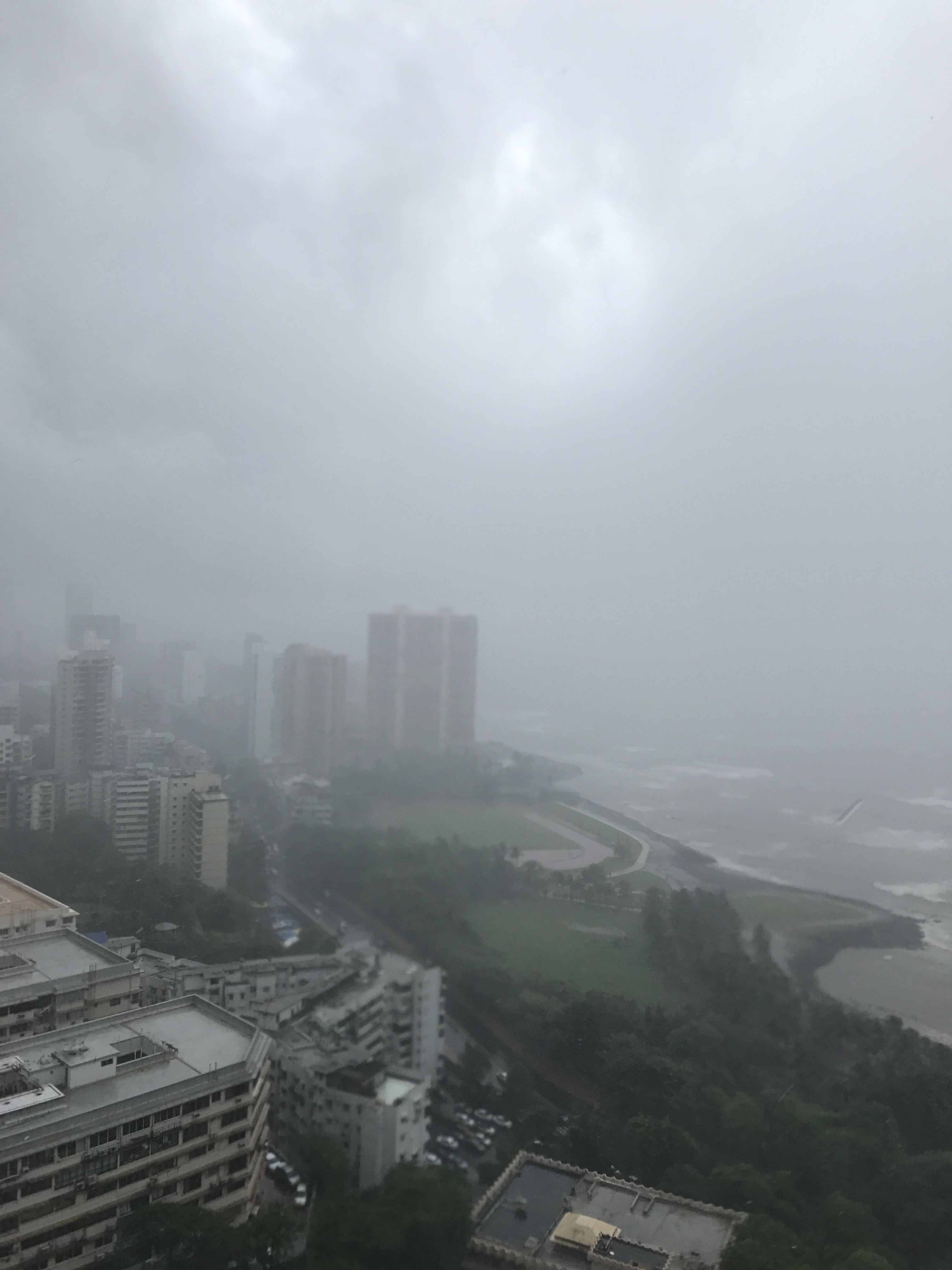
Life is like the weather today. Gloomy and rainy in the morning but bright and sunny in the evening. Nothing is permanent. Not even the weather on a single day. 

Let us believe in ourselves and our good deeds and leave the rest for time to heal.

S Ramesh Shankar

Decisions are contextual


All our decisions in life are contextual.  I have sometimes wondered as to why we feel bad when we need to review a decision we have made sometime in the past in our personal or work life.  In my view, all our decisions are the best we could have made in the circumstances we made them.  As time passes, the context may change or new awareness may come in and we may feel like reviewing our own decision.  Although, we may be convinced that the decision we made may have been right at that time and needs a review now, we are generally reluctant to do so.  The reason for the same in most instances is either our ego or our inability to recognise the change of context.

Let us try to understand the same from two situational contexts in our personal and professional lives. I have experienced this both in my personal and professional lives.  In the personal context, I had bought a house and had decided to settle there post my retirement.  I was staying there for two years and suddenly my wife realised that the house was not Vastu (Indian architectural science) compliant.  I took a stand that we had decided to buy it only a few years back and never in the past considered Vastu as a criteria to buy a house.  I decided not to sell it and buy another house for this purpose.  However, two years down the line, I also read a bit of Vastu and understood the benefits of its compliance and decided to sell it and buy another one.  The context had changed since I was more aware and now I was anyway shifting from Bangalore to Mumbai to change my job so it facilitated my decision easily.

Now let us look at a work situation.  We decided to specify the type of mobile phones and the price limits, which could be allowed for different categories of employees.  As the market environment changed within two years, the models of mobile phones available in the market multiplied and the prices crashed.  While all of us were convinced that our policy on mobile phones was redundant, we were reluctant to review the same since we had taken that decision after a detailed analysis.  It took us some more months and discussions before we reviewed our own decision and agreed it make it more flexible.

These are just two simple examples.  The fact is that all of us take decisions every day.  Our decisions are always based on the best available information and judgement of ours.  As time passes, the context may change and we may become aware of new circumstances and hence we could review our own decisions.  However, we are reluctant more due to our own ego issues, our reluctance to move on and accept the change of circumstances or sometimes “who will bell the cat”attitude.  It’s like a chef not keen to change the temperature of the oven after summer is over and winter sets in.  Even our mothers did not hesitate to do so.

Let us realize that all decisions are contextual and may have an expiry date.

S Ramesh Shankar