Everyone has a bad day…


I was watching a reality music show on television for kids.  In my view, the best participant did not do well that day.  I felt it was ok.  After all, everyone has a bad day and so did this young boy.  It was a good lesson to learn.  Even the best have a bad day.  The only difference between the best and the rest is that they learn and bounce back fast.  We as normal mortals take our time to spring back to normal.

If we look back, it is true in every walk of life.  The best in the class may not top the class every single time and may slip once in a while.  The best in a game of soccer may not score every single time they play the game.  The best batsman in cricket may not score a century every time she or he walks into a match.  So, it is in life.  We may not have the best of time, all the time.  This does not mean, we do not give our best and put our best foot forward all the time.

The best sportsman always put in their best effort.  They are not rattled even if they don’t win a game or score a goal in a match.  They are willing to realise their mistakes and learn from them.  On the other hand, many of us tend to give up even before the game is over.  It is like the spectators in a match.  If their favourite team does badly in the first half, many of them leave the ground even before the match is over.  On the other hand, the players do not give up till the last whistle is blown.

I have seen in real life that champions never give up.  Whether it is in academics, sports or even at work, the best never rest.  They may fail once in a while.  After all, they are also human like all of us.  But their resilience is worth emulating.  They spring back many a time even before the match is over.  That is why many a time it is said in sports that form may be temporary but class is permanent.

Let us try to understand this from the prism of work.  The best performers may fail in a project.  But they are keen to learn from their mistakes and then excel in their very next project.  Many of us tend to get depressed and down and out after we fail in an assignment.  It takes courage to accept defeat and learn from it.  It is better to learn gracefully from defeat than to jump in arrogance after a victory.

It is interesting to note that failures teach you better lessons than success.  It is up to us to look back and reflect on our failures with an intent to learn from it.  We want to bury the past and race towards the future.  The lessons of the past may help us lay the foundation for the future.  It is up to us to learn from it and assimilate them in our life. If we do not learn from our past mistakes, the future errors may be graver and harder to correct.

Life gives us enough chances to err and learn.  It is up to us to realise that it is fine to fail once a while and learn from it.  In today’s competitive world, many of us including our parents, family and friends find it difficult to encourage us to experiment and fail.  The best leaders give you the space to try out new things.  They are not worrried about failure as they realise that these are the stepping stones to success.

As in the photo above, the best sculptors possibly fail a few times before they produce a thing of beauty for all of us to admire.

Let us look back to move forward.

S Ramesh Shankar

Comparisons


All our joy and sorrow in life is due to comparisons. We tend to look at others to feel happy or sad. Why does this happen ? I do not know but it is most often a reality in our lives. We tend to compare ourselves with our siblings as a kid and then our classmates in school and college. Then may be our colleagues at work.

I used to live in a city, where people bought a car or a house bigger than what their neighbour had rather than what they needed. This was because the societal norms in that city was to live by comparison. Imagine you buying something in life not because you need it but because your neighbour has it.

How do comparisons affect us ? It makes us less tolerant and also tends to create a complex within us. We either think we are superior or inferior to others. This leads to negative behaviour, which in turn impacts our relationships with others.

What do we do ? How can we live without comparing ourselves with others ? Yes it is possible. We could compare ourselves with people having more troubles than we have. We can compare ourselves with people who are less fortunate than us and this will make us grateful to God. We can compare ourselves with people who are better than us in behaviour and relationships and learn from them.

However, in reality we do not do that. We tend to compare with those who have more than us. This leads to jealousy and in turn leads to undesirable behaviour and actions. Thus leading to both physical and psychological illnesses, which definitely can be avoided.

Another positive way to compare is to do it with oneself. How was I when started my career ? How am I today ? How was I when I was a child and how am I today ? All these comparisons will make us feel better and more grateful to life and God.

We can learn from the sportspersons from individual sports. They prefer to compete with themselves than with others. This is healthy and absolute. It energises them to do better and excel every single time without losing any energy. They remain positive in life and are always focussed on what they want to achieve.

As in the photo above, two artisans do not compare their pieces (boats) of  art, as they create it.  Each is a masterpiece in itself.   They always try  to do better than what they have created previously.  This is the lesson we need to learn in life.

Even the most successful people in all walks of life tend to excel by bettering what they have done before. They are not feeling bad of others around them, who have done better than them. They learn from the best but always set high standards for themselves in absolute rather than relative terms.

Let us learn to live life on our own turf from today.

S Ramesh Shankar

Humility versus Arrogance

IMG_1101
Life is full of choices. One of the choice we need to make is between “Humility” & “Arrogance”. It is not that the choice is between black and white. It is most of the time grey. While most of us like to be humble and modest in our day to day behaviour, its the effectiveness of arrogant people around us, which tempts us to review our choice. We sometimes feel that humble people are ignored and walked over. On the other hand, the arrogant ones are noticed and people do listen to them.

Many of my colleagues at work at all stages of my career have always expressed this dilemma in their life. Is it a good idea to be humble and ignored sometimes or be arrogant and get noticed always. I do not have a ready made recipe. But can share my learnings from life and its consequences. One can get away with arrogance as long as you are seated in a position of power in family, work or society. The day you give up your position, you are neither respected nor remembered.

If someone was to ask you to recall your favourite teacher in school, you would always remember the one who was kind to you and grounded. We never remember people who were pompous and arrogant in their behaviour. Life is no different. While it is true that sometimes arrogant behaviour may appear more effective in getting things done in the short term, nobody will every cherish your company in the long term.

Let us examine this phenomenon from various angles. The first angle is that of history. We adore people who were humble and generous in their thought and actions. We do not like to study about the arrogant and pompous types. This is not because we know either of them from the past. It is more because we would like to have role models who are modest and not abrasive in their behaviour.

If we look back at our work life, we will always cherish to work with people who are simple, modest and willing to learn and share with others. We may sometimes feel that they are not assertive enough but their humility bowls us over. If you are humble does not mean that you cannot be assertive. It means that you know where your feet are and are always willing to learn from your own mistakes. Pride is like anger. It can only destroy you today and tomorrow. On the other other humility is like honey, it will always make you a sweet person to adore.

If we look at our family and friends, we always like to be in the company of those whom we respect. We respect those who are our role models. Our role models are people who are grounded and kind. People who are humble will always be good listeners and effective coaches. Their actions teach others. Even if they do not actively coach anyone, others learn even in their company every day.

On the other hand the arrogant people spread venom. They may appear very aggressive and effective in the short term. But they spoil all their relationships in the long term. Their day to day behaviour repels people around them. Everyone tries to avoid such leaders. If given a choice, team members would prefer to join other teams rather than suffer in the hands of an arrogant leader.

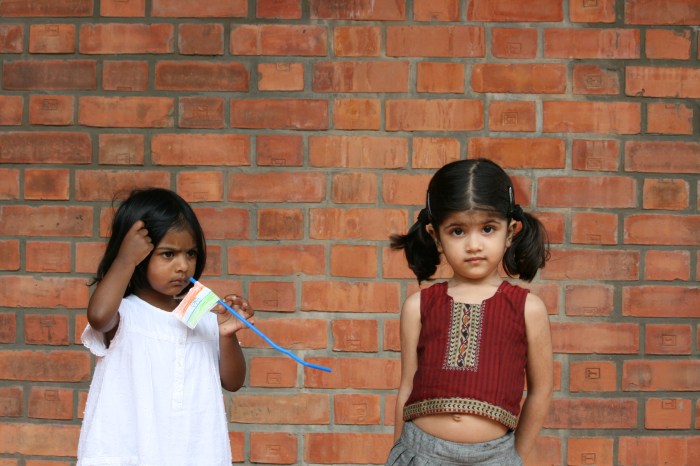
The best thing to learn from kids is that they do not have to make a choice. They are natural in their disposition as in the photo above.

It is true that sometimes it may appear that humble leaders may look less effective. However such leaders are always better in the long term. Their leadership is sustainable and focussed on the future. They would never cut corners or look at short term benefits. On the hand, they may sometimes be willing to sacrifice short term gains to create long term sustainability of their people and organisations.

What would you prefer ?

S Ramesh Shankar