Experience speaks..


In today’s world, some people ask – is experience valued ?  It may not be an easy answer to this simple question.  I am reminded of an incident almost thirty two years back.  My father was admitted with renal failure in the ICU of a hospital in Chennai.  The cardiologist, who used to examine my father examined him for two minutes,look at his pulse, checked his bp and would charge consultation fee of Rs. 100 per visit.  My monthly income at that time was around Rs 2000 .  This meant the consultation fee would be more than my monthly income every month.  I used to curse him for fleecing  a poor helpless soul like me.  My father recovered and was discharged.  I thanked God and returned home with my father.

Then after three weeks one day my father almost got choked in his throat while having his dinner.  I panicked and called in the same doctor on phone since it looked it were the last moments of my father alive that day.  However, the same doctor patiently advised me to lay my father on a bed and raise his legs with pillows.  He said that he will be fine and then I could bring him back to the hospital.  I did that and he miraculously became ok.  He later told me that his bp had gone down and raising his legs ensured flow of blood to the brain and he regained consciousness for me to get the breather to take him back to the hospital.  This incident taught me how valuable experience is in life. The same doctor I considered as a life saver of my dad and almost God sent.

In today’s work place, many employees feel threatnened the moment they cross fifty years of age.  Some employers also feel people over fifty may not be very useful and work on voluntary exit schemes to optimise this category of the workforce.  However, neither of these are necessary if we plan the right way.  It is true that as we grow old, our competencies may become redundant.  It is upto us to keep ourselves updated and upskilled.  If we do that and we are the best in whatever job we do, no employer will even dream of losing us.  On the contrary, if we live in the past and want to drive the car using the rear view mirror only rather then the windscreen in front of us, we may become obsolete sooner than we think.

So, the reality is that experience has to speak for itself.  It is like the doctor who was in his fifties then taught me how valuable experience is to save lives even on the phone.  Experienced managers can be great mentors and coaches.  One generation has to hand over the baton to the next.  It is upto us to be the beacon of light in the organisation rather than the dimming candle light.

Organisations gain from the wealth of the experience of her employees.  No organization can survive with material assets or cash in the bank.  It is the capabilities of employees which is invaluable.  It is the experience of the seniors which becomes the competitive edge in the market place.  However, if the seniors live in the past and are not in tune with the times than the future will not take them along.

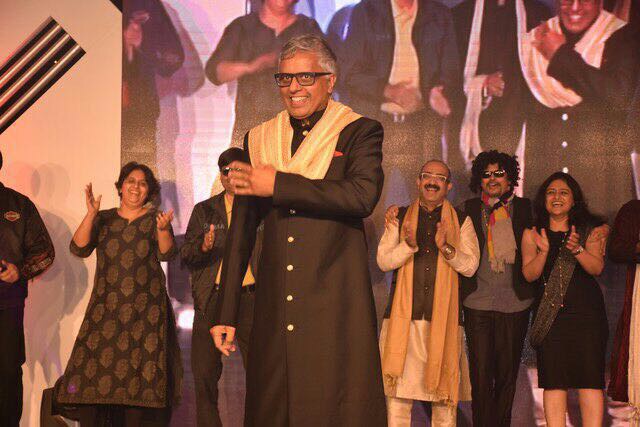
It is like in the picture above, you should be willing to walk the ramp along with the younger generation if you are in tune with them.

Do you think experience speaks ?

S Ramesh Shankar

Mirror


I wonder many times as to how my behaviour with others will impact me.  I have seen in my life and career that many people get away with rude behaviour.  Sometimes people in power and authority think that have a right to behave rudely.  This happens both at home, work environment and society. Let us try to explore why this happens and what is the impact. 

At home, as I grow into an adult and become successful in my career, I tend to believe that I can boss around in the house.  I tend to take my family members for granted and sometimes even my parents.  This further makes me short tempered and unpredictable.  In some families, irrespective of both husband and wife working, there is a sense of superiority in either of us.  We are intolerant to the success of the other person and live in a make believe world. We do not realise how our behaviour as adults impacts the psychology of our own children.

If we move to the work place, the situation is not very different.  As we grow in the organisational hierarchy, we tend to believe we become demi God.  We treat our colleagues with disdain rather than human beings.  We tend to show not enough respect to people down the hierarchy.  It can result in simple courtesies not being extended to our colleagues.  It could be like not wishing back to our colleagues, when they wish us.  It could also mean not listening to junior colleagues or dictating our way through key decisions.

This tendency reflects in societal behaviours too.  People in positions of power whether in organisations, politics or other institutions tend to get egoistic.  They take everyone around them for granted.  Pride and ego dominates their behaviour.  They get away with this sort of antics as long as they are in power.  The moment they lose power, they become cowards and they do not realise how much they have hurt people till they get hurt themselves.

In all these situations, what is common is that power and behaviour seems to be directly correlated.  As power seeps into the human body, our behaviour tends to get from bad to worse.  So, it is up to us to realise this change and keep ourselves grounded and humble.  You may get respected as long as you wield power.  But, it is critical to remember that people respect your position rather than yourself.  In real life,  people respect those with character and humility.  Your words are more important than your deeds.    

All these situations signify that as parents, leaders or citizens our behaviour impacts our future generations.  Our words and actions determine our character.  Our character determine our actions.  Our actions trigger changes in society.  It is up to us to behave in a way we want our future generations to do.  Our behaviour reflects and impacts the behaviour of the younger generation.  It is like our images are reflected in the mirror every time we peep into it.

Let us behave the way we want others to do with us every day.

S Ramesh Shankar

Competition or Co-optition ?


We live in a competitive world.  The competitive spirit starts from our childhood.  Our parents tend to compare us with other kids in the same school.  Many a time, we are told why our peformance in academics cannot be like our neighbour’s daughter or son.  We are asked why we cant compete in sports like our friend’s kid and so on.  Not a single day in school or college goes without our performance being compared with someone else.   Why this competition ?  We are not born in this world with our neighbour’s son or daughter nor will we die with our friend’s children.  Then, why do we do compete and make our life miserable every day.

If we move beyond children, even adults tend to compare themselves in everything.  If a neighbour buys a new TV, it creates enough ripples within our home.  If a friend buys a car or house, we want to outbeat them in size and value of house and car.  Our value is based on the size of our house and car and not on the size of our heart.  We want to possess more wealth than our siblings and our friends.  We do not compete in giving back more.  We are not willing to learn from the best habits of our neighbours.

Why this competitive spirits seeps in our life ?  I may not have an answer but have many questions to ask myself and my readers ?  Why do our parents want us to always compete with our siblings and our neighbours and friends ?  Why do we want to possess more wealth than our neighbours and friends even though we may not need all of them in our life time ?  Why are we willing to sometimes sacrifice our personal values to outbeat our colleagues at work ? 

Many a time we justify our animal spirit of competitiveness by claiming that there are limited resources in this world and we have to be ahead of others in grabbing them.  In my view, there are unlimited resources in the world for us to be successful.  It is the limitation in our thinking, which makes us competitive.  We limit our thinking and that reflects in our behaviour.

The workplace behaviour is more competitive.  We die at the workplace virtually competing with everyone around us.  Our spirit is not to learn and grow but to compete and die in our careers.  While, it may be a good idea to be the best in whatever you do, it should not be at the cost of other colleagues at work.  It may be a good idea to compete with oneself in whatever we do in life.  We could be the best by being the best in work and in our behaviour.  

There is enough in this world for all of us.  Co-optition may be a better word.  We can work along with our competitors for jointly creating a better world.  Similarly, we can work with our colleagues to do our job better and learn from one another.  We can also learn from our siblings and support each other to succeed.  We learn more by sharing with one another rather than keeping knowledge to ourselves.

If at all there is an urge to compete, let us compete in working to create a happier world.  Let us compete to live together as a bonded family.  Let us compete with other countries to foster peace in the world.  Let us compete to eliminate pollution in the world.  Let countries compete to eradicate poverty in the world.  Cooptition may replace competition from our dictionaries.

In the photo above, friends are singing together to create a chorus rather than competing with each other to  outbeat each other.

Let us learn to live along with each other and create a world of our choice for our future generations.

S Ramesh Shankar