
Instant Gratification


We live in an era of “quick fixes” for everything in life.  We want “ready made food” in the kitchen to brokers to do all our jobs at half the time to finishing an educational course by hook or by crook.  We are impatient for results and are least bothered about the process.  On a lighter vein, at least God has ensured that we have to wait for 9 months to have a child.  If we could influence that, we would have tried 2 minute babies like noodles !  Children look for instant gratification in everything they do and that is understandable.  However, as adults instead of learning the good things from children, we carry it in on in our life and want instant results for all our actions. 

Why are we in a hurry today ?  Is it because of the competitive landscape around us ?  Is it because of the limited resources available to us in the world. ?  I am not very sure.  But, let us get to the root cause of the issue.  We all go through the same education system, live in the same society and have the same opportuities and resources.  We want to take more than we give back to society.

If we look at the competitive landscape around us, we find that this is injected in our blood right from childhood.  As children grow up in a community, parents induce competitive behaviour in us.  We have to be better than our neighbours in everything we do.  We spend more time in tuition classes than even in the school classrooms.  We have to learn sports, music, art and other hobbies irrespective of our own intersts.  All this is encouraged by our own family and friends. Then, how can we blame the society around us.

If we move to the work place, we compete with everyone around us and want to establsih our superiority by every possible action at our command.  Our performance management systems are based on differentiation and relative assessment of performance.  We blame the bell curve for our irresponsible behaviour.  Are we justified in our actions.  I am happy that many organisations today are giving equal weightage to “What” & “How”of performance.  We not only are rewarded for the results per se but how we accomplished those results.

In many cultures, your value is measured by the size of your car and house and not by the size of your heart.  Material wealth is valued much more than mental, physical or emotional wealth.  It is this orientation in society that may have led us to this state of affairs.  We are keen to plunder the wealth of the society and nature around us but least bothered about how we can give back.  We are not much concerned about our future generations.  While technology has helped us lead better lives, we have not used technology to better human kind.

Whom should we blame for this state of affairs ?  We have to blame ourselves. We need to reset our buttons.  It is time for Control + Alt + Del in our life.  We need to re discover our priorities.  We have to instil excellence in our children as a value but not at the cost of other children.  We have to give back more to society than we take.  We have to make individuals care and share in organisations to create collective happiness.

Let us restart today.

S Ramesh Shankar
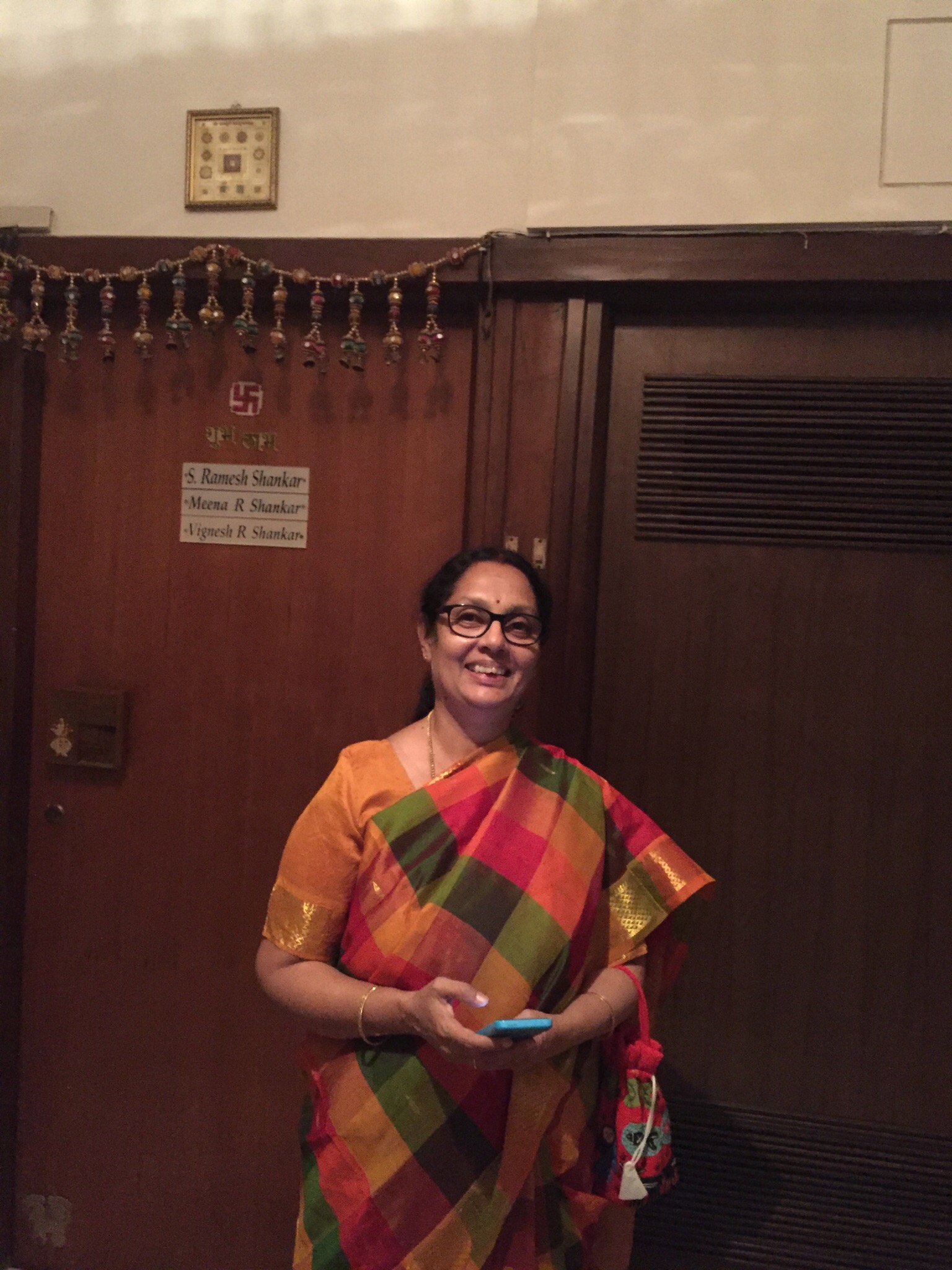
Saluting women in my life


“Woman = Man”, Woman > Man or Man > Woman”. This is a debate, which may be on for centuries. In my view, this may not be the best way to celebrate “International Women’s day”.  

Organisations celebrate this day by organising functions or special events for women to salute them and recognize their contributions to everyone. This is more of a ritual and quickly forgotten as the calendar turns to March 9th every year. 

I have been asked many a time as to what could be some innovative ways of celebrating this day. I would prefer to spend the day educating the men amongst us as to how we could recognize the women in our life and be grateful to them for our successes in life.

Most men including me possibly do not realise the invaluable contributions of women in our life. It starts the day we are born, when they go through all the pain to deliver us as a normal child on earth. From then on, as a mother, sister, spouse or friend they nurture and care for us to make us successful in every step of our life.

It is today for us to realise the value of their contributions, introspect and commit to support them every day to their success in life. It could be small things in life but will go a long way in respecting and rewarding them every day of our lives. The small steps could be like dropping a kid to school, helping in the kitchen, getting groceries for home or consulting your spouse in every key decision of your life.

At work, it could be supporting your colleagues to succeed, projecting the successes of women colleagues, when they deserve it and treating them with dignity and respect.

As in the photo above, my spouse has contributed immensely to all my successes in life.  I am ever grateful to her and commit to support her in every possible way I can to make her successful in her life.

I salute the women in my life by rededicating my commitment to support, respect and recognize the women in my life, who have tirelessly contributed to what I am today.

One sure shot way of living your commitment today could be to express your gratitude to the women in your life, who have made you what you are today.

What is your innovation for today ?

S Ramesh Shankar 

#women, #respect, #gratitude

Patience with kids


Child is the father of man is an old saying.  Most of us as kids always complain that our parents do not listen to us.  They do not have the time to answer all our inquisitive questions.  They are busy in their own world and tend to lose their cool when we pester them with our queries.  As a child, we feel each of our questions are closest to our hearts and we feel hurt when they are not answered.

On the other hand, as we grow old and have our own kids, our world view changes.  When our first child is born, we thank God for the blessings showered on us.  Our child is the most beautiful in the world and we commit to take care of them to the best of our ability.  As the child grows up and speaks the first word, we are elated.  We encourage them to speak and we are all ears to every conversation of theirs.

Now the kid grows up and has all the questions under the sun.  As they grow up, they keep testing our patience with endless questions challenging us every day of our life.   We end up asking God why did he bless us with a kid, who cannot stop asking us all day and night.  We forget that our life would have been silenced without a kid in our lives.

Now our kid grows into an adolescent.  The rebellious behaviour tests our patience to the limits.  We are told by elders, family members, friends and colleagues that we do not know how to parent our adolescent kids.  We need to lead them by example and restrain ourselves.  It may be easier said than done.  It is one thing to advise others and totally another to practise it as a parent.  All those who have gone through this know the definition of patience in real life.

Now our child grows into an adult and leaves home.  We grow older and our own kids do not have time for us.  Life comes a full circle.  We feel distressed that our kids do not talk or listen to us.  We eagerly wait for our kids to call us or visit us once in a way.  This is the way life progresses and we need to learn to live it that way.  All of us go through life and the earlier we realize the changing roles and needs in different phases of life, the better for us.

Now when our kids lose their patience at our persistent questions, we wonder why are they so impatient.  Why do they not respect us ?  Why cannot they find time for us.  Why are they not grateful to us for all that we have done for them.  So, again, life turns upside down.  We find ourselves in the same place as our kids were when they were young.  They had all the questions in the world and we neither had the time nor the patience to answer them.

It is this realisation that life is a full circle and each of us go through the same tests of our patience at different phases of life is a reality.  We need to learn to enjoy the curiosity (impatience) of kids, the adrenalin ( rebellion) of the adolescents, the maturity (silence) of the adults and the wisdom (intrusiveness) of the elders. 

Let us start today.

S Ramesh Shankar