Our past may not determine our future…

Adapting is the key to the future

One of my ex colleagues called me up to check on how to deal with the current crisis. I told him that “ I don’t know” and that’s the truth. Although I have spent almost four decades working for the best corporations of India and the world, I have not come across a crisis of this type.

This is symptomatic of what the future has in store for us. Our future challenges cannot be solved based on past experiences. Our past may not be able to help us to solve the complexities of the future. It is as simple as the seasons in a year. In the past, we could predict, summer, winter, monsoon, spring and autumn. We could also predict when it will rain in our region. Now with climate change, nothing is predictable. It snows in Middle East and its hot in Europe, which nobody would have even dreamt.

Our life is not going to be very different. We may not be able to anticipate the future. The best of corporations with their intelligent employees and the best of artificial intelligence cannot anticipate the future. Someone has beautifully said that “ The future has a habit of suddenly and dramatically becoming the present..”. That is what is likely to happen. Who imagined a 21 day lockout in a country like India ?

Economic power or technological power may not be able to enable nations to find solutions for human problems. We can find a solution to a problem provided we understand what it is and how it going to impact us. What the current Covid crisis has taught us is that we neither can predict the future nor anticipate it. We have to adapt to the future as it evolves in front of us.

One of things we always talk in corporates is adaptability. It is this ability to adapt to change,which could enable organisations and individuals to cope with it. Even though we may not be able to anticipate or predict the change, we can develop the ability to adapt to it and steer it to our advantage.

All of us may have gone through multiple crises in our lives. Some of us manage it well and get over it fast and move on. While others may get sunk by the crisis and get stuck for the rest of their lives like sinking in quicksand. They can neither pull themselves out nor help others stuck in a similar crisis. The successful people find ways and means to adapt to the crisis and move on.

Organisations are no different. They are like a summation of individual behaviours. That is what we call the organisation culture. HR specialists and managers need to develop this adaptability as a special skill in their teams. If members panic and get sunk, then the organisation may never survive and thrive.

The other quality one can think of is Resilience. This is our ability to withstand a crisis without getting ruffled too much and bounce back. While we may not be able to anticipate a crisis of the Covid type even in the future, we can show resilience and bounce back sooner than others. Organisations which bounce back faster than their competitors are the ones who will succeed and not the ones who keep analysing what went wrong and how to deal with it in the future. This is because the future is no longer going be a reflection of the past.

As individuals, one great lesson this crisis has taught us is to be close to nature. Everything we have done to move away from nature has harmed us. The more we cut forests, build on lakes, dump garbage in the oceans, the more we may have to pay in the future. Individuals in the past fought for survival and growth. On the other hand, individuals in the future will fight for clean air, drinking water, healthy food and so on. These may appear basic today but may become extinct tomorrow if we do not get back to respect nature as we did in the past.

I am a born optimist. I believe this crisis will wake up the world forever. As nations, communities and individuals, we will be more conscious of our duties and responsibilities than in the past. We will create a future of our choice and try to evolve it to become predictable again.

Time to start is today. Let us as individuals commit to make one change in our personal lives. It could be as simple as carrying a cloth bag for all our purchases rather than dumping single use plastic, which is used as carry bags even today. It is not for governments to mandate anymore. It is for individuals to change our own behaviour.

As in the photo above, if you are rowing a boat in the ocean, adapting to the waves will be the key to success as a boatman can never anticipate the wind or waves on the sea.

S Ramesh Shankar

28th March 2020
Park & Purpose

IMG_2164
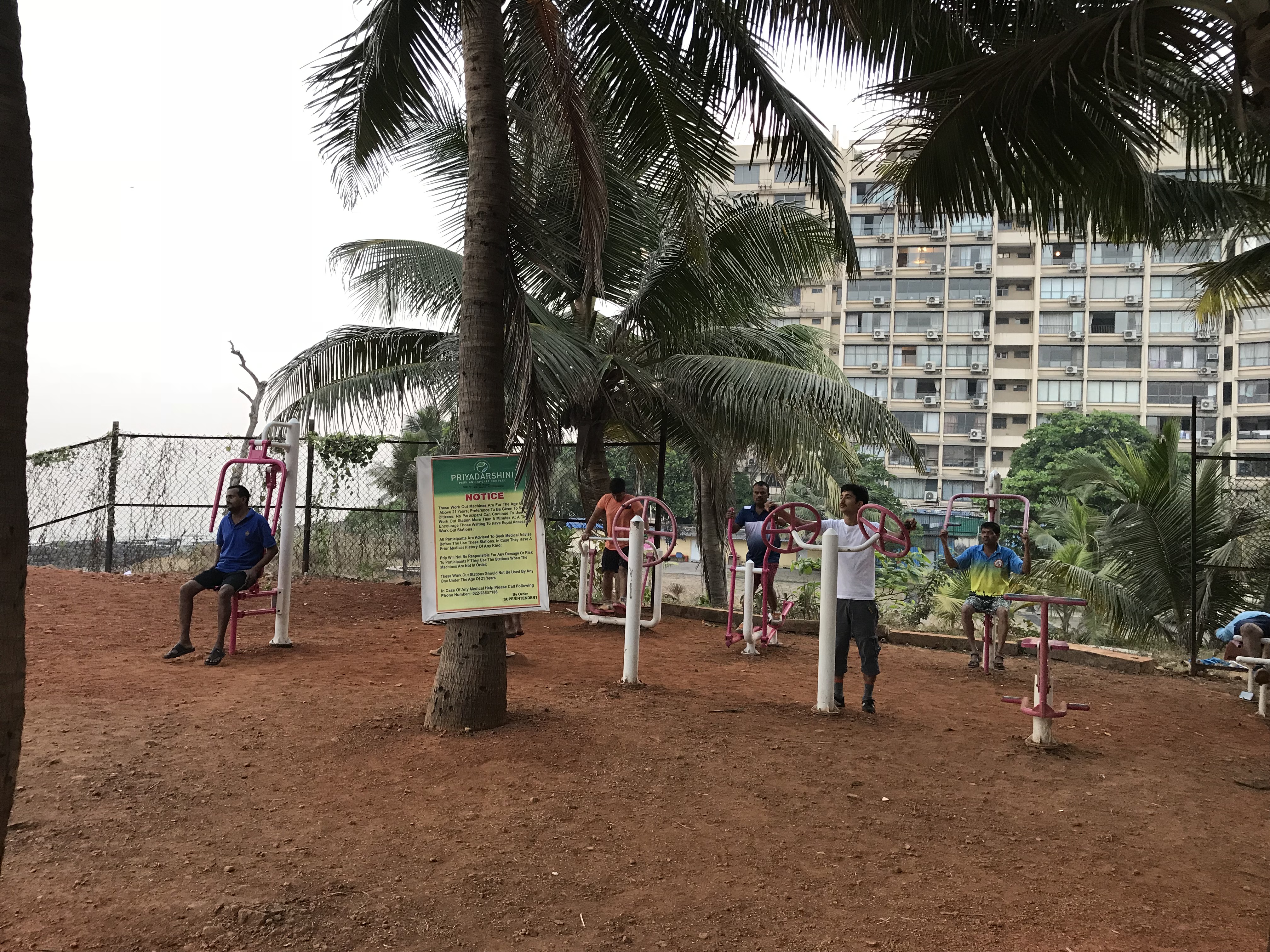
Each of us may have a different purpose to visit a park. Some of us go to the park to exercise. It could be a walk, jog or practise in an open gym as in the photo above. While others may go to play or just to relax and rejuvenate themselves.

So each of us may have a different goal to visit a park and it is fine. I have been visiting a park for the last seven years for my morning and evening walks. Apart from walking, it is chat time with my spouse. We walk together and exchange our thoughts, beliefs and stories as we have experienced the previous day.

As we stroll around the park, we can see kids playing and sharing joy. Kids do not come to the park to maintain their fitness. It is sheer entertainment for them and that is the way it should be. They may be looking forward to meeting their friends and teasing each other after a hard day at school.

On the other end, we see young adults meeting and mating at the park. It’s a beautiful park along the sea shore and ideal locale for romance. So as the sun sets, we can see lovers in full glory. They are oblivious of the world around them and that is how all of us have experienced love as we grew up as adolescents and young adults.

Then we see senior citizens strolling around the park in groups. They play a game of housie, have some snacks together and share their stories with each other. The park is a place to meet and seek good company for them. Their world may be lonely at home and hence the park provides an ideal place for socialising.

As you go around the park for your walk, you meet people from different age groups and in different colours and costumes. It is fun to admire the energy and enthusiasm of different groups. Of course, you also meet people who have entered the park with no stated purpose. They may be just admiring nature or enjoying the sunset all alone and why not.

Another interesting dimension is that a public park brings people from all religions, caste, creed, nationalities and social status together. There is no discrimination and each one has the complete freedom to enjoy the park the way she or he desires to. Even observing people of diversity in the park is great fun.

I am not sure even a religious institution like a temple, church or mosque can provide you with such a beautiful social setting. It is indeed a gift of nature that a park brings people together with no boundaries or discriminations.

Let the parks bloom and all people visiting them fulfil their purposes.

S Ramesh Shankar

Art of weaving…

IMG_1600 2
We need to learn a lot in life from nature. One of the things I have admired in nature is the ability of birds to weave their own nests. Most of them do not have the resources near them but they still succeed. They gather resources from wherever it is available without cribbing about its non-availability. They then gather bit by bit and weave their nest in right earnest. Their nest is pulled down by greedy humans and other animals around them but they do not give up.

On the other hand, what do we do as human beings ? We find every excuse under the sign to complain. If at home, we blame our parents for discrimination and try to avoid doing any work at home. At school, we complain to our teachers of lack of time to do our home work or any projects or assignments. At work, we innovate ingenious reasons to delay a project or not deliver our commitments on time.

If we are willing to learn from the birds around us, we can weave our life to success. We will never crib about resources or lack of it. We will always find a way to locate alternate ways to solve an issue. We will garner the support of every member of our team to support us to succeed. We will share success and failure with equal measure. We will collaborate to excel. We will achieve our goal irrespective of the circumstances or the environment around us.

Another important lesson we can learn from the birds is to never give up. I have seen the birds’ nest is destroyed by insensitive humans or even by the travails of nature. The birds are not wasting their time in finding out why it happened and who can be held responsible ? They seem to focus on rebuilding their nest so that they are ready for the future. We tend to focus on fixing the blame rather than garnering our energy to prepare for the future. What is the use of crying over spilt milk is the message the birds give us loud and clear. Isn’t it worthier to spend time to find new sources of milk for ourselves.

Another dimension of learning from the art of weaving is that every problem in life may not have the same solution. No two birds build the same type of nest. Every bird weaves a nest, which will best protect its offspring’s from the travails of nature. It also knows the way nature is likely to behave and hence reinforces the nest with necessary materials to support it. Life is no different. Every challenge in life is different and we need to be creative to finding an innovative way to solve it. We need to course correct our solution mid way as the dimensions of the challenge changes along with way.

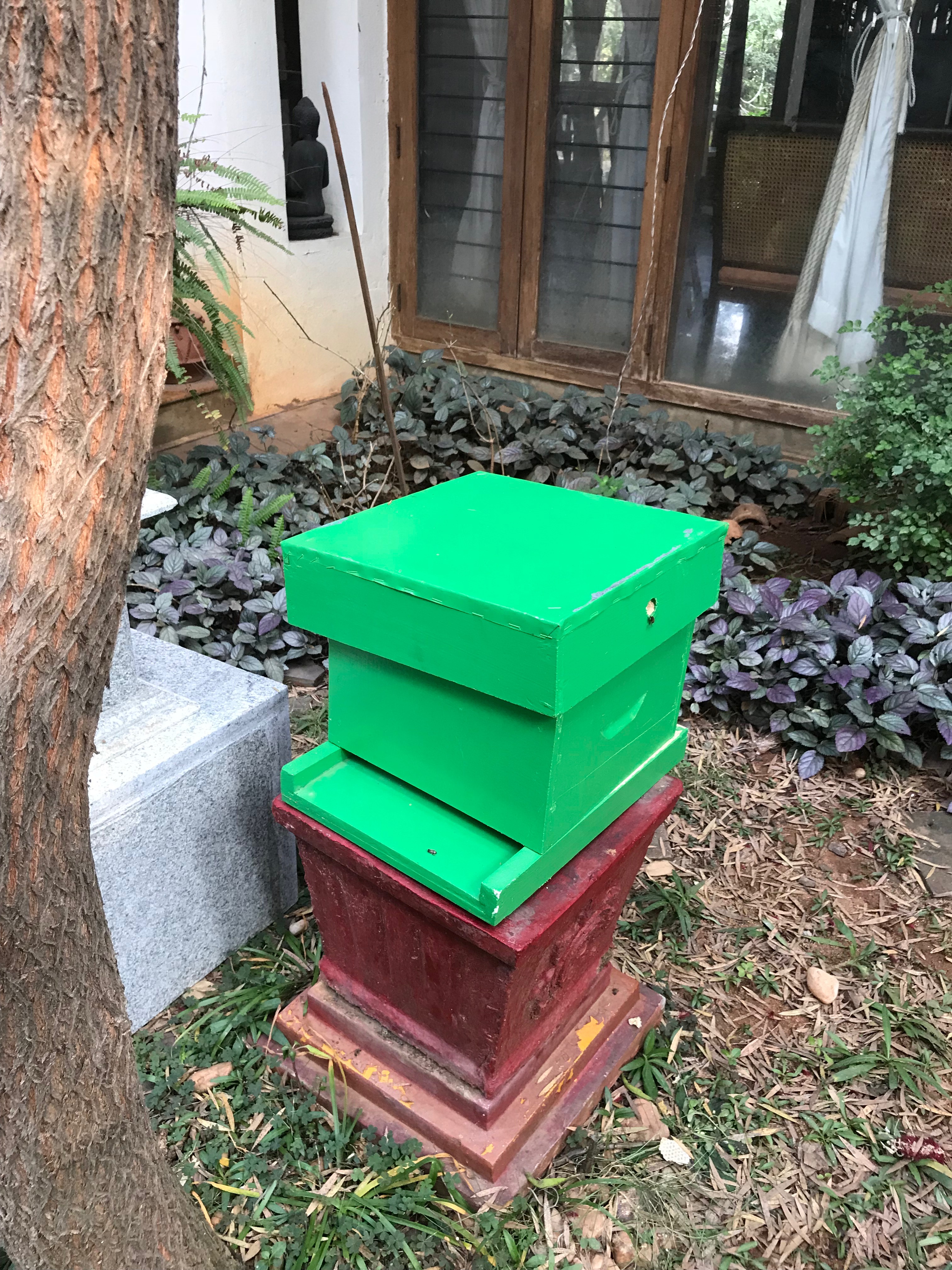
As in the photo above, the honey bees are another fascinating creature to teach us the art of weaving. Their honey combs are one of the most well designed under the sun. They are built to ensure maximum safety and there is clear division of labour. We can learn from the honey bees how to optimally use resources to build our life’s nest. We need to learn to benefit from the strengths of each team member so that the collective output is the best we can achieve in life. It is not worthwhile to trying everything all alone.

Life is a complex phenomenon. We need to learn to weave our life like the birds beautifully do every day. We need to be creative, collaborative and never give up irrespective of multiple failures. This is the learning birds give us. We need to grab it with both hands and make the best utilisation of limited resources available to us. We need not complain as God has given enough for all to live, survive and grow.

Lets learn the ‘the art of weaving life” from the birds around us.

S Ramesh Shankar