Art of weaving…

IMG_1600 2
We need to learn a lot in life from nature. One of the things I have admired in nature is the ability of birds to weave their own nests. Most of them do not have the resources near them but they still succeed. They gather resources from wherever it is available without cribbing about its non-availability. They then gather bit by bit and weave their nest in right earnest. Their nest is pulled down by greedy humans and other animals around them but they do not give up.

On the other hand, what do we do as human beings ? We find every excuse under the sign to complain. If at home, we blame our parents for discrimination and try to avoid doing any work at home. At school, we complain to our teachers of lack of time to do our home work or any projects or assignments. At work, we innovate ingenious reasons to delay a project or not deliver our commitments on time.

If we are willing to learn from the birds around us, we can weave our life to success. We will never crib about resources or lack of it. We will always find a way to locate alternate ways to solve an issue. We will garner the support of every member of our team to support us to succeed. We will share success and failure with equal measure. We will collaborate to excel. We will achieve our goal irrespective of the circumstances or the environment around us.

Another important lesson we can learn from the birds is to never give up. I have seen the birds’ nest is destroyed by insensitive humans or even by the travails of nature. The birds are not wasting their time in finding out why it happened and who can be held responsible ? They seem to focus on rebuilding their nest so that they are ready for the future. We tend to focus on fixing the blame rather than garnering our energy to prepare for the future. What is the use of crying over spilt milk is the message the birds give us loud and clear. Isn’t it worthier to spend time to find new sources of milk for ourselves.

Another dimension of learning from the art of weaving is that every problem in life may not have the same solution. No two birds build the same type of nest. Every bird weaves a nest, which will best protect its offspring’s from the travails of nature. It also knows the way nature is likely to behave and hence reinforces the nest with necessary materials to support it. Life is no different. Every challenge in life is different and we need to be creative to finding an innovative way to solve it. We need to course correct our solution mid way as the dimensions of the challenge changes along with way.

As in the photo above, the honey bees are another fascinating creature to teach us the art of weaving. Their honey combs are one of the most well designed under the sun. They are built to ensure maximum safety and there is clear division of labour. We can learn from the honey bees how to optimally use resources to build our life’s nest. We need to learn to benefit from the strengths of each team member so that the collective output is the best we can achieve in life. It is not worthwhile to trying everything all alone.

Life is a complex phenomenon. We need to learn to weave our life like the birds beautifully do every day. We need to be creative, collaborative and never give up irrespective of multiple failures. This is the learning birds give us. We need to grab it with both hands and make the best utilisation of limited resources available to us. We need not complain as God has given enough for all to live, survive and grow.

Lets learn the ‘the art of weaving life” from the birds around us.

S Ramesh Shankar

Heritage

“A thing of beauty is joy for ever” said Keats. Every time I pass through a heritage building, I am struck with the beauty of the same. I cannot take my eyes off it and wonder why modern day architecture cannot do the same to me. Today design and architecture has evolved and technology has enabled the unimaginable to be imagined and created. In spite of all these developments, I am yet to come across any modern architecture which can be more stunning than a heritage building.

I sometimes wonder how our forefathers could design, develop and create something out of the world and make it last for centuries. Even today if you visit a building or monument around the world you will notice that the older the building is, the stronger it is in design and execution. I recently visited the state residence of the Governor of our state. It is a huge mansion built almost a century back. When I visited the campus I was amused to know that buildings built in the last fifty years need renovation but the ones built over a century back or intact and in great condition.

“Old is gold” is another common saying. I do not know if the earlier generations spent more time in planning then execution, which has created heritage buildings, monumental in design and beauty. Today we hear of buildings collapsing within a few years of construction. What has gone wrong ? I can understand that relationships have become more virtual than real due to the evolution of technology. But how can evolution of technology in the field of architecture and design create buildings that do not last for a century as in the past. How can material science with all its advancement not help us create structures of envy as our earlier generations did ?

Just like heritage buildings, I also love the antique furniture of the bygone era. I still love to go around town shopping for antique furniture or handicrafts, which represent our rich heritage and culture. I wonder why today we cannot design furniture or handicraft, which can be the envy of the generations to come. I do not know the reasons but the reality is that antique has more value than what is designed today. It has more art and more followers than modern day creations.

Another interesting insight is today’s film songs also do not stick to our hearts. I can sing a song of the generation gone by even today and they are termed classics. The wordings of the song are like pearls of wisdom and each word gives an insight into life and living. Today’s songs are rich in music but fade within years of their release and most people cannot remember their lines.

I sometimes wonder whether this is a generational issue. I have no answers but may be more questions. I have met young artists and architects, who agree with my views. Hence, it may not be an issue of my growing old and not appreciating the new. It is much more deeper than that. It could be that the generations of the past created art with limited resources and hence created more value out of limited inputs. Today, we have technology and resources at our command and may be long lasting value is no longer a goal in the minds of the creator.

The Chatrapati Shivaji Terminus ( Victoria Terminus – VT) (in the photo above) is the main railway station of Mumbai, built during the British era in India. It’s a world heritage site and I pause in front of it every time I pass by even today.

What is your view on heritage ?

S Ramesh Shankar

Our five senses

Bangalore 8-9-june2007 165

As human beings, we are born with five senses. They are sense of touch, hearing, smell, sight and taste. Today we are losing our sense of senses. I do not know the real reasons for the same but may be worth exploring. We need to revive our senses. They not only help us lead a more fulfilling life but will help us add joy to the life of others. The increasing lack of senses is making us live senseless, in society.

Let us start with the sense of touch. Can any of us forget the warmth of a mother’s hug on a day we are feeling low ? This touch is magical. It seems to cure us of everything. It helps us get over our sorrow. It re-energises us to bounce back in life. We get consoled without even a word being spoken. Today we hug each other in the social media and are shy to hug in real life. This is not only because we do not have time to meet each other in person but feel it is less socially respectful to hug someone. Lets give a hug to a person in distress and experience the magical effect on their well being.

If we move to the sense of hearing, it is equally magical. One would always long to be with family members or friends, who are active listeners. We generally tend to speak more than we listen. Let us listen to kids at home, colleagues at work as if our listening will change their world. We can experience that the richness in our relationship becomes qualitatively better to the quality of our listening. Here again, one need not go far away from home to learn. In most of our cases, our parents are good listeners and we have failed to learn from them.

Today we do not have the time to enjoy the fragrance of nature. If we go on a morning walk, the smell of the jasmine, plumeria or parijatam can transcend us to a different world. But, most of us either do not go for a morning walk or jog or cannot recognise and enjoy the smell of these beautiful flowers. This is partly due to our lack of time and supplemented by pollution and lack of flowering trees in our environs. We seem to be losing of ability to sense the smell of flowers around us. If our eyes are blind folded and we are asked to identify different flowers by their smell, many of us may fail to do so and may blame choked noses for the same.

We are also losing our sense of sight. Today, we see only what we want to see. We may not be colour blind by birth but are unable to sport all the colours in the beautiful world because of our lack of sight. Many of us may not have the time to enjoy the shades of the rainbow and explain the Indigo to our kids. We do not get up to the colourful hues of the sky during sun rise or have the time to do so at sunset. We do not have time for holidays to spot animals and birds of different colours and breeds.

Last but not the least is our sense of taste. We seem to have become bland in our taste. We have our breakfast , lunch and dinner in a hurry and also while watching TV or playing on our phone. We do not have time to sit back and enjoy our food. We cannot distinguish between different food varieties and enjoy the diversity of food of different states in our country. If we are blind folded and asked to identify the taste of different ice cream flavours, we may fail to do so.

Life has indeed become senseless – literally and figuratively. But, whom should we blame for this state of affairs. Can we blame our ancestors or our parents ? Can we blame the society or community around us ? It is time to realize that we need to blame ourselves and nobody around us. We are responsible for this pathetic state of our senses.

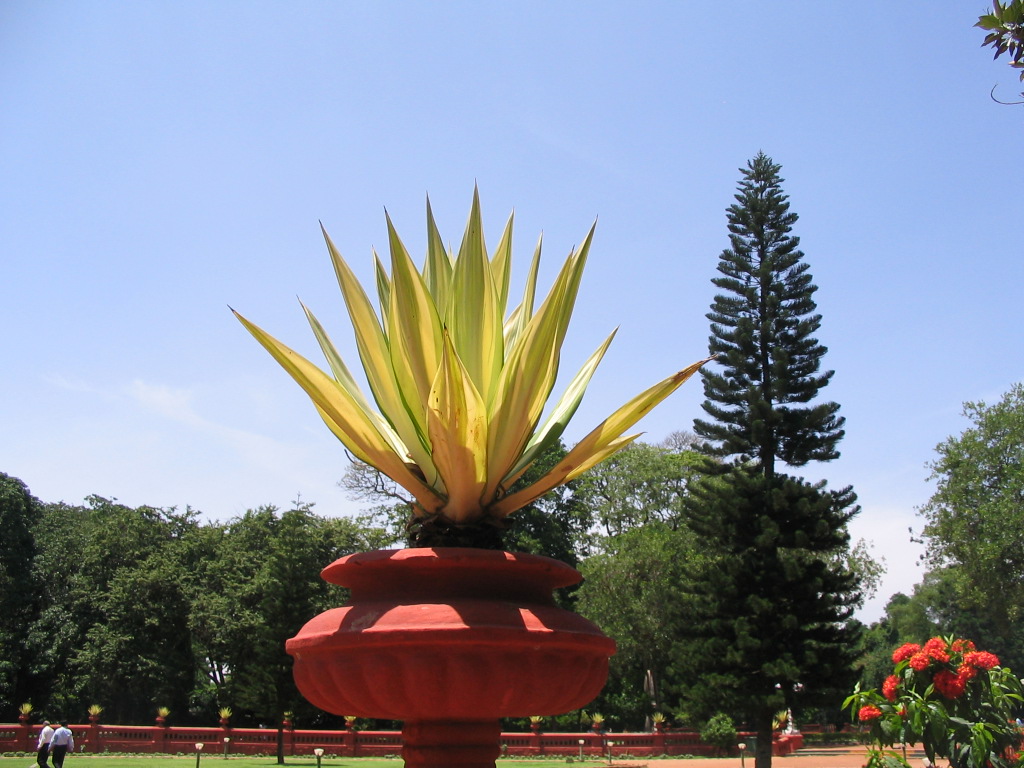
In a park ( like in the photo above), you can get in touch with all your senses.

It makes sense to revive our senses to day

S Ramesh Shankar