The train journey

I have been travelling in trains since the time I was born. As a child, we used to travel in second class compartments and non air conditioned coaches. Initially, the trains were pulled by steam engines and then diesel and nowadays electric engines

I loved the smell of the steam engines. I recall my first posting after my training period as a management trainee in a public sector undertaking. I was posted to an iron ore mine and the journey from the steel plant to the mine was by a passenger train pulled by a steam engine. It took us 3.5 hours for a distance of about 130 kms.

The joy of travelling by train has to be experienced to be believed. The best part of the train journey is that every ten minutes there would be a food vendor offering tea/coffee or snacks. We enjoyed getting down at every station and buying something – may be a newspaper or a magazine or just filling our water bottles.

Another interesting benefit of a train journey, especially a long overnight one ,was that ,we met people from different states of India. There would be interesting people to meet. Families, young boys and girls and elders. Many families carried enough food for their journey and invariably shared amongst all the co-passengers.

Some of the long journeys would take us two nights or more and it was more than 36 hours. We not only met and made new friends, who could turn out to be friends for life but also learnt a lot of things, from the interactions on the trains.

The train journeys improved over the years. The trains became faster and coaches cleaner. We also could upgrade from second class to first class and then to air conditioned coaches. Having tea in mud kulha (pot) and coffee in glass or steel tumblers was fun.

We also enjoyed snacks along the way and some stations were famous for some things. We used enjoy oranges at Nagpur or good mangoes in Vijayawada. Even ice creams was popular in some stations. The peda at Mathura and Peta at Agra were mouth watering.

My childhood, teenage and early adulthood was spent in train journeys. Even after I started my career, the first decade was travelling by train only – both personal and official travels. We looked forward to the company and the food ,shared in trains.

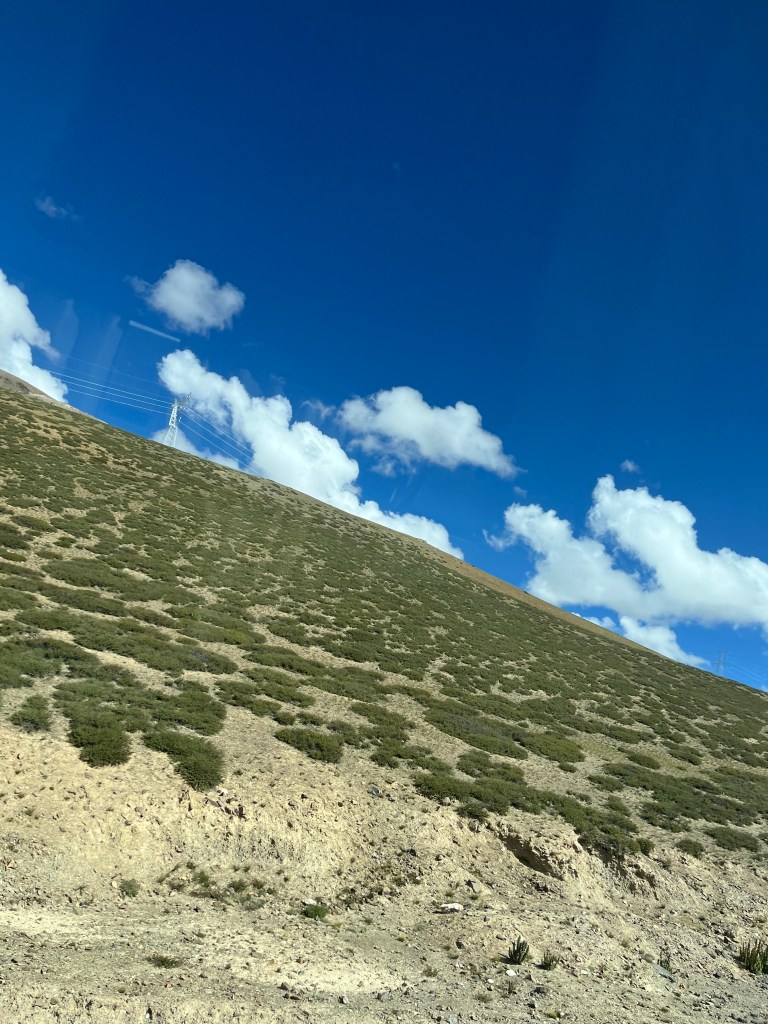
Watching the sun rise on the horizon or the moon set ,was mesmerising. The trees and the landscape along most routes, are green and breathtaking. Another good companion during train journeys was about reading books. I had a colleague at work, who was a book worm. He used to just buy a ticket from the starting to the destination station and carry a few books and finish them. He never got down. Just took a train to its destination and returned in the same train on the return jouney.

Today, when I look back, I can state that, life is also like a train journey. We start somewhere and end somewhere. We have stations on the way as the cities we move and live in. We meet people along our life journey. Some are entertaining like in the trains and some may avoid us like the grudging travellers, who do not like to interact with anyone.

We need to learn to enjoy our journey as much as the destination.

S Ramesh Shankar

20th Jan 2025

Plan vis a vis actual, is life

I was recently reading somewhere that “Plan versus Actual is life” and I tend to agree. We all dream big and aspire to fulfil our dreams to the best of our ability.

However, when reality bites us, we realise that what we planned is different from our current realities and that is life. This does not mean we should not plan, nor it means that the current reality may not drive us towards our goals.

This means that either our plan was inadequate or the execution beyond the plan, was not good enough. It is almost like the new year resolutions ,most of us make. We are high on enthusiasm when we make those resolutions but within weeks, if not days, we realise that reality is far from the promises, we made to ourselves.

It is almost like the gym ,in most offices today. While all employees desire to have the best of gym in their workplace; after a few months, if not weeks of its inauguration, we see that most gyms are either closed down or highly underutilised.

This is not because a gym at work ,is not a desirable thing. It also does not mean that employees do not want to be healthy. What is means is, there is a huge gap between plan vis a vis actuals and that is life.

If we move to the business situation, we understand it much better. All of us plan grandiosely. However, even before the end of the first quarter ,of a new financial year, we talk of revising the plans for the subsequent quarters since the actuals of the first quarter makes us realise the ground realities.

So, we need to realise that our life and work are not very different. At both places, we need to plan and then execute it meticulously. The gap between plan and actuals, is life. We need to realise that our life will be as good as our planning and execution.

If we either do not plan well or we do not execute well, we face failure in life and that disappoints us. It may be simple to assume that we need to go back to the drawing board and look at our plans or the gap between our plans and execution strategies.

Both at life and work, our planning has to be continual and evolving. Our execution also has to adapt to the changing needs of the environment. If we have planned well and implement our plans meticulously, the chances of disappointments are less. However, the environment around us may not always be under our control.

So our plans and implementation strategies have to be adaptive and evolving. We need to fine tune them ,keeping in mind the changing circumstances and our own moving milestones.

If we positively accept life, then our ability to execute what we have planned more realistically ,becomes a reality. On the other hand, if we surrender to current reality and refuse to change ourselves, then our plans will continue to be ,building castles in the air.

Let’s start living life positively from today.

S Ramesh Shankar

2nd Jan 2025

When you want to make a home, you have to leave your home

I was watching a music reality show on TV and one of the judges mentioned in Hindi – “ Ghar banane ke liye, ghar chodna padta hai “. If translated, it literally means that “If you want make a home, you have to leave your home”. Although translations many a time do not convey the real meaning of the quote, it is very insightful.

If you want to make a mark in your career, you have to leave the comforts of your home. Many of us grow up in small towns, villages or even in cities but never like to leave them since we get attached to our family, friends and the ethos of that place.

I hail from Chennai in South India. We used to have a joke in my college days that if you have the courage to cross Basin bridge station ( the station next to Chennai Central station), your mind will broaden. I have experienced this and agree with this world view.

We may pursue any career in life. We could work in corporates, run our own business or become a professional sports person. It does not matter. We may be able to excel in whatever we do ,the day we venture out of our comfort zone.

Even as students, we tend to study in the same town or city, where we have grown up as a child. We resist moving out of that city or town, even to pursue higher studies. This makes us like a frog in a well. However, if we get over this inertia and move out of our city of up- bringing, to pursue higher education, our mind broadens and our learning multiplies.

This is equally true at the work place. Many employees want to learn and grow in the city or state ,of their origin. When faced with a transfer, even on promotion, they resist and give some excuse to stay back in the city of their birth or up -bringing.

In my view, this could become a limiting factor ,in their career. We learn not only from the role we play in the organisation but the environment around us ,too. The teams would be different, the culture and ethos of the new city or town ,could open our eyes and tickle our brains.

I can state with empirical evidence of my own experience of living and working, in ten different towns/cities ,that my world view has grown and evolved ,because of these multifaceted experiences. If I had lived and worked only in one city, I may have evolved as an uni-dimensional professional. However, these experiences made me learn and adapt to different environments and learn from one another.

I have seen this in my children too. They have also lived, studied and worked in different towns/cities and this has made them adapt to different cultures and professional environments. Today, they can thrive in any scenario because they are not limited ,to live and work ,in one environment.

Life is a never ending learning journey. The more we spread our experiences and environments, the more we learn. The pandemic has further necessitated the need to learn and adapt to different situations at a short notice or no notice at all.

Let us learn to re discover ourselves everyday.

S Ramesh Shankar

24th Dec 2024