Strategy versus Execution


Strategy & execution are like the two words – thought and action.  The issue is which comes first.  Thought or action.  We have people around the world, who believe that action leads to thought.  On the other hand, purists believe that thought has to precede action.  We need to plan first before we go for execution. It is like in the photo above, any amount of study of wind direction and planning to play the frisbee on the sea shore is of no use unless you try it and learn by your failures and successes.

It is similar to the debate on Theory versus practise.     After having worked in industry for more than three decades, my learning is that both are equally important and they complement each other.  You need to have a plan to execute it.  However, on the other hand, if we spend our entire life planning of a dream future, it may remain a dream in our life.  Hence, execution is as important as planning itself.

Let us look back at every stage of our life.  As a child, we are trained to dream big.  Aim for the moon we are told.  However, if we aim for the moon and do not work hard to achieve our mission, we may reach nowhere.  Whether it academic or sports, we have to have a dream and then we need to evolve milestones to realise our dream. No plan leads to action until executed with discipline.

The work life is no different.  We all are ambitious and want to become the CEO within years of our starting our career in an organization.  There is nothing wrong in having such aspirations.  However, we need to have a plan, work towards executing that plan through hard work and discipline.  As we progress, we may face obstacles.  This should not deter us from proceeding with our plan execution with necessary changes and perseverance.  However, if we give up mid way, we can neither blame the plan, nor our exection for our failure.

Life is no different.  We all have a dream.  We may be born in lower middle class families.  But, we want to conquer the world in our own sphere.  Its great to have such dream.  It would be wise to plan meticulously to realise this vision of ours.  After visioning, we need to put our neck out and experiment.  We need to take the risk associated with our actions and be willing to learn from our failures.  No wonder they say failures are the stepping stones to success.

Most of the time, we neither plan nor we are willing to try.  We give up even before we begin.  Let us take a simple example from our lives, which happens to most of us every year.  We make grandiose new year resolutions.  We want to be fit and healthy.  We resolve that we will walk or jog for ten kilometres every day before the dawn of the new year on the 31st of December, while we are still rejoicing welcoming the new year.

The very next day we do not get up and postpone our plan for the next day and then the next week and may be the next month.  This way it never happens and the next year arrives before we realise it.  Now, in this scenario, can we blame the plan or the execution.  We need to blame ourselves as we neither were serious in planning or in implementing what we planned.  

I recently met an Olympics bronze medalist in swimming.  She told us that she practises for ten kilometres of swimming every day.  She does this for four years before the next Olympics and thus plans for winning a medal.  We need to plan to walk for at least one kilometre every day before we dream of being fit.   This teaches that meticulous planning and relentless execution is the key to success.

Let us start today.

S Ramesh Shankar
January 2017

Vision – thinking beyond the obvious..


Organisations and individuals can have visions.  In my definition, Vision is our ability to dream about the impossible and make it possible.  I recently attended a conference wherein a company CEO nicely illustrated the concept of “Dreams and details”.  He said it is important for all of us to dream but it is equally important to convert the dreams into details and work out the road map to achieve it.

It is very similar for organisations and individuals.  While all of us dream big and set out almost impossible goals for ourselves but we do not reach them because we do not work on the details.  It is like our new year resolutions as an individual.  We set idealistic personal goals for ourselves and more often than not falter in the first month of the new year itself because we never bother to work on the next steps.

Let us first reflect as individuals.  We are content with what comes our way.  Mediocrity becomes a way of life. If we are born in a family with all comforts in life, we tend to become lazy and content.  Another interesting dimension is that children tend not to look beyond their parents for inspiration.  We are happy to maintain the way we have been brought up in life. 

If we move to the organisational context, the story is not very different.  Most organisations want to grow in an incremental way.  They do not want to tread on troubled waters or take undue risks.  They do not dream big or set themselves daunting goals since individuals working in the organisations cannot think beyond the obvious.

The trend is similar for countries too.  It takes a Mahatma Gandhi to think beyond the obvious.  It takes a great leader to dream big and then work on the details to make that dream a reality.  Similarly, in organisations it takes a great leader to set an impossible vision and then rally the whole organisation to realise it.  Even individuals who can think big can realise it more often than not.

I recently met an olympic bronze medalist.  She said that you need to trust yourself and your team and then work hard to realise your goals.  This is equally applicable for individuals, organisations and societies to achieve their vision.  All of us have to develop the ability to think beyond the obvious and then work on the ways and means to make that vision a reality.

It is like reaching the sun in the photo above may look impossible today but the human being is capable of it in the future if we set ourselves to do it.

Can we think beyond the obvious from today ?

S Ramesh Shankar
Oct 2016

Success


The definition of success can be different for everyone.  It also depends on the stage of our life and our career.  It could be simply stated as achieving what we want in life.  As a kid, we mostly feel that we are successful if we achieve our scholastic goals in school or college.  We also are happy if achieve our goals in sports or cultural activities.

Most parents also define success for their children as acamedic accomplishments. This definition of success changes as we grow in life.  The moment we get through our acadmic part of our life and stand on our own feet, we redefine success .   At this stage, we tend to define success by our material wealth and accumulations in life. We would like to be the richest and the wealthiest amongst our peers.

As the career stabilises, promotions are also a measure of success.  Then we yearn for recognition and status in society.  We also grow in the family and respect is a way to defining success.  Our happiness gradually moves from self to others’ success.  At home, the accomplishments of our kids make us feel successful.  At work, the performance of our team members make us feel proud.

After we pass through this stage of our life, we realise that it is time for us to give back to society.  We redefine success in life now.  We believe that our contributions to the success of other family members and friends makes us happier.  At work, we would like our team to excel.  We also want to give back to others what we have learnt from our elders and seniors.

We now are no longer looking for more material wealth but mental peace and happiness.  Our spiritually gets redefined and we reach a stage of self actualisation.  At this stage of life, we start working on how we can support others and make them successful.  We are no longer in a rat race being competitive with others.  Our concept of success is more within us than without.

The interesting aspect of the evolving definition of success in life is linked to our life stages.  Some of us grow faster than others.  It is important to remember that we are human and hence we need to adapt ourselves to the meaning of success in life as we grow up.  It is equally essential to respect the definition of success of others in our life as they may be at different stages and may have different needs to fulfil.

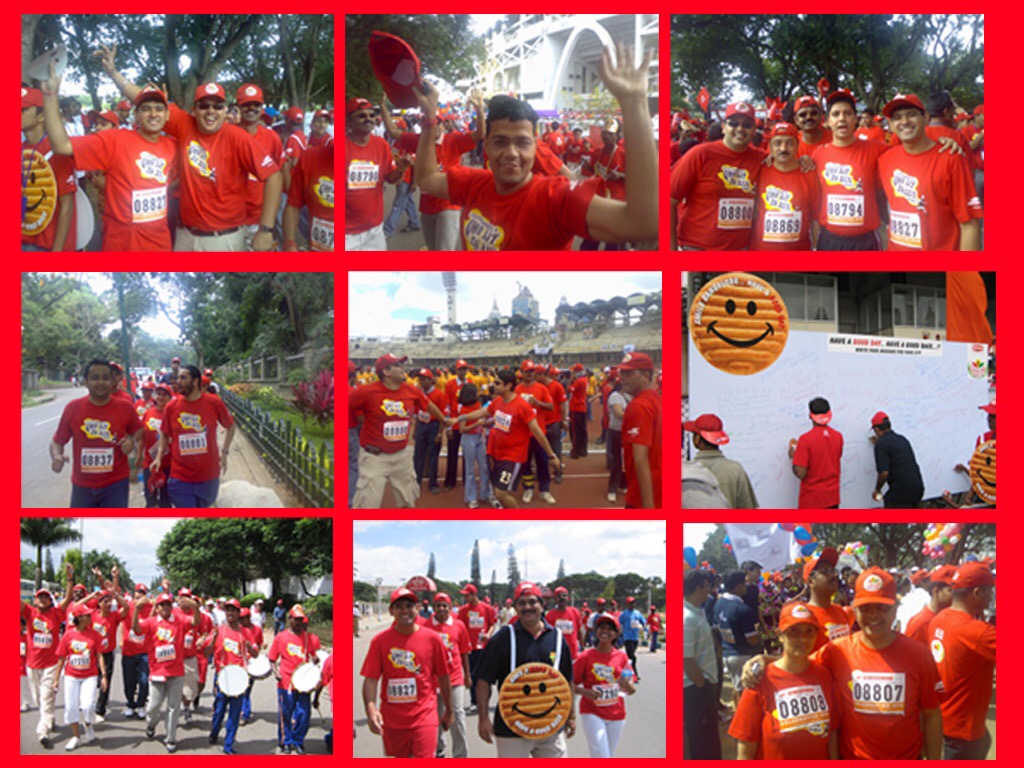
Running for a marathon like in the photo above could be measure of success for some and not for others.  It is quite fine to be that way.

Let us learn to enjoy our successes in life as we define it.

S Ramesh Shankar