Campus to Corporate…

All of us look forward to our first job in our life. We eagerly await the completion of our formal education in school/college to enter the corporate life. We want to stand on our own feet and live out our dreams in life.

While this journey is indeed exciting, we have to prepare ourselves to be successful in this phase of our life. What are the changes which one has to encounter when you leave the college premises and enter the corporate world?

A. Forget your pedigree at the compound wall of the corporate : While your pedigree may help you enter the corporate world, it will not make any impact after you are in there. What makes a difference is your performance and the value you bring to the table.

B. Unlearn, learn and re-learn : Unlike the academic world, the corporate sphere changes very fast. We need to learn to unlearn, learn and re-learn at a hectic pace not only to survive but to thrive in the corporate world.

C. Excel : Excellence is a journey and it is never ending in a corporate world. You have to be the best in whatever you do and then nobody can ignore you. Kindly remember that this world is much more competitive than the academic world and you may not always get a second chance.

D. Ambition : Dream big and you will be able to realize your dreams some day. It may not happen in the time frame you have set for yourself but if you do not give up, it will definitely materialise.

E. Morals : It is always a dilemma in your mind if ethics have any value in corporate life. You may have seen millionaires making money the wrong way. You may be tempted to take short cuts and realize your dreams. Just remember to listen to your conscience every single time and you will do no wrong. It is better to be happy and hold your head high rather than be rich and evade the taxman or the police all the time.

F. Stand alone : It is natural for you to compare your self with others working with you. You may wonder why you get paid less as compared to someone else working with you. You may think the other person is less qualified or has irrelevant experience. It is not worth comparing yourself with others and feeling bad about it. You need to learn to be like the pole star comparing yourself with yourself and shining so brightly that nobody on earth can ever miss your sight.

G. Commitment : One may get away by submitting your assignment late in college once in a while. However, in the organisational context, living up to your commitments is the key to success. Your relative value is always determined by your personal credibility.

H. Punctuality : Self discipline is expected in corporate life. Nobody will remind you to be on time. You set your standards by being on time all the time. Your reputation is determined by your punctuality. It is good to remember that your discipline is displayed when nobody watches you.

I. Mobility: In today’s globalised business environment, one need’s to be truly globally mobile to be successful. We should be willing to pack up our bags and go anywhere in the world to launch a global career in any organisation.

J. Team work : Unlike the college daya, where one could get away with individual excellence, team work is the key to success in organizations. One needs to learn to work in team and collaborate and cooperate to leverage on the strengths of each team member.

Now, let us look at the emotions and feelings we may experience as we enter the corporate world and how do we deal with them :

I. Happy and excited : The enthusiasm and joy has to be sustained and persevered. We may not always get what we want but by sheer hard work and determination we can lay our own career path in the organisation.

II. Fear : The lurking fear of not being good enough will confront us. Our ability to be humble, grounded and willingness to unlearn, learn and re learn will help us get over fear.

III. Unhappiness : Not getting the location of your choice may make you unhappy. But our ability to adapt and make the best use of every opportunity will help us excel.

IV. Anxiety : Everything appears new and unknown. How to ask and whom to ask is a constant question in our mind. Simply asking and being innocent will help you always find your way.

V. Intimidating : The induction programme may be intimidating and you may find your self lost in a big organisation. Kindly remember all of us joined some day and today it is your turn. There is nothing to worry as you will come to know of everything as days pass by.

VI. Nervousness: The fear of the unknown and the realisation that time will run out fast may make you restless. As long you realize that learning is a life long journey, please remember that everyone in the organisation will be keen to help you.

VII. Curiosity : You are not sure when to speak and when to listen. You are curious when to ask questions and whom to ask. There is no right or wrong answers. As long as you are authentic, you need not worry about anything or anybody in the organisation.

Some things to look forward to :

A. First salary : The thrill of getting your first salary in life is unbelievable

B. Own office desk: When you reach office on the first day and get your own desk to sit, it is a matter of pride.

C. Corporate credit card: On getting your corporate credit card, you feel as if you have arrived in life.

D. Colleagues / friends – It feels nice to have new friends and colleagues at work and learn from them

E. Visiting card : Your first visiting card gives you respect and credibility

F. Independence : As we stand on our own feet, we become self reliant

All in all, moving from campus to corporate is like transitioning from bachelorhood to married life. Unlike your spouse in married life, you will have colleagues in the organisation. It is our ability to adapt and learn from them, which will make us successful.

The nervousness of the student transitioning into the corporate world can be seen in the photo above.

Wish you all the best.

S Ramesh Shankar

Traditions versus Modernity


We all have inherited innumerable traditions from our families and societies.  They help us in life and living.  We need not rediscover the world as our forefathers have experienced most of it and left behind ways of dealing with life in most situations.  When we follow a ritual, we may call them tradition.  On the other hand, when we invent something new to deal with a new situation, we may call it modernity.

In life both traditions and modernity are equally important.  While traditions share lessons of the past, modernity helps us to break free from the past and deal with the future with an open mind.  I used to think that most of the traditions are redundant and may not answer the questions of life in the future.  I personally did not believe in many traditions and believed they were backward looking.

However, I recently went to my diabotologist to consult for my diabetes.  When he enquired about my food habits I explained how I had moved from traditional food to new oils and less calorie food products.  He smiled and advised me to revert to traditional food.  He explained as to how the human body adapts to the food based on weather and eating habits.  He further explained that oils and food items recommended by our grand parents are more healthy than what modern marketeers make us believe.  

This was indeed a revelation.  He explained the science behind traditions.  It appeared to make more sense.  After all traditions are also rooted in science and may be we do not believe in them because there was no marketing of traditions.  I am not for one recommending that all our traditions are noble.  However, it may be valuable to look at traditions with an objective mind.  We may challenge only those traditions which may have become irrelevant in modern life.

Another interesting example of traidition versus modernity is the science of “Vaastu”. I used to live in a beautiful green home in Bangalore till I moved to Mumbai.  My wife felt that that home was not vaastu compliant after staying there for three years.  I resisted from moving out of the house since we had moved in by choice and loved the environs.  However, when I was moving to Mumbai for change of my job in 2011 I agreed to sell that home and buy another similar green home.

Meanwhile I tried to study the science of “Vaastu” ( Indian traditional science of architecture).  I found it intriguing.  It explains the basics for the design of a house.  It explains as to why the kitchen should preferably be in the south east of the house.  This is because the maximum sunlight enters the house in this direction and hence it will be a natural prevention of pests and insects in the kitchen.  The master bedroom should be in the south west because it is the coolest place in the house and so on.

After having studied the basics of Vaastu, I can state that this tradition is worth emulating and following even today.  Every recommendation of Vaastu seems to rooted in science and although learnt through traditions is relevant to modern life.  No wonder one of the best insititutes of architecture in the country has recently decided to include the study of Vaastu as part of the curriculum.

As in the photo above, people of a southern state use cocunut oil for all their cooking as per tradition and still lead a healthy life without much impact on their cholesterol levels.

Let the traditions of the past help us redefine our life today.

S Ramesh Shankar

Should every effect have a cause ?


Every time something happens in life, we look for a reason.  We are worried and want to dig deep to find out the root cause.  We sometimes even lose our sleep if we do not get to the root cause for everything in life.  I sometimes wonder if every effect  necessarily needs to have a cause ?  If it rains on a bright summer day, is it wrong ?    If someone who has never called you up for years suddenly decided to enquire about you on the phone, is it unusual. 

I personally feel that we waste a lot of time, many a time by investigating the causes rather than the managing the effect.  Why not live with the effect ?  Why not accept the event as it comes and evolve ways and means to deal with it.  In our quest to get to the root cause, we sometimes even forget to celebrate good moments in life.  Imagine someone surprising you with a chocolate on your work desk.   We spend more time finding out who did it rather than enjoying the chocolate.

I can recall many moments in my life where something happens out of the blue.  We can never get to the root cause as to why it happened.  It may not be worth the time and effort even to try to do it.  I recall way back in 2002 I had planned a holiday to a particular country with my family.  I had booked the tickets, accommodation etc.  But when we went for the visa interview, they denied the visa for all of us with the reason that we were potential immigrants.  I was working in Delhi and my children were studying.  We were living in our own house but still it happened.  I never bothered why they denied my visa.  I changed my plans and went on a nice holiday to another beautiful country.

If I had spent my time to invesitagate the reasons why they denied my visa, I would have wasted a lot of time and energy.  My holiday plans would have got spoiled and my family may have felt miserable.  But as we changed the plans and went to another country, we enjoyed the trip and never regretted the incident till today. 

 In life, many a time, we do not follow this principle.  We are always worried why it happened and why it happened only to me ? We spend sleepless days and nights worrying about it.  Why worry about something over which you have no control.  In my view, it is not worth it.  It is like worrying about the reasons for rain on a bright summer day.  Lets enjoy the rain rather than find the cause for the rain.  Can we control the rain ?  We cannot and hence why worry about it.

Another incident which has convinced me that we should not worry about the cause is when I moved to Mumbai in 2011.  I had settled in Bangalore and was staying in my own home.  I never thought I will move out of Bangalore.  But suddenly an opportunity knocked my door and we decided to move.  I never worried to find out the reasons why it happened to me.  This is because it helped me to move to a more vaastu compliant home in Bangalore.  It also gave me an opportunity in work in Mumbai, which I had never done before.

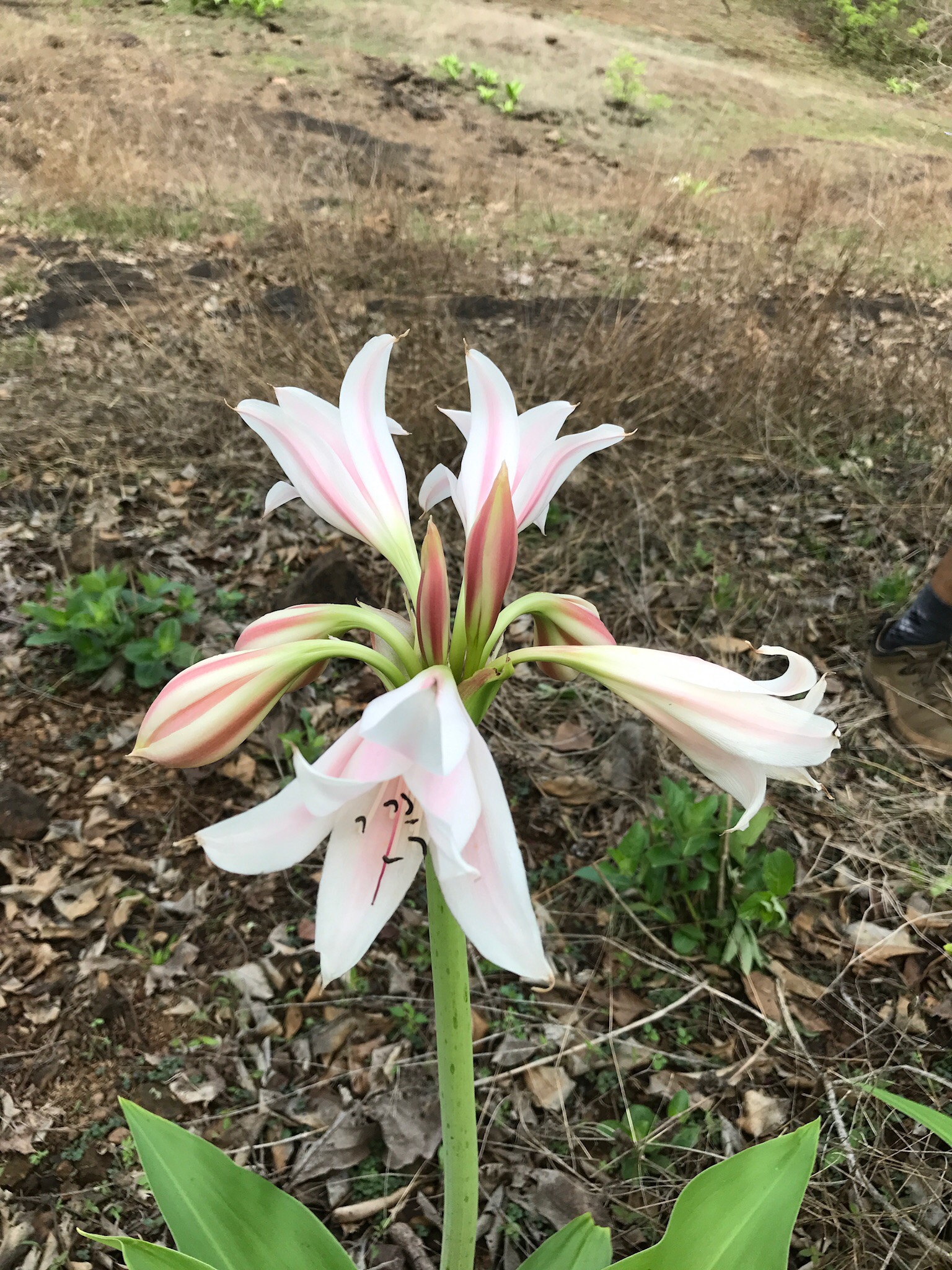
I am told that the wild lillies in the forest grow beautifully without any reason. They do not wait for the rains to arrive to blossom.

It is important to remember that there would be events in life, which occur for no reason.  When things go well, we generally do not bother for the reason.  But when things do not go well, we wonder – why me ?  It may be worthwhile to ponder, why worry for the reason ?  Let us learn to accept things as they happen and learn to deal with them.  It may many a time happen for our good.

Shall we try it ?

S Ramesh Shankar