Learning management from kids

IMG_2066
I have always been a great fan of kids. I have felt energised in their company and learn from them in every interaction. Of course, they do test our patience at times but so do we. I was wondering if it is a good idea to translate today’s management concepts to what we could learn from the behaviour of kids. We may not have realised it during the incident but if we look back, it is interesting and provides great insights.

Mission : I remember an incident from my childhood when I ran for miles behind a gas balloon which had flown away from my hand. While looking back and logically it may look foolish. But the kids have high levels of perseverance and never give up to achieve their mission in life.

Strategy : I am reminded of many incidents where my son has strategised and accomplished what he wanted to get in his life. Once my son wanted to go with his classmates in college for an educational tour. He had made up his mind and had evolved a foolproof strategy to achieve his goal. He first tried with me and then with his mother. He then pursued the same with his teacher and made his teacher convince us of how useful it would be to send him. Thus, although initially we had not approved his tour, he did make it finally.

Conflict resolution : While kids may end up fighting at the drop of a hat, I have seen them resolving conflicts much easier than adults. What I have noticed in them is that they are ready to move on in life. They are willing to forgive and forget. As adults, we tend to carry the grudge for our lifetime. Our egos prevent us from forgiving others and we are worried as to who has to first ring the bell for peace.

Listening : Do we remember how our kids listened to stories at night ? Even today when I see my grandson who is 7 years old listen to my wife I am stunned at his level of concentration. When he is listening to a story, he is in rapt attention. He does not fiddle around a mobile phone or watch TV and also listen. This is what most of us do. Hence, kids can take a class for us on attentive listening, which is critical for success as a leader.

Communication : While behavioural scientists have established that more than seventy percent of behaviour is non verbal, we do not use it effectively in our day to day communication. We need to learn from kids. A child may communicate effectively even without uttering a word. The expressions on their face , the laughter, the cry and et all can speak more than a thousand words.

Interpersonal skills : I have seen kids mingle even with strangers without any bias. Why do adults find it difficult to work in a team even with people known to them ? One of the factors I have noticed in kids is that they do not have any conscious or unconscious bias towards others. They are willing to let go. They take the initiative to interact and are willing to accommodate others in the group. As adults, we seem to have erased these qualities as we grow up.

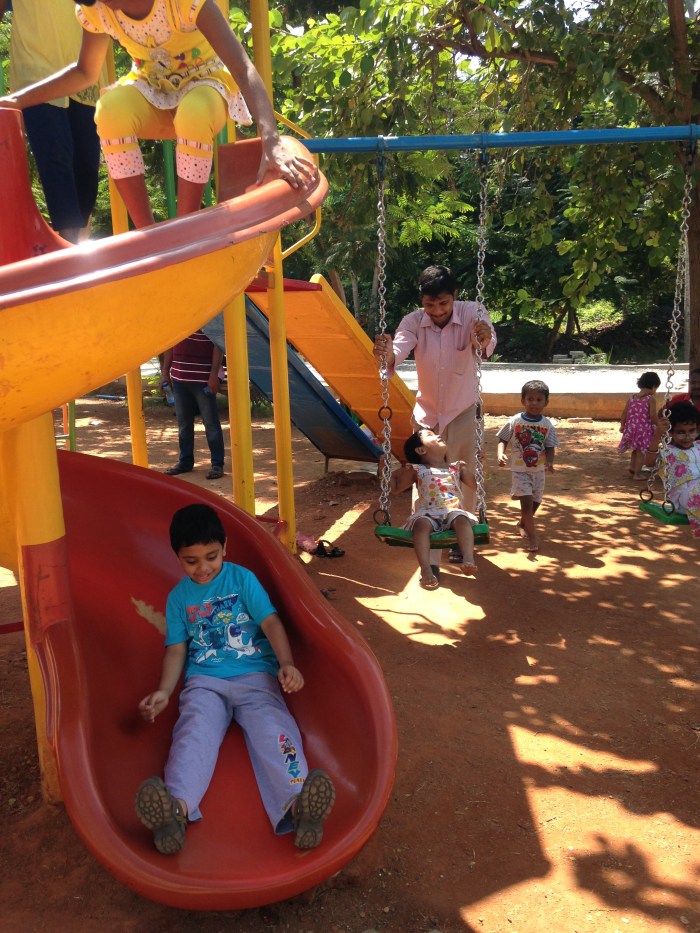
Perseverance : I have seen kids go up and down the slide multiple times till they succeed. I have never seen them give up in life on anything. Why do we as adults tend to give up even before we give things a try ? Kids have the patience and the perseverance, which we need to learn. As we grow up our patience fades and so does our perseverance. We end up making simple things complicated and thus give up even without a try.

It may be worthwhile to observe the kids around us and learn management from them. The lessons are practical and real life. We can refresh our knowledge, skills and attitude to life. What do you think ?

S Ramesh Shankar
Class is classic 

Class means different things to different people. As a student of sociology, class refers to the social status in society. It is referred to as social class. It is like the caste system, which creates a hierarchy in society. Class could be based on income, caste, profession etc. An act of high quality is also referred to as class. For eg, in the cricket world, we normally refer to batsmen who are outstanding as class. An oft quoted saying is ” Form is temporary but Class is permanent.”

So, let us understand why form is temporary but class is permanent. It is believed the best in class player in any form of sports is classic although she or he may not be in form on a particular day. We can think of the best soccer players going goalless in a match. The best batsmen getting out for a duck and so on. However, their consistency and quality of the game is unimaginable. Hence, we could easily state that “Class is classic”.

If we move to the social class, there is an interesting theory in sociology called “Sanskritization”. This means people who are in the lower caste do everything in their domain to move to the higher caste hierarchy. This is simple aspiration in life. Who on earth would not like to grow ? However sociologists have studied this phenomenon and called it “Sanskritization”. Today it may look obvious that every one of us aspires to learn and grow in every aspect of life.

Another interesting determinant of class is forwardness or backwardness of a community. This is determined by developmental indicators, educational levels, per capita income and so on. So, when communities are behind their contemporaries in the same society due to clear developmental factors, they are referred to as backward communities. On the other hand, when communities move forward in the same factors they are called forward class.

Another interesting classification of society in the past has also been done based on the professional vocation of a group. This segregation then refers to a community as potters , agriculturists and so on. The profession adopted by the majority of a village or a community gives credence to the name of that community or village as a potters village and so on.

Whatever be the definition of class, I would state that “Class is classic”. In order to attain class in anything we do, we have to be the best in class. This means that in a group of artisans if we are the best, we are referred to as class. This has an important meaning for us in life. If we are the best in whatever we do in life, we will be a class apart and nobody can ignore us. On the contrary, class is respected always.

If I link it to the organisational context, most of us waste our time and efforts by comparing ourselves with our colleagues at work in terms of our performance. It would be wiser to compare oneself to self and be the best in class. If we are the best in whatever we do in the organization, nobody can afford to ignore us, least of all our manager. Hence, it is critical to remember that the best in class will always beat their own standards and records and not bother about others.

Why should we waste our time by comparing ourselves with others if we can be the best ? Our competitors should waste their time comparing themselves with us rather than the other way around. Let us excel in whatever work we do and be always better than the best. The best is class and may not be easy to replicate. We have to outshine everyone around us by our class and not by caste or position or power.

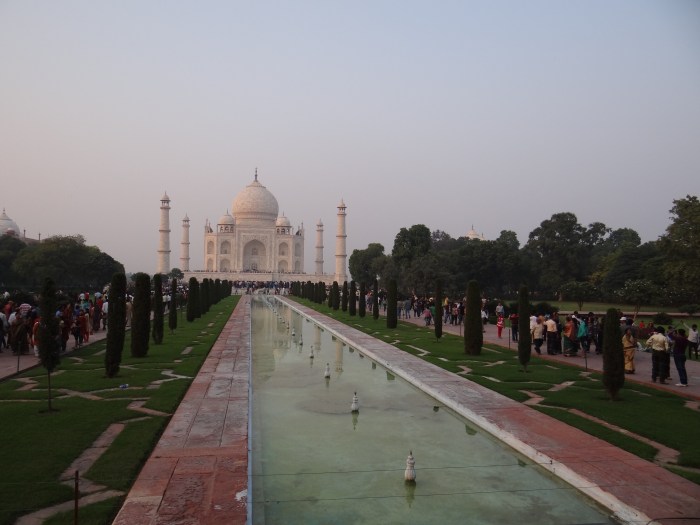
As in the photo above, Taj Mahal is class and hence no new architecture of the world has been able to beat its beauty.

Let us learn to outshine ourselves every day.

S Ramesh Shankar

People – the competitive advantage for an organisation

Every company in the world tries to identify what is its competitive advantage ? They look at what markets they operate in ? Who are their competitors ? What are their sources of competitive advantage ? This leads to factors like Cost, Quality, Reliability , Service, Innovation, Products etc. But, I do not subscribe to this theory of management. In my view, all competitors ultimately catch up to your sources of competitive advantage today or tomorrow. Hence, it is only “People” working with you, who are your only source of competitive advantage, which is not replicable.

Hence, if we believe that we have to make our organisation a great place to work – we have to realize that “Managing People” is not nice to have but must have factor for organisational success. If we take the simple example of the auto industry, we will get our answers. Today, the cars produced by different companies in the same segment is not very much differentiated. They have the similar technology, features, price etc. What really differentiates them is the service, which that company provides you before or after the sale of the car. Service is delivered by people and people are the key differentiator.

We have evolved the concept of “Ownership culture” in our organisation. What does this mean – this means that every manager owns her or his people in every possible way. A manager is the friend, guide and philosopher for his team. We need to build the people management skills in every manager so that they take care of their team members.

We launched the “People Matter” programme and the manager fitness certificate to support this philosophy in Siemens. This would help us strengthen the ownership culture by creating highly motivated teams. This would in turn enhance our customer experience. Like they say, if you take care of your employees, they will take care of your customers.

In this intervention, we partnered with Great Place to Work(GPTW). The reason why we selected GPTW is because we wanted a partner, who understand India and also helps us understand the best people practises in the world. They have helped us customise the programme to suit our context. They have benchmarked us with the best in the world and are supporting us to become the best.

This has been an exciting journey for me personally. I travel across the company and have visited almost all locations of Siemens. Everywhere I have been since the launch of the People Matter programme, employees have told me that they see the significant change in the behaviour of their managers. This is very heart warming. They tell me that their managers listen more and spend more time with them for their own development.

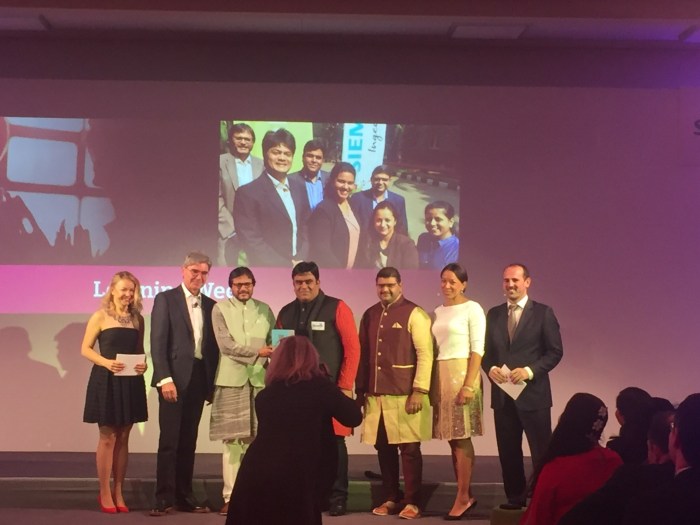
It is the people in the organization, who make a difference as illustrated in the photo above.

We would like to make this a way of life in Siemens. This is not a one of flavour of the season. We want every people manager to be the face of the employee in Siemens. We will empower them to take people decisions for all their team members. We will incorporate this in some way towards the “How” assessment in the PMP process. We will reward and recognise the best people managers periodically across the company.

We believe that it is “Customer first” but “Employee always” in Siemens.
 
S Ramesh Shankar