Traditions versus Modernity


We all have inherited innumerable traditions from our families and societies.  They help us in life and living.  We need not rediscover the world as our forefathers have experienced most of it and left behind ways of dealing with life in most situations.  When we follow a ritual, we may call them tradition.  On the other hand, when we invent something new to deal with a new situation, we may call it modernity.

In life both traditions and modernity are equally important.  While traditions share lessons of the past, modernity helps us to break free from the past and deal with the future with an open mind.  I used to think that most of the traditions are redundant and may not answer the questions of life in the future.  I personally did not believe in many traditions and believed they were backward looking.

However, I recently went to my diabotologist to consult for my diabetes.  When he enquired about my food habits I explained how I had moved from traditional food to new oils and less calorie food products.  He smiled and advised me to revert to traditional food.  He explained as to how the human body adapts to the food based on weather and eating habits.  He further explained that oils and food items recommended by our grand parents are more healthy than what modern marketeers make us believe.  

This was indeed a revelation.  He explained the science behind traditions.  It appeared to make more sense.  After all traditions are also rooted in science and may be we do not believe in them because there was no marketing of traditions.  I am not for one recommending that all our traditions are noble.  However, it may be valuable to look at traditions with an objective mind.  We may challenge only those traditions which may have become irrelevant in modern life.

Another interesting example of traidition versus modernity is the science of “Vaastu”. I used to live in a beautiful green home in Bangalore till I moved to Mumbai.  My wife felt that that home was not vaastu compliant after staying there for three years.  I resisted from moving out of the house since we had moved in by choice and loved the environs.  However, when I was moving to Mumbai for change of my job in 2011 I agreed to sell that home and buy another similar green home.

Meanwhile I tried to study the science of “Vaastu” ( Indian traditional science of architecture).  I found it intriguing.  It explains the basics for the design of a house.  It explains as to why the kitchen should preferably be in the south east of the house.  This is because the maximum sunlight enters the house in this direction and hence it will be a natural prevention of pests and insects in the kitchen.  The master bedroom should be in the south west because it is the coolest place in the house and so on.

After having studied the basics of Vaastu, I can state that this tradition is worth emulating and following even today.  Every recommendation of Vaastu seems to rooted in science and although learnt through traditions is relevant to modern life.  No wonder one of the best insititutes of architecture in the country has recently decided to include the study of Vaastu as part of the curriculum.

As in the photo above, people of a southern state use cocunut oil for all their cooking as per tradition and still lead a healthy life without much impact on their cholesterol levels.

Let the traditions of the past help us redefine our life today.

S Ramesh Shankar
Should every effect have a cause ?


Every time something happens in life, we look for a reason.  We are worried and want to dig deep to find out the root cause.  We sometimes even lose our sleep if we do not get to the root cause for everything in life.  I sometimes wonder if every effect  necessarily needs to have a cause ?  If it rains on a bright summer day, is it wrong ?    If someone who has never called you up for years suddenly decided to enquire about you on the phone, is it unusual. 

I personally feel that we waste a lot of time, many a time by investigating the causes rather than the managing the effect.  Why not live with the effect ?  Why not accept the event as it comes and evolve ways and means to deal with it.  In our quest to get to the root cause, we sometimes even forget to celebrate good moments in life.  Imagine someone surprising you with a chocolate on your work desk.   We spend more time finding out who did it rather than enjoying the chocolate.

I can recall many moments in my life where something happens out of the blue.  We can never get to the root cause as to why it happened.  It may not be worth the time and effort even to try to do it.  I recall way back in 2002 I had planned a holiday to a particular country with my family.  I had booked the tickets, accommodation etc.  But when we went for the visa interview, they denied the visa for all of us with the reason that we were potential immigrants.  I was working in Delhi and my children were studying.  We were living in our own house but still it happened.  I never bothered why they denied my visa.  I changed my plans and went on a nice holiday to another beautiful country.

If I had spent my time to invesitagate the reasons why they denied my visa, I would have wasted a lot of time and energy.  My holiday plans would have got spoiled and my family may have felt miserable.  But as we changed the plans and went to another country, we enjoyed the trip and never regretted the incident till today. 

 In life, many a time, we do not follow this principle.  We are always worried why it happened and why it happened only to me ? We spend sleepless days and nights worrying about it.  Why worry about something over which you have no control.  In my view, it is not worth it.  It is like worrying about the reasons for rain on a bright summer day.  Lets enjoy the rain rather than find the cause for the rain.  Can we control the rain ?  We cannot and hence why worry about it.

Another incident which has convinced me that we should not worry about the cause is when I moved to Mumbai in 2011.  I had settled in Bangalore and was staying in my own home.  I never thought I will move out of Bangalore.  But suddenly an opportunity knocked my door and we decided to move.  I never worried to find out the reasons why it happened to me.  This is because it helped me to move to a more vaastu compliant home in Bangalore.  It also gave me an opportunity in work in Mumbai, which I had never done before.

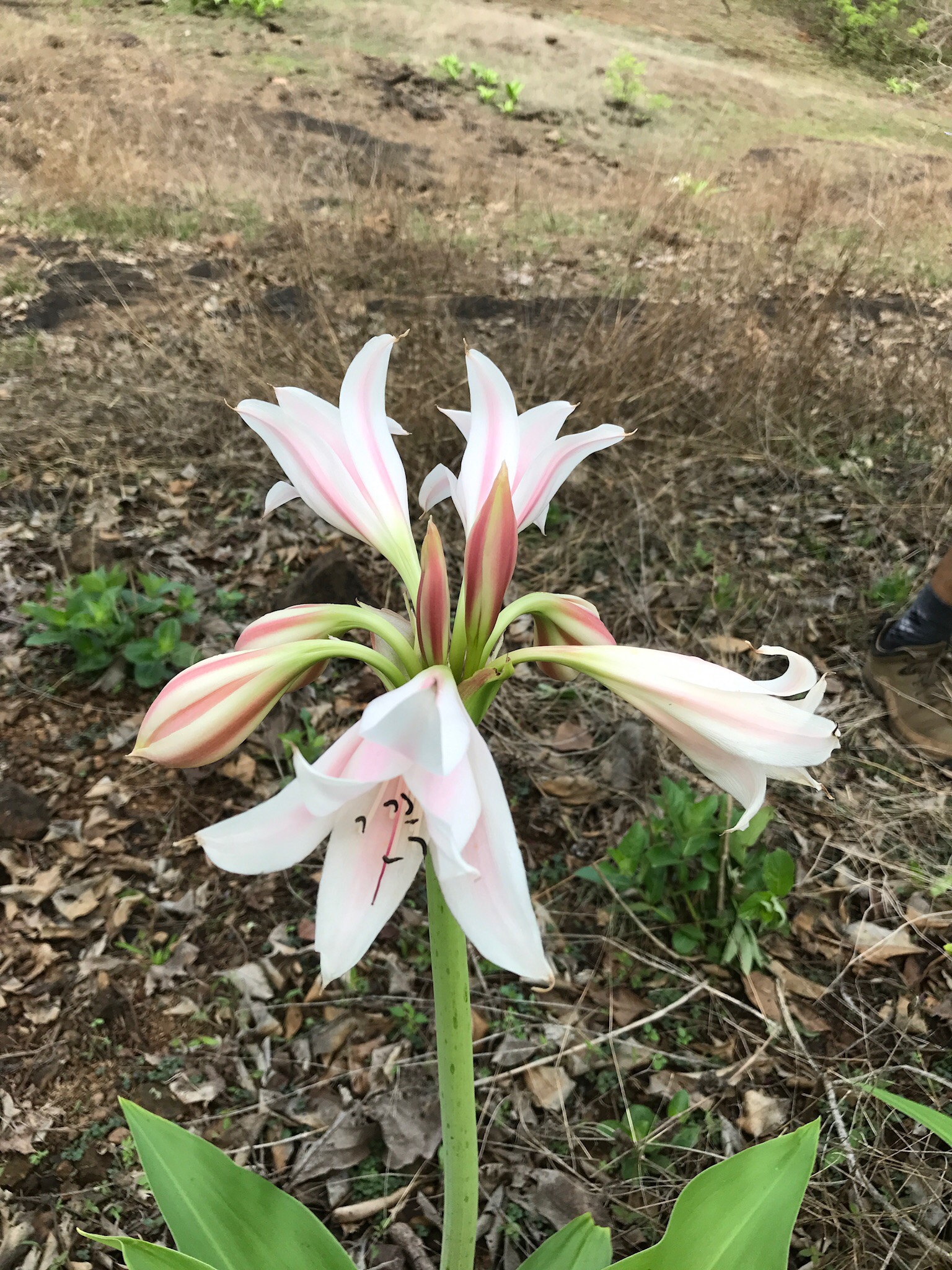
I am told that the wild lillies in the forest grow beautifully without any reason. They do not wait for the rains to arrive to blossom.

It is important to remember that there would be events in life, which occur for no reason.  When things go well, we generally do not bother for the reason.  But when things do not go well, we wonder – why me ?  It may be worthwhile to ponder, why worry for the reason ?  Let us learn to accept things as they happen and learn to deal with them.  It may many a time happen for our good.

Shall we try it ?

S Ramesh Shankar

Facing an”Interview”


One of life’s toughest examination is facing a job interview.  Of course, our life is submerged in a competitive landscape and we have to qualify at each stage of our life.  Today the competition begins even when a child enters a school for the first time.  More than the child the parents face the challenges of admission.  Imagine parents being interviewed for admitting a child in first standard of a school.  It is no longer a joke but the reality of today.

This journey continues through school and college.  In the Indian context, getting admission to your preferred school is only the first step.  Then it is middle school, high school and finally the hurdle of a college admission.  Many parents decide what their child should be studying and this makes the admission process more complex.  Apart from admission tests and capitation fees, which are indeed a nightmare, the interview process is itself a life time test.

Now, if we believe that the hurdles are over and life is going to be a smooth sail thereafter, we are in for a shock.  Graduating from an educational institute is only a pre-qualifier.  Now, you have to plunge into the world of the job market.  If you have managed to secure admission in a prestigious educational institution, you may be lucky as employers may queue in to offer you a job based on your merit.  But the majority of students pass out from colleges, where there are many more students than job opportunities.

You may have to go through a series of written tests followed by psychometric examinations and then finally may be lucky to be short listed for a face to face or video job interview.  Many students find it easier to clear the written tests and psychometric ones but find it challenging to face an interview.  Hence, I thought it may be worthwhile to write about it.  This may be helpful to calm your nerves.  My five commandments for a impactful interview would be :

A. Be authentic :  All of us have gone through ups and downs in our academic career.  It is best to be truthful and share your crests and troughs without camoflaging it. You can highlight your areas of interest and your passions in academics, sports or culture.  You should be thorough in whatever you want to share and in depth. Be honest in all your answers and do not try to impress anyone.  Kindly remember the interviewers are smarter than you.

B. Be passionate :  It may be a good idea to share your passions.  You could talk about how deeply you got into a particular subject and got great insights much beyond your syllabus.  You could talk about a sport you are passionate about and life lessons you learnt from it.  It is worthwhile to remember that you cannot fake your passion.

C. Share your experiences :  It is important to share your knowledge, skills or attitude through actual experiences you have had in your life.  If asked about your leadership, it is not expected to be hypothetical but relate it to your personal leadership experience in sports or cultural festival you have actually led.  What went right and how you could have done better ?  Competencies are best assessed by displayed behaviour and not theoretical constructs.

D. Lead the interview process :  While the interview is generally opened by the interviewer, you could take the first opportunity to lead the course of the interview.  This could be best done by sharing your story in an authentic and convincing way and leading the interview process to your strengths.

E. Live your values :  It is very important to display your core values right through the interview process.  This could be fundamental values like truthfulness, listening, ethics, respect and so on. You need to display your values in your behaviour in whatever you strongly believe in.  E.g. If you do not know an answer, it is best to accept it rather than mislead the interviewers. This will be living your value of “truthfulness”.

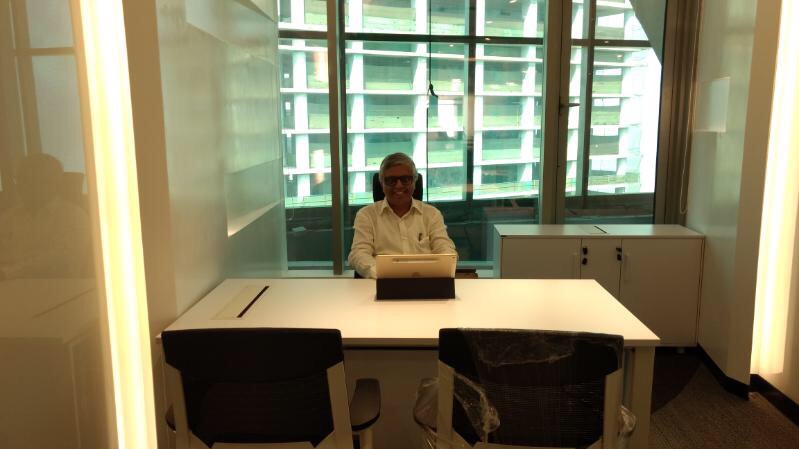
The nervousness of an interviewee may be symptomatically seen from the empty seats in front of the interviewer as in the photo above.

In my view, if you are well prepared, passionate and honest, you could relax and face the interview with determination.  I am sure you will come out with flying colours.

Wishing you all the best,

S Ramesh Shankar