Comparisons


All our joy and sorrow in life is due to comparisons. We tend to look at others to feel happy or sad. Why does this happen ? I do not know but it is most often a reality in our lives. We tend to compare ourselves with our siblings as a kid and then our classmates in school and college. Then may be our colleagues at work.

I used to live in a city, where people bought a car or a house bigger than what their neighbour had rather than what they needed. This was because the societal norms in that city was to live by comparison. Imagine you buying something in life not because you need it but because your neighbour has it.

How do comparisons affect us ? It makes us less tolerant and also tends to create a complex within us. We either think we are superior or inferior to others. This leads to negative behaviour, which in turn impacts our relationships with others.

What do we do ? How can we live without comparing ourselves with others ? Yes it is possible. We could compare ourselves with people having more troubles than we have. We can compare ourselves with people who are less fortunate than us and this will make us grateful to God. We can compare ourselves with people who are better than us in behaviour and relationships and learn from them.

However, in reality we do not do that. We tend to compare with those who have more than us. This leads to jealousy and in turn leads to undesirable behaviour and actions. Thus leading to both physical and psychological illnesses, which definitely can be avoided.

Another positive way to compare is to do it with oneself. How was I when started my career ? How am I today ? How was I when I was a child and how am I today ? All these comparisons will make us feel better and more grateful to life and God.

We can learn from the sportspersons from individual sports. They prefer to compete with themselves than with others. This is healthy and absolute. It energises them to do better and excel every single time without losing any energy. They remain positive in life and are always focussed on what they want to achieve.

As in the photo above, two artisans do not compare their pieces (boats) of  art, as they create it.  Each is a masterpiece in itself.   They always try  to do better than what they have created previously.  This is the lesson we need to learn in life.

Even the most successful people in all walks of life tend to excel by bettering what they have done before. They are not feeling bad of others around them, who have done better than them. They learn from the best but always set high standards for themselves in absolute rather than relative terms.

Let us learn to live life on our own turf from today.

S Ramesh Shankar

Humility versus Arrogance

IMG_1101
Life is full of choices. One of the choice we need to make is between “Humility” & “Arrogance”. It is not that the choice is between black and white. It is most of the time grey. While most of us like to be humble and modest in our day to day behaviour, its the effectiveness of arrogant people around us, which tempts us to review our choice. We sometimes feel that humble people are ignored and walked over. On the other hand, the arrogant ones are noticed and people do listen to them.

Many of my colleagues at work at all stages of my career have always expressed this dilemma in their life. Is it a good idea to be humble and ignored sometimes or be arrogant and get noticed always. I do not have a ready made recipe. But can share my learnings from life and its consequences. One can get away with arrogance as long as you are seated in a position of power in family, work or society. The day you give up your position, you are neither respected nor remembered.

If someone was to ask you to recall your favourite teacher in school, you would always remember the one who was kind to you and grounded. We never remember people who were pompous and arrogant in their behaviour. Life is no different. While it is true that sometimes arrogant behaviour may appear more effective in getting things done in the short term, nobody will every cherish your company in the long term.

Let us examine this phenomenon from various angles. The first angle is that of history. We adore people who were humble and generous in their thought and actions. We do not like to study about the arrogant and pompous types. This is not because we know either of them from the past. It is more because we would like to have role models who are modest and not abrasive in their behaviour.

If we look back at our work life, we will always cherish to work with people who are simple, modest and willing to learn and share with others. We may sometimes feel that they are not assertive enough but their humility bowls us over. If you are humble does not mean that you cannot be assertive. It means that you know where your feet are and are always willing to learn from your own mistakes. Pride is like anger. It can only destroy you today and tomorrow. On the other other humility is like honey, it will always make you a sweet person to adore.

If we look at our family and friends, we always like to be in the company of those whom we respect. We respect those who are our role models. Our role models are people who are grounded and kind. People who are humble will always be good listeners and effective coaches. Their actions teach others. Even if they do not actively coach anyone, others learn even in their company every day.

On the other hand the arrogant people spread venom. They may appear very aggressive and effective in the short term. But they spoil all their relationships in the long term. Their day to day behaviour repels people around them. Everyone tries to avoid such leaders. If given a choice, team members would prefer to join other teams rather than suffer in the hands of an arrogant leader.

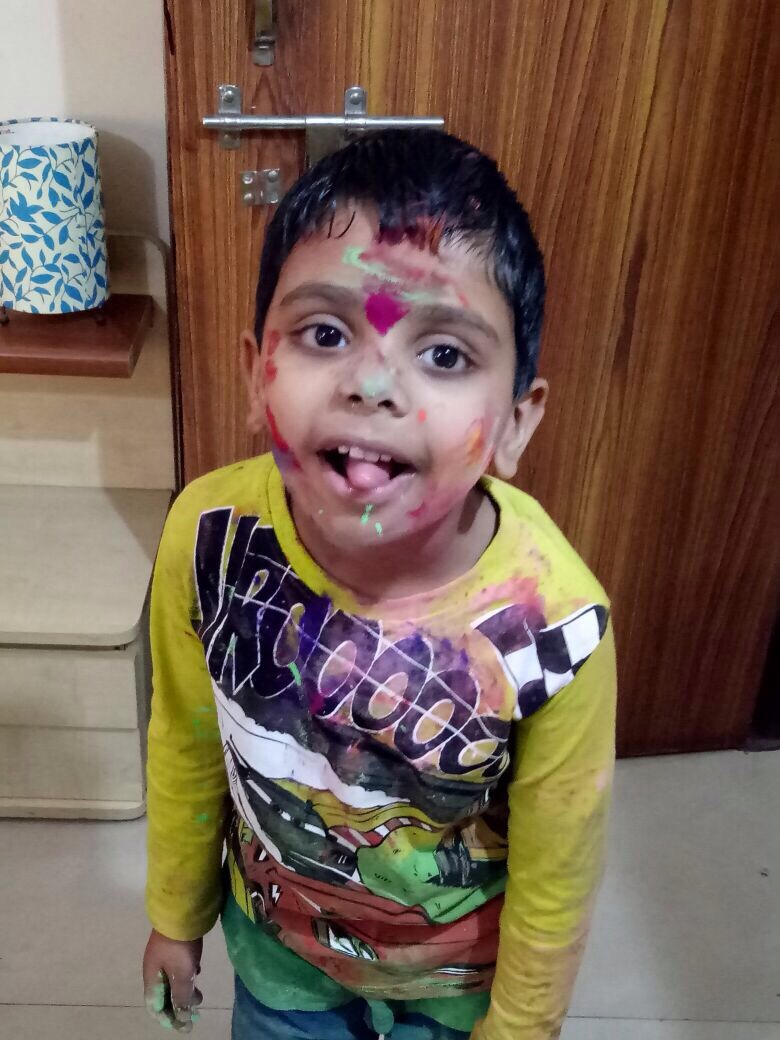
The best thing to learn from kids is that they do not have to make a choice. They are natural in their disposition as in the photo above.

It is true that sometimes it may appear that humble leaders may look less effective. However such leaders are always better in the long term. Their leadership is sustainable and focussed on the future. They would never cut corners or look at short term benefits. On the hand, they may sometimes be willing to sacrifice short term gains to create long term sustainability of their people and organisations.

What would you prefer ?

S Ramesh Shankar

Safety vis a vis Speed


I have always been fascinated by driving.  I love driving on the highways along with family and friends for a long road trip any day.  A long drive along the country side teaches you many things in life, which no class could do.  It helps you in advance planning.  It enables you to deal with any type of unforeseen circumstances.  It also makes you adapt to eating what you get on the way rather than what you desire.

Even in my youthful days when I first owned a second had fiat car, I used to love to drive fast.   All the kids in our family or friends circle used to jump on to my car only because they loved my speed. It was indeed thrilling.  The cars were not technologically advanced nor the roads were great.  There were hardly any safety features and hence the maximum speed on a highway could be 60 to 80 kms per hour.

I continued this driving style for many years in my life and was quite proud of the same.  I did take whatever safety precautions were necessary and possible.  I used to plan and ensure driving especially on the highways only from sun rise to sun set.  I normally did not drive more than 400 to 500 kms in a day as it gets tiring beyond that.  Today the cars are more advanced and the roads are excellent.  You are tempted to drive faster and keen to enjoy the thrill of speeding.

This attribute of mine continued for decades.   I can be honest to state that it was only about 5 years back that I realised that speed thrills but kills too.  As long as the road is empty and good, you can drive fast.  But it is important to wear your seat belts and keep the car under control.  On the highway, you never know how the others are going to drive.  Further, there could be traffic from the wrong side of the road like a tractor or a two wheeler.  This could further get unsafe with pedestrians or animals crossing the road at odd places.

Now after spending decades enjoying the thrill of driving in the city and on the highways, I realise that speed thrills but kills.  It takes the same time to reach your destination if you drive at high speed or at reasonable and safe speed.  If you drive at high speed, you enjoy that moment but then have to slow down the moment you see a pedestrian or a vehicle on the opposite side and this not only slows down your car but also damages the brake pads and other parts of the car.

It is better to care for safety than speed.  As long as you are safe and can drive at reasonable speeds, it is not only enjoyable for you but you reach your destination safely and in the same time period. Thus this may be a life lesson for me.   I continue to enjoy my driving as a hobby and have a car, which has all the basic features of safety.  We ensure that we are wearing the seat belts always in the front and the rear seat and are at reasonable speeds, wherein the car is in full control and safe.

In conclusion, I would say it is safety with speed which is thrilling and not speed alone.  We not only have to care for our own safety but all the people on the road.  It is true that all over the world the maximum accidents happen on the road.  Unfortunately, it is the highest number in our country.  So, let us resolve today to be safe always and still enjoy speed.

Safety first, speed next.

S Ramesh Shankar
January 2017