Take nobody for granted…

IMG_5945

We take life and everybody around us for granted almost every day. It starts from the family to friends and even colleagues in the organisation, where we work. Let us start how this evolves from our childhood. As a child, we are respectful of our parents and others in the family and do not take anyone for granted. However, as we grow up as an adolescent, we tend to take our parents and family members for granted. We decide when we want to leave the house and when we want to return and expect our parents to wait for us endlessly for us to return.

We start justifying our erratic behaviour and interestingly demand services from our family members as if they were dying only to serve our needs. We do realise that this is not desirable behaviour when we grow up as adults and even regret our actions. This may be psychological in nature and may not be intentional. Our parents generally understand and tolerate our rebellious behaviour and at times try to counsel us too. We realise how much we took our parents and other family members for granted when we get into college or a job and leave the safe precincts of our home to live all alone.

Now, let us move to our friends. We almost take them for granted always. One may say friends are meant for that. I also thought so till I realised that it is not fair to think that way. After all even our best friends are human beings and have emotions and feelings. We need to respect them and empathise with them. Our friends stand by us at all times, even more than our relatives. Then, why should we take them for granted. We do realise sooner than later that we need to give them space and respect they deserve always.

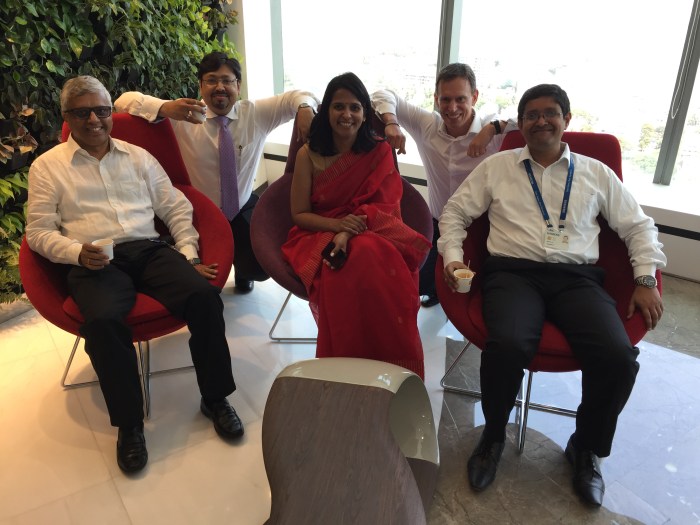
If we move to the organisational front, the story is not very different. We take our colleagues( as in the photo above) for granted. We sometimes even take our suppliers and customers for granted. In the worst case scenario, we even take our manager for granted. We start believing that everybody is working for us and we deserve to be served by them. We do not realise that we also have obligations towards them and we should first give then expect anything from other stakeholders.

So, this is a vicious circle. Taking someone for granted is a natural state of evolution and all of us fall prey to it sometime or the other. We need to realise that as responsible human beings we have no business to take anyone for granted. Everyone has a right and has an equal measure of responsibility. This phenomenon possibly happens because we remember our rights diligently but forget our duties. Let us reflect how this impacts our behaviour in our daily life ?

As a child, we consider our parents’ duty to take care of us all the time but we do not realise that we have a responsibility to serve them in whatever way we can in return in every stage of our life. As a friend, we are happy when friends help us in distress but we forget them when we doing well in our lives and they may be in distress. At work, we seek guidance and support from everyone when we are under stress but we claim to be busy when others need our help.

This is my learning in life. We should not take anyone for granted in life. If we try to put ourselves in the shoes of others before we take anyone for granted we may realise their value in our life. It is time to wake up. It is time to be grateful to others rather than take them for granted.

It is time to change ourselves.

S Ramesh Shankar

28th August 2017

Perseverance

IMG_1882

One of the qualities all of us wish we had would be “Perseverance”. I have not come across many people in my life time, who are perseverant in the pursuit of their goals in life. An unflinching belief in yourself and a dogged pursuit of your goal is what you aspire for. But it is just an illusion for most of us. This is one quality, which I learnt from my father in law, who left on his heavenly abode on 20th August 2017.

A self made man from a poor middle class family. After losing his father at a young age, he got into the government service. He rose from the lowest levels to retire from service after more than three decades as a Chief Accounts officer. His passion for mathematics was visible. But, what I really admired about him is his passion to learn new things in life all the time.

I have seen many incidents in his life, which speak volumes of his learning attitude and his passion to persevere. He lived along with his spouse and till the age of eighty five and was fully self dependant. He neither depended on his kids financially nor otherwise. He lived in his self built house, cooked his own food and maintained everything around him with his own hands.

A master of mathematics and a voracious reader. His command over English was admirable. He would discuss and debate on all issues and always had a point of view. He would never be satisfied with any response unless he verified it himself and was convinced. At the age of eighty two, he took to writing a book. He wrote the manuscript in his own hand and then requested my wife to edit it and contribute to complete the same and publish it.

Another interesting attribute I have learnt from him is his meticulous maintenance of records and documents for everything. The accountant in him was embedded in his blood. But the systematic maintenance of household records is indeed worth emulation. Luckily for me my wife has learnt this quality from him. He would maintain the receipt and history of every asset in his house and neatly maintained and easily retrievable.

He was a well read and a pious person. He had deep knowledge of the scriptures and all the Hindu rituals. While he followed all religious practices, he never imposed his views on others. He was always open to be challenged and was willing to accept alternate view points on any issue. He had in depth knowledge of Hindu rituals and could easily challenge the priests on festive occasions if they took a short cut.

If a person can pursue his post graduation at the young age of 75 in order to fulfil one of his unfulfilled goals in life, it is worth adulation. I have not seen many people in my life time, who have persevered with such dreams and pursued it till success much after retiring from service as well. He was a man of letters. Well read in religion, current affairs and even medicine, where he could end up challenging doctors on a wrong prescription.

I recently visited him with my spouse on a courtesy call. While I was leaving his house, he asked me to explain – “What digitalisation means ? “. Honestly, I was stunned and had no answers. I told him that I will research and revert to him with an answer. I did tell him that it could mean applying technology to make human life better. But, I did go back and did a lot of research to understand the concept of digitalisation. But, unfortunately, he is not alive today for me to share with him.

I can only state that he was a perfectionist in the true sense of the word. A man, who would pursue till he got what he wanted. Of course at times it could be termed nagging and you may get irritated by his perseverance. After all , none of us are born only with virtues. But, the positives in him far outweighed his improvement areas. I salute him for his stature and am grateful to have learnt something from my interactions with him.

May his soul rest in peace.

S Ramesh Shankar

20th August 2017

Why do I blame the world ?

We all have a tendency to blame everyone else in the world for almost everything. If things work for us, we take the credit and when something does not work, we blame others. This is the reality of the world. Lets start with ourselves and our lives. If I come first in the class we say it is all due to my hard work. If we fail in the class, it is due to teachers not doing their job or parents forcing me to take a subject I do not like and so on.

If we move to the work place, life is no different. If I do well on the job it is because of my hard work. If I do not do well, it is because of lack of support from my boss or from other colleagues at work. This again proves that everything going well at work is because of me and everyone else around me is responsible for anything going wrong.

If we move to society at large the situation is not very different. If the roads are flooded during the monsoon, we blame the government, municipalities or contractors. However, if the I choke the drains with plastic waste I am not responsible. If the city is not clean, the state has to be blamed. If I litter garbage around my house, we may blame the municipality for not having effective garbage collection system.

All this leads me to reflect as to why do I blame the world for everything that goes wrong in my life ? Why do I take the credit for all that I do well in my life ? Is this human psychology or our limitation and selfishness ? I would consider it human limitation and our selfishness. We as human beings always want to take the credit for everything positive in life and blame the world for all the negatives.

I was wondering how the world would change if we looked within ourselves and decide to reverse this trend. Imagine my giving all the credit to my teachers and parents for all my success in life. What would happen if I credit my boss and colleagues for my success at the work place ? How will society be different if I lead the change I want to see in my environs ?

I think it is time for us to lead this change and make a positive impact in society. I would like to take responsibility for all my actions. If things go right in my life I could give credit to the people who have made it possible. If I do something wrong I will take the responsibility and ensure that I own it up. This will ensure that the people who deserve the credit for my success in life get the due.

All this will also ensure that there is an attitudinal change in society. Change always begins with the individual. Like we say an organisation is not buildings or structures, it is a summation of people working in it. Similarly, change has to begin with the individual. Why blame the world for my sins ? If I smoke, I am responsible for it. How can I blame my friends or relatives and claim that they have got me into this habit ?

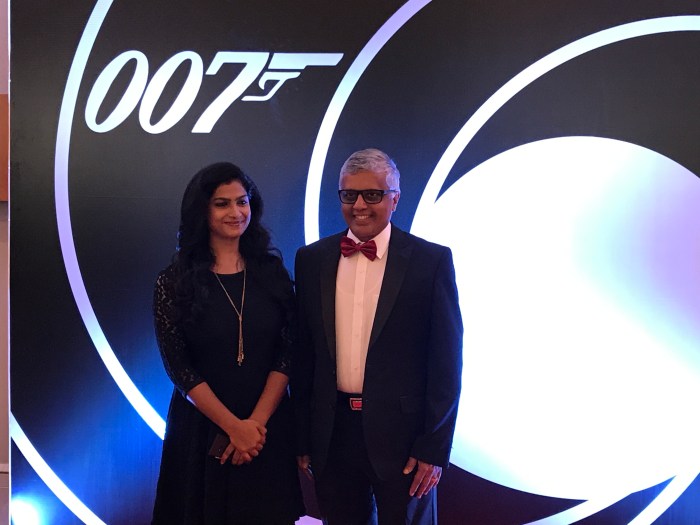
A selfie above is a good illustration that change begins with me.

We always tend to externalise a problem or an issue ? We want to blame the world for all our wrongdoings . We want to blame society for anything which happens to us. We want to blame the government for all inaction and evils in the community. It is time to reflect and change. It is time to introspect and act. It is time to look within oneself rather than outside ourself.

Change begins with me.

Let me start today.

S Ramesh Shankar