Is performance management an art or a science ?


I have been asked this question multiple times in my career. Is managing performance an art or a science ? I would say both. While some aspects of it is a science, other aspects could be an art.

Lets look at every aspect of performance management process. If we take goal setting as the first step, then it is definitely a science where you can link organisational and functional goals to individuals and make them measurable. Many wonder if all goals are measurable. I believe so and it depends on how you set them.

Then if we move to mid term review of performance, it is both a science and an art. Without doubt, the review of performance metrics is a science. But the way we conduct the review is definitely an art.

If we then move to self appraisal, it is also both a science and an art. The ability to introspect and present your performance based on data and metrics is a science but the ability to communicate the same during a dialogue process is an art.

If we move to annual performance review – it is again a hybrid of science and art. We need to be objective and fair in assessment based on data and metrics and hence it is definitely a science. But our ability to have a dialogue with the Appraisee and present it to a performance review group is possibly an art.

Development planning and potential assessment could again be a combination of art and science. While planning has to be scientific, the ability to communicate and enforce the plan is positively an art.

Last but not the least is the feedback diagoue. This is more of an art than a science. While feedback again has to be fair and objective, it is our ability to make it an inspiring dialogue , which enhances its effectiveness. Hence, it is more of an art than a science.

Now one may ask what is difference between science and art in a performance management process. Science is logic, while art is to make the process inspirational. Science makes it fair and objective through use of appropriate data and metrics. Art is our ability to have an open and inspiring dialogue where we can tell the truth without demotivating an employee.

While it may be easier to write on the art and science of performance appraisals, it may be more difficult to practise it. After spending almost four decades practising performance management processes, I can easily state that I am yet to master this art of science.

The day we realise that it is is combination of art and science, we may become more effective as appraisees and appraisers. It is almost like the interview process. Even if a potential employee is not selected, he or she should feel that they just had the best experience of their lives and would definitely love to join this organisation.

As in the photo above, most of us behave like the lion, especially when we play the role of the manager of the appraisee. 

Similarly both the appraisee and the appraiser should feel that they not only enjoyed the performance management process but also felt that is objective, fair and inspirational. This possibly comes from diligent preparation and authentic skills in conversations.

Lets try this year and make a beginning.

S Ramesh Shankar

3rd May 2021
Life is never a full stop.

We do not realise many a time as to when life begins and when it ends. Many of us tend to believe that life begins at birth and ends at our death. It may or may not be true. This is because we do not live life fully till the day we realise what life is ?

I have met people in my life who have worked very hard and toiled their way through ups and downs, sacrificed their lives for their family, relatives or friends but never lived life to its full glory.

I am not advocating leading a self fulfilling life at the cost of others. I am suggesting that one needs to live life the way one would like to without any full stops.

This means we have to believe life may have commas, semi colons and colons but never a full stop. Every obstacle in our life could be an enabler for our resolve to live life fully. Most of us get stumped by the commas and semi colons of life. We need to believe that everyone goes through a “Sonder” in their lives. We are no different. We need to believe that if the sun sets today, it has to rise tomorrow in our lives too.

I do not believe that that the sun sets forever in anybody’s life. All hurdles and challenges are only ephemeral. They will disappear as fast as they appear. If we postpone living life to a tomorrow, it may never come.

We need to live life today and every day of our lives. While yesterday will fade away, sometimes a tomorrow of our choice may be elusive. It may be worthwhile to believe that “today” is the best day of our lives. We also need to believe that there are millions of people around the world, whose lives are more challenging than ours.

A feeling of gratitude for all that we have in life as compared to those millions of have nots may make all the difference to our lives and living. The pandemic today worldwide is a good reminder for all of us for being grateful for all that we have.

Most of us have a place to live in, food to eat, a family to support and friends to cherish. What else can we ask for ? Imagine the plight of the migrant labour who has lost his job in an urban city , then forced to migrate to his village and unable to feed his family and self . Aren’t we better off than most of such stories of people losing lives and livelihood. Isn’t it time for us to rekindle our conscience and bow in gratitude to God.

I have worked and lived in different parts of India. Hailing from a lower middle class family I have worked hard to earn my living. Today when I look back, I realise how fortunate I have been right throughout my life and lived the way I always wanted to. Although, I did not have all the material things I may have desired at the early stages of my life, I always had love and happiness in abundance.

The best is to learn from our kids. Even in the most difficult times, they will find happiness in small things of life and enjoy. It is time to realise that money cannot buy love and happiness.

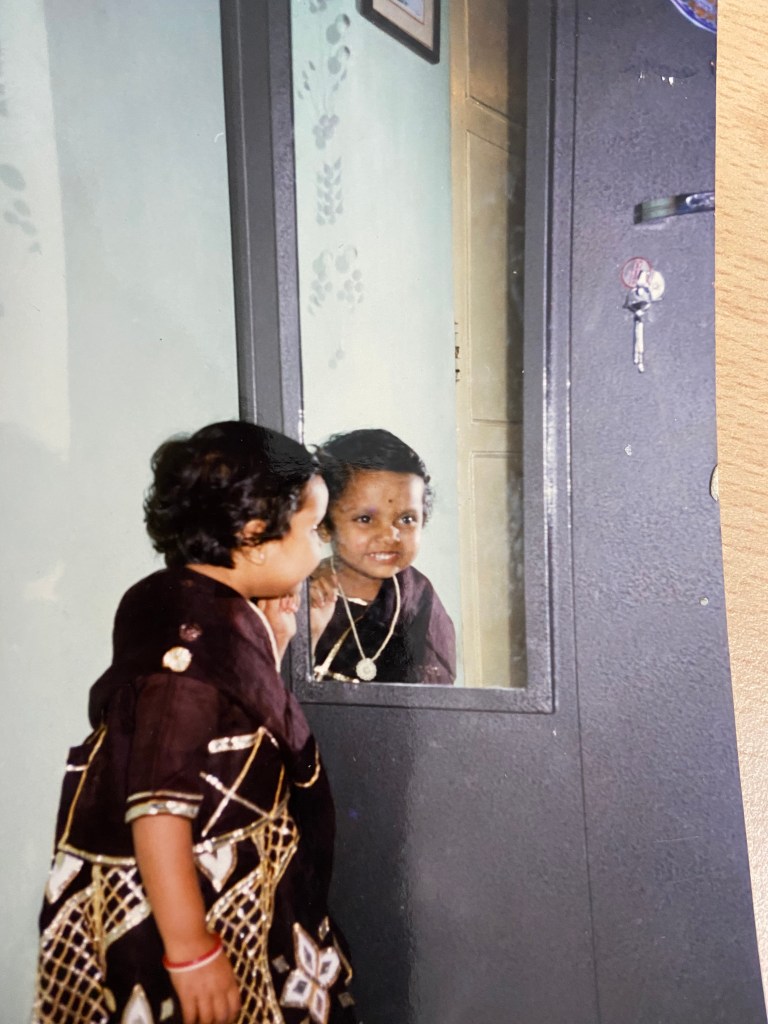
As in the photo above, irrespective of what others think this girl is admiring her smile.

Let us bow in gratitude and live life to the fullest from today.

S Ramesh Shankar

8th October 2020

Diversity of colours

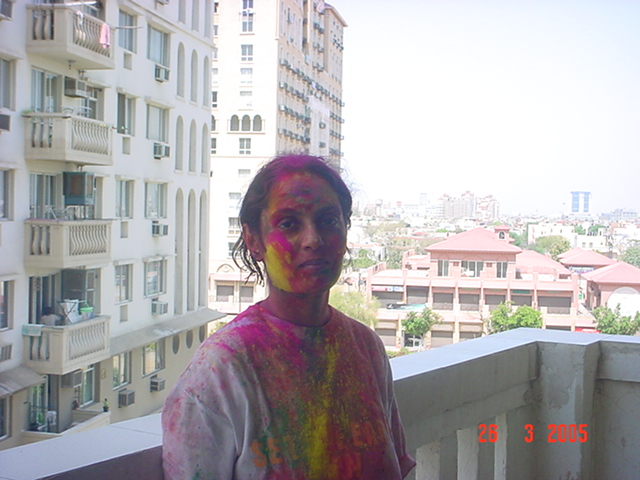
The festival of “Holi” in India signifies the onset of spring. While there is a story behind the festival, it is celebrated in most parts of India through sprinkling of colours on one another after the burning of Holika and performance of puja.

While the world talks today of DEI ( Diversity, Equity & Inclusion) and most organisations make a fuss about it, India celebrated the festival of Holi over many centuries and celebrated diversity in true spirit every year.

In my view “Holi” signifies equality and equity of all people. It does not differentiate based on religion, caste, creed or socio-economic status. The spirit of this festival is lived in India over generations.

Whether in communities, villages, towns or cities or within the precincts of organisations, everyone is deemed equal and celebrates this festival without any discrimination based on any factor.

I love this festival of colours as it truly represents the spirit of India’s diversity. I have played Holi across the length and breadth of our country. It not only celebrates the onset of spring but also promotes brotherhood and humanism at large.

While some say that the spirit behind this festival of diversity, equity and inclusion may have faded a bit, it is for us as individuals and as a collective to rekindle this spirit and promote the camaraderie in the societies where we live in today.

If we look back at our history as a nation, we have lived harmoniously irrespective of multiple religions, castes and ethnicities, peacefully co-existing over centuries. We have been threatened by invaders time and again and even the British tried to divide and rule but they did not succeed.

Today on the occasion of our 75th year of independence, it is upto us to resolve to preserve and promote this inherent diversity in our society. If there are forces within our society or outside which negate this spirit, we need to challenge them and be proud of our culture and heritage.

I have worked and lived in north, south, west, east and centre of India. I can proudly say that I am an Indian first and then belong to a state or a city. I have lived and thrived in every place I lived and have been respected and regarded by all communities.

Today, we are at a juncture where the world is looking at India and China as the super powers of the future. There could be strategies to derail our growth and development as a nation. But we need to preserve our rich cultural past and create a future of our choice built on this great foundation.

We have 28 states and 8 union territories in India. Each state almost speaks a different language and each of the languages also have multiple dialects. At the national level we use Hindi or English for official communication with the Centre and between states. However, we live and breathe as one nation. This is the spirit of India we can be proud of. Our Constitution guarantees us to live and thrive in any part of India and enjoy our heritage.

Let us continue to celebrate unity in diversity and share the spirit of “Holi” in our everyday lives.

I salute this spirit on the occasion of “Holi” today.

S Ramesh Shankar

7th March 2023