Body, mind and soul

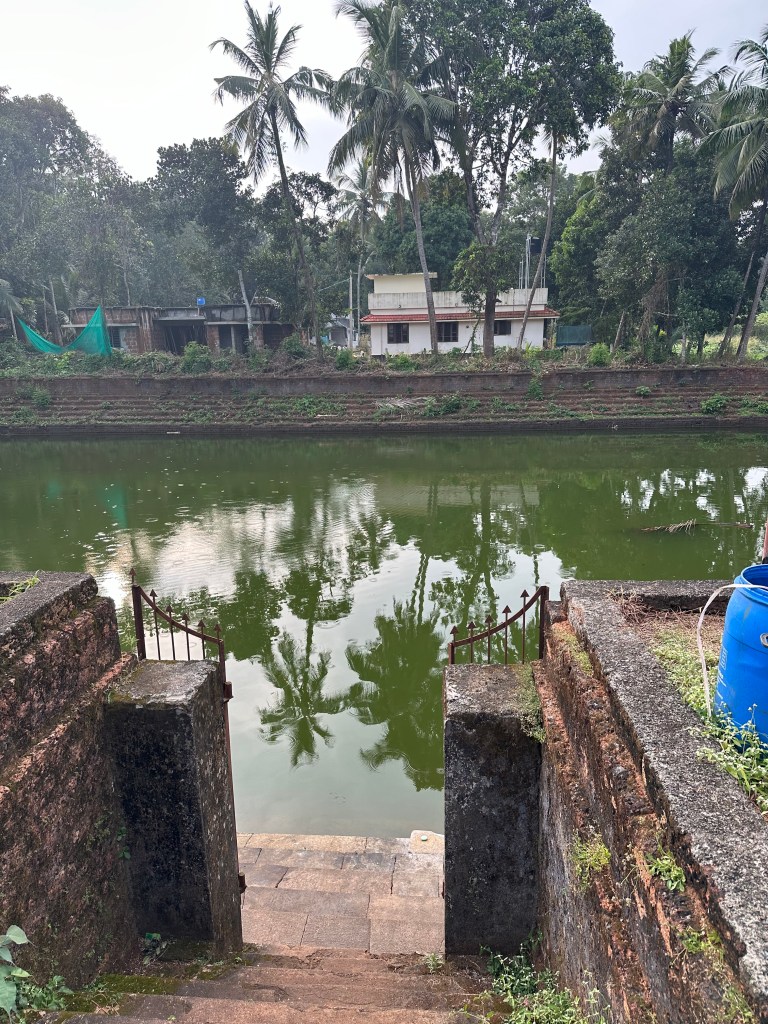
I am at an ayurveda centre ,in Kerala and come here once a year, to rejuvenate my body ,mind and soul. I am not recommending that everyone needs to go to an Ayurveda centre ,to do the same. You could choose your own place, where you think ,it may help you ,to do the same.

My body is getting rejuvenated by massages through herbal oils and pastes and all the toxins in the body ,are getting released through Kashayam ( herbal medicines in liquid form). I am sleeping more peacefully and relax my body, mind and soul.

My mind is in a state of stillness. It is almost like I have hit the Contol+alt+del button ,on my computer. All the stresses and strains of urban life, seem to have been erased from my mind. It appears that my mind is fitted with a brand new hard disc ,with all worries of the past deleted.

My soul appears to be only listening to the song of the birds around me. I am in sync with nature and there is no scope of polluting my body, mind or soul. Everything seems so serene, that I can feel my soul floating around me.

Today many of us work ,in high pressure jobs ( or at least we make ourselves believe so ). The first myth one needs to remove from our minds is that we are indispensable ,wherever we are working and whatever role we play ,in the organisation. There is nobody in the organisation starting from the CEO, who is indispensable.

The second myth we need to break in our minds is that ,we are young and health need not be a concern, at this stage. It may appear like the inbox in a new email set up ,by us. We may think that we can delete unwanted emails in the future ,as there are not many ,as of now. But before we realise ,our email is flooded with junk. Similarly our body assimilates toxins right from our young age and unless we have a systematic mechanism to eliminate them, they accumulate and end up in diseases for us.

One way of detoxifying ourselves periodically ,is to go away from our routine ,to a place where we can rejuvenate our physical, mental, social and emotional health. It is up to us to decide, if it has to be an ayurveda centre, a trek to the mountains, running a marathon and preparing for it or something else.

The third and the most important myth we need to shatter is that ,we can do it in the future. Tomorrow never comes for some of us. We need to realise that ,today will also not last forever ,and will sooner than later, become yesterday. If we do not care for our health, we may become extinct ,even before we realise it.

We can explore what works for us. But, it may be a good idea ,to find a way to synchronise body, mind and soul at least once a year, so that we lead a healthier life.

Let the journey of health discovery ,begin today.

S Ramesh Shankar

9th Jan 2024

Conflict Resolution


Conflicts are an integral part of life. It could be within a family, with team members at the workplace or even between communities or nations. Conflicts basically arise when there is a misunderstanding or communication gap between two people or teams or even communities or nations.

I was reminded of a beautiful quote, I read long ago. It goes like this: “I know, you believe, you understand, what you think, I said. But I do not know whether you realise, that what you heard is not what I meant.”

The crux of the communication ,lies in the receiver getting the message in the same intent ,in which the sender intends, to give. However, there are a lot of barriers ,in between ,and this results in conflicts.

After spending my entire career in corporates ,working for multiple teams, I realise that one of the better ways of resolving a conflict, is to develop three basic skills ,in our lives :

A. Active Listening

B. Willingness to accept mistakes, and say sorry

C. Moving on

The first and most important skill ,one needs to develop ,is active listening. This may look simple, but in my view ,listening and that too active listening, is one of the most challenging skills to develop. Active listening would mean ,listening as if your whole world depends on, what the other person is about to say. We need to screen out ,all distractions and barriers ,and focus on what is being said ,so that there is no gap between ,what is communicated and what we listen.

The second skill is ,willingness to accept our mistakes. We generally believe ,that we do not make any mistakes and the whole world around us ,is erroneous ,most of the times. It may hugely benefit us ,if we are willing to subsume our egos and honestly and openly accept our mistakes. Every individual is internally aware ,when they have made a mistake. It is only our ego, which prevents us, from accepting our mistakes willingly. How do we learn to crush our egos and accept our mistakes ,unconditionally. Saying “sorry” would be the most difficult challenge in life ,always but if we are able to do it, most conflicts could get resolved ,even before we can imagine.

The third skill is ,our ability to move on in life. We tend to remember all the bad things of our life and easily forget the good things. It may help us immensely, if we are able to erase any incidents leading to conflicts and move on into the future. This requires a big heart but may be worth the effort. Life is definitely wholesome ,if we are willing to look into the future rather than worry about the past forever.

Apart from the above skills, we need to

A. Trust one another

B. Communicate authentically and openly

C. Be open to alternative solutions

Trust is earned by our actions and behaviour. It cannot be bought by money or the position we hold. People do not trust us because, we hold a position of power in family, society or even within an organisation. Trust is evolved by demonstrated action of the values, we preach others. Trust begets trust. If we trust others unconditionally, they would trust us too. But trust is lost at the first loss of faith ,due to a gap between what we say and do.

Communication is always the key ,in conflict resolution. In most situations, silence speaks louder than words. Each one expects the other person ,to take the initiative. It is here ,that we have to show magnanimity. Let us learn to bury our ego and take the first step to communicate. The more we communicate, the more we move towards solution of a problem. This supplemented by patience, and perseverance will yield us to the ultimate goal.

The last aspect is ,openness to alternative solutions. We tend to limit ourselves to our own thinking. Our mindset appears to be cast in stone, in most such situations of conflict. If we are willing to be open to alternative and innovative solutions to a problem, which could be at variance to our own thought processes, the solution could emerge faster ,than we think.

The key to conflict resolution is listening, accepting our mistakes and moving on. This when supplemented by mutual trust, authentic communication and openness to alternative options ,will resolve conflicts amicably always.

Let the journey of discovery start today

S Ramesh Shankar

7th Jan 2024


Being considerate to others

I am not sure if man was born selfish or not. Many of us tend to be very selfish in every walk of our life. We are inconsiderate to others with or without realising the impact we create on people around us.

An individual’s selfishness may be tolerated within the family ,by parents and siblings ,for two reasons – one ,they do not have a choice but to tolerate and the other ,that they are magnanimous to us, as they want us to change in the future.

However, we may not get the same support from the society and the organisation, which we work for. Our neighbours may not be as considerate as our family members and so will be the case ,with our colleagues at work.

It may be worthwhile to realise the impact of our selfishness sooner than later ,to be successful in life. Just like no individual can succeed alone in life, no team will tolerate a selfish individual ,forever. If we do not change, we may have to fend for ourselves as individual players in family, society and organisations at large.

Now, if we move to communities and societies, we are tending to become more self centred without any consideration for others. This is reflected in the fact that ,today we do not know our neighbours as well as we did in the past. We are not concerned about anything happening around us ,unless it directly impacts us. The best example is that, there are not many volunteers to work for community or apartment associations.

If we move from societies to nations, the story is not very different. The most developed nations ,are the most selfish. For example, the developed nations of the world emit the maximum carbon emissions and then advise the world on climate change and carbon footprint, of other less developed nations.

If we look at this phenomenon of inconsiderate or selfish individuals communities and societies, we could come to the conclusion that this may be because, the unit of any society or nation is an individual, and unless the individual changes, this phenomenon will only multiply in the future.

If we look back at Indian villages, everyone in the village knew everyone else and if there was a problem for a villager, the whole village was there to support that individual to get over it. The villagers shared resources and volunteered to support each other, in any crisis or celebration ,in the family or the community.

Today, we are gradually alienating, members of our family itself. Joint families led to nuclear families and now nuclear families are leading to individuals in live in partnerships. So individuals are tending to get more individualistic in outlook and are not bothered about anyone around them in the family, community or society.

The impact of this alienation is already felt in society. We have more cases of depression and other psychiatric illnesses in society today. Relationships are weakening in families, societies and even between nations.

We need to get back to our roots to revive and transform the individual from a selfish to selfless person and thereby change societies and nations at large.

Let the journey begin with ourselves.

S Ramesh Shankar

6th Jan 2024