Past versus Future


If we signify the “Past”, our children epitomise the “Future”. Our generation is history but the future generation is a mystery. I have always wondered as to why we study so much of history and not much about the future.  We have to realise that our past generations have contributed to our success and happiness in life. It is our duty to invest our best for the benefit of the future generations.

Let us look at the family as an institution.  How much of our time are we investing in our children ?  How do we contribute to the success of the future ? Many of us believe that investing in academics and ensuring our kids get good scholastic education will insure their future.  I am afraid we may be wrong. The future will thrive on the values and beliefs we inculcate in the next generation.

If we move to the work place, the situation is not very different.  We believe that if we hone the skills of the younger generation, we have done our duties. It is important to remember that future of human kind is an optimal combination of ‘Skill ‘& ‘Will’.  While “skills”can be trained, “will”has to be internalised.  We cannot expect that the younger people will listen to what we say.  They may follow what we do.

It is in this context, it is important for us to lead by example.  We have to as parents, teachers and leaders be clear what will shape the world of the future.  We have to continue to invest in new skills but is equally important and may be more relevant to inculcate the will.  It is also very important to realise that while skill can be be developed over the years, will gets deeply embedded in the mind and may be difficult to change.

The values of the past may not be a passport for the future.  Just as the skills of the past may not create a future of our choice.  Thus it is critical to review and reshape the future by investing time and effort into it.  We cannot inculcate values by investing money.  We can train people on skills by spending money.  But, it is virtually impossible to inculcate the right values by spending money on our future generations.

The success of the future generations lies in the investment of our time today. We cannot expect miracles in the future without establishing the foundations of values required for its sustainability.  The future will become present even before we realise it.  It is important for us to realise the impact we can make today for creating a future, which all of us will be proud of.

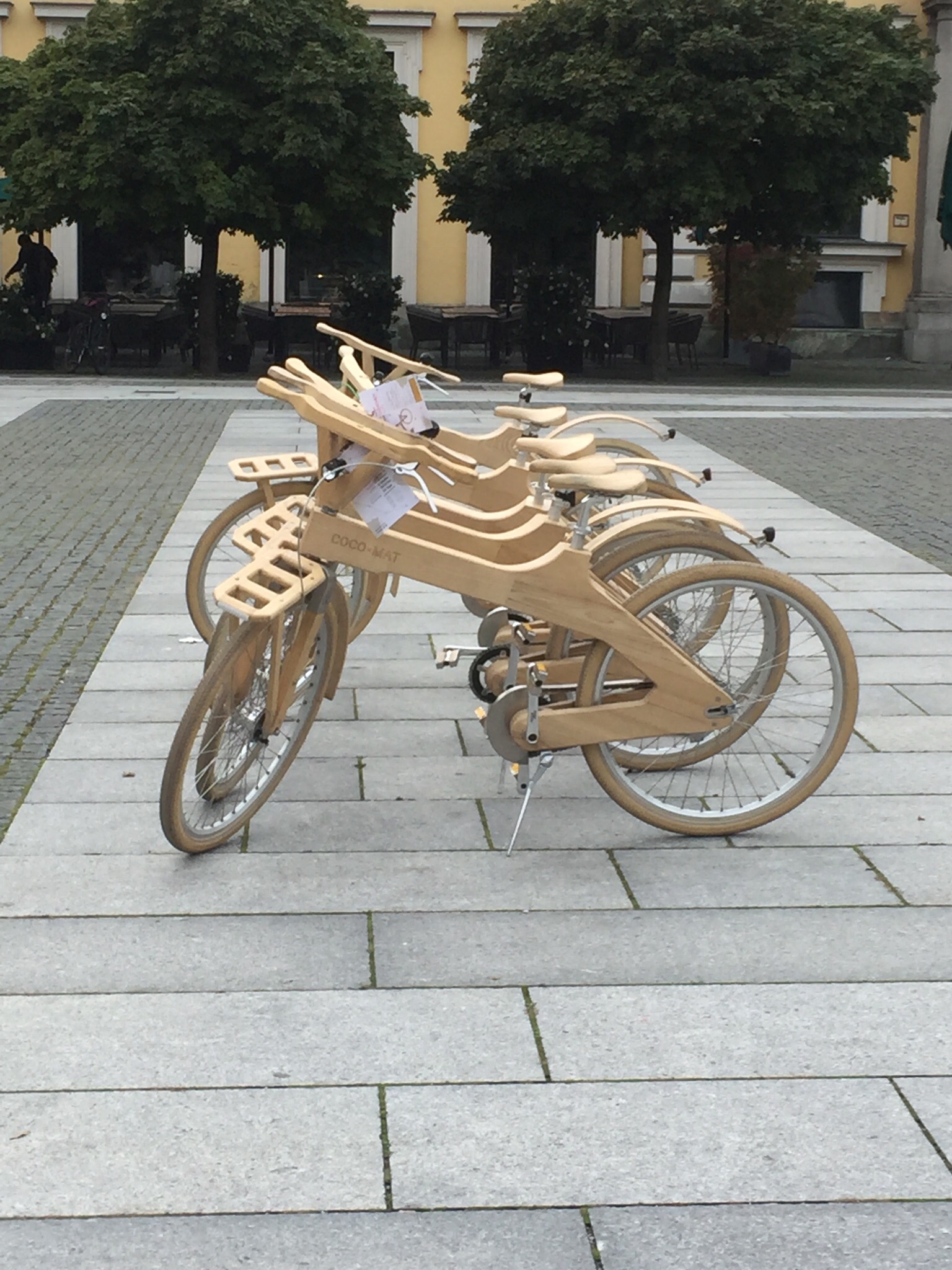
Just as in the photo above, the future generation will follow what they see of the past as measures of success.

Let us invest today for a tomorrow we feel proud of.

S Ramesh Shankar

Technology & me

Technology & me

I always wonder if technology rules me or I rule technology.  When I was young, I did not have to think much on this subject.  But, as I grew older, technology seems to have taken over my life. While I am a great fan of technology, I sometimes wonder if technology helps me or harms me in my every day life.  Let us take the simple example of the mobile phone.  There is research around the world that the mobile is never more than three feet away from a human being at any point of the day or night.  This means that we depend more on the mobile than the mobile depends on us.

I think all of us have immensely benefited from technology.  I grew up when we had not seen the advent of computers.  We did not even have the television in our homes.  So, the journey from living in an era of no mobiles, TV or computers to an age where the world is fully digitised has been an exciting one. I remember the early days in my career when I had to travel more than ten kilometres to make a long distance call after waiting for my turn in a long queue.  It used to take hours of waiting in long queues and we paid through our nose for talking to our parents for just a few minutes using long distance telephone calls.

Today technology touches  us in every aspect of our life.  If we refelect on it, from the time we get up from bed till we sleep, technology supports us in many ways.  We are woken up by the alarm on our mobile phones and do not need the sound of birds or the classic alarm clock with us.  Then, we do not need to read the newspapers to know what has happened around the world.  We are connected to the world through our mobile apps and we get alerted of news events around the world within minutes of its occurrence.

If we extend to the work place, computers have changed the way we work.  The work place is no more sacrosanct.  Work moves along with you wherever you are in the world.  The ubiquitous mobile phone helps you as an office assistant with calendar reminders, emails, clock, fitness tracker and many more useful aids.  We are connected with the world on the internet and decisions are taken on issues by people sitting in different parts of the world seamlessly.  All this has been possible only due to the advent of technology.

Hence, in spite of all these benefits, why do we feel that technology is managing us rather than we managing it.  It may be because of our greedy nature.  It may be because we have become over dependant on technology.  I remember that we used to have  the landline numbers of most of our family and friends in our memory.  Today thanks to the mobile phone we do not even remember the numbers of our close family members.  Some may argue that this is convenience and hence we need not remember any phone numbers any more.  I agree.  But, there seems to be a side effect and we need to worry about that.

The side effect of technology overwhelming us is that we are losing our humanness.  We do not remember the birthdays of our family, friends or colleagues.  We do not have the time to visit a dear one in a hospital.  We have no time to play with our kids in the park.  We have no time to admire and enjoy nature.  We are more content by the number of likes to a post on social media. We get depressed if nobody comments on our post for a few minutes.

Like in the photo above while bluetooth headphones can be a great technology to listen to music, it may sometimes make you inattentive to people around you.

I believe technology is a great enabler for us.  But, may be it is time to touch people and use technology.  We are ending up using people and touching technology.  Technology does not have emotions but people have.  Let us resolve to share our feelings with our near and dear rather than use technology to do so.

Today is the most auspicious day to begin. Lets just do it.

S Ramesh Shankar

Experience speaks..


In today’s world, some people ask – is experience valued ?  It may not be an easy answer to this simple question.  I am reminded of an incident almost thirty two years back.  My father was admitted with renal failure in the ICU of a hospital in Chennai.  The cardiologist, who used to examine my father examined him for two minutes,look at his pulse, checked his bp and would charge consultation fee of Rs. 100 per visit.  My monthly income at that time was around Rs 2000 .  This meant the consultation fee would be more than my monthly income every month.  I used to curse him for fleecing  a poor helpless soul like me.  My father recovered and was discharged.  I thanked God and returned home with my father.

Then after three weeks one day my father almost got choked in his throat while having his dinner.  I panicked and called in the same doctor on phone since it looked it were the last moments of my father alive that day.  However, the same doctor patiently advised me to lay my father on a bed and raise his legs with pillows.  He said that he will be fine and then I could bring him back to the hospital.  I did that and he miraculously became ok.  He later told me that his bp had gone down and raising his legs ensured flow of blood to the brain and he regained consciousness for me to get the breather to take him back to the hospital.  This incident taught me how valuable experience is in life. The same doctor I considered as a life saver of my dad and almost God sent.

In today’s work place, many employees feel threatnened the moment they cross fifty years of age.  Some employers also feel people over fifty may not be very useful and work on voluntary exit schemes to optimise this category of the workforce.  However, neither of these are necessary if we plan the right way.  It is true that as we grow old, our competencies may become redundant.  It is upto us to keep ourselves updated and upskilled.  If we do that and we are the best in whatever job we do, no employer will even dream of losing us.  On the contrary, if we live in the past and want to drive the car using the rear view mirror only rather then the windscreen in front of us, we may become obsolete sooner than we think.

So, the reality is that experience has to speak for itself.  It is like the doctor who was in his fifties then taught me how valuable experience is to save lives even on the phone.  Experienced managers can be great mentors and coaches.  One generation has to hand over the baton to the next.  It is upto us to be the beacon of light in the organisation rather than the dimming candle light.

Organisations gain from the wealth of the experience of her employees.  No organization can survive with material assets or cash in the bank.  It is the capabilities of employees which is invaluable.  It is the experience of the seniors which becomes the competitive edge in the market place.  However, if the seniors live in the past and are not in tune with the times than the future will not take them along.

It is like in the picture above, you should be willing to walk the ramp along with the younger generation if you are in tune with them.

Do you think experience speaks ?

S Ramesh Shankar