Vision – thinking beyond the obvious..


Organisations and individuals can have visions.  In my definition, Vision is our ability to dream about the impossible and make it possible.  I recently attended a conference wherein a company CEO nicely illustrated the concept of “Dreams and details”.  He said it is important for all of us to dream but it is equally important to convert the dreams into details and work out the road map to achieve it.

It is very similar for organisations and individuals.  While all of us dream big and set out almost impossible goals for ourselves but we do not reach them because we do not work on the details.  It is like our new year resolutions as an individual.  We set idealistic personal goals for ourselves and more often than not falter in the first month of the new year itself because we never bother to work on the next steps.

Let us first reflect as individuals.  We are content with what comes our way.  Mediocrity becomes a way of life. If we are born in a family with all comforts in life, we tend to become lazy and content.  Another interesting dimension is that children tend not to look beyond their parents for inspiration.  We are happy to maintain the way we have been brought up in life. 

If we move to the organisational context, the story is not very different.  Most organisations want to grow in an incremental way.  They do not want to tread on troubled waters or take undue risks.  They do not dream big or set themselves daunting goals since individuals working in the organisations cannot think beyond the obvious.

The trend is similar for countries too.  It takes a Mahatma Gandhi to think beyond the obvious.  It takes a great leader to dream big and then work on the details to make that dream a reality.  Similarly, in organisations it takes a great leader to set an impossible vision and then rally the whole organisation to realise it.  Even individuals who can think big can realise it more often than not.

I recently met an olympic bronze medalist.  She said that you need to trust yourself and your team and then work hard to realise your goals.  This is equally applicable for individuals, organisations and societies to achieve their vision.  All of us have to develop the ability to think beyond the obvious and then work on the ways and means to make that vision a reality.

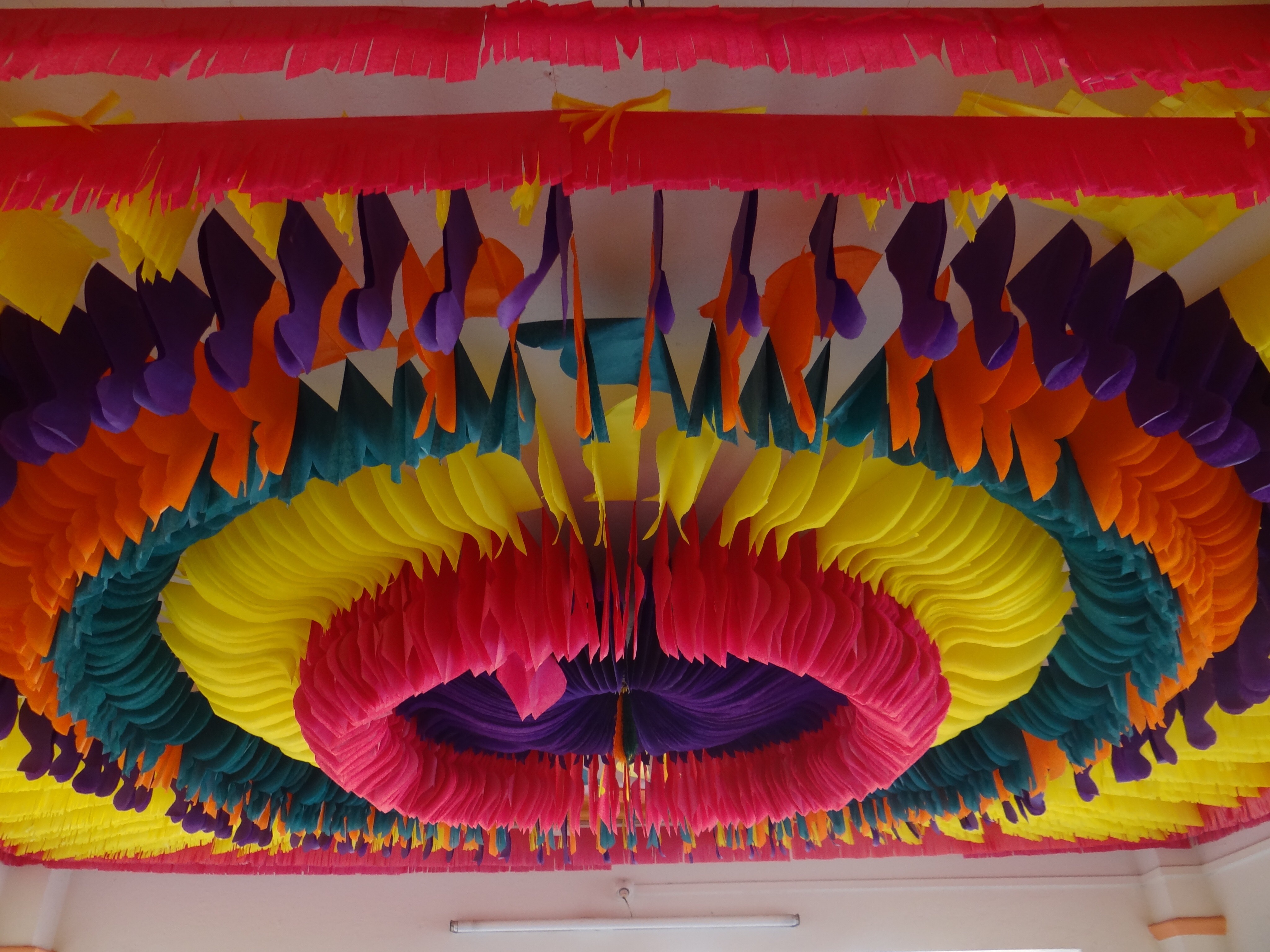
It is like reaching the sun in the photo above may look impossible today but the human being is capable of it in the future if we set ourselves to do it.

Can we think beyond the obvious from today ?

S Ramesh Shankar
Oct 2016

Knowledge, skill or attitude ?


What is important in life ?  Knowledge, skills or attitude.  This is an ongoing debate for generations.  We assimilate knowledge through our academic system.  We acquire skills by practising what we have learnt.  Our attitude is moulded by our beliefs and values.  What comes first and what is the most important ?  It is almost like the chicken and egg story in life. Did the chicken come first or the egg ?  

Knowledge is an assimilation over centuries.  It is gathered through experiences of people and experiments in life.  This knowledge then is passed on to generations through academic pursuits or through exchange between members in the family and society.  When people apply the knowledge gathered this way, they hone their skills in practise.  However attitude is developed by environment and our own beliefs and values.  What do we believe in and what will we never compromise in life ?

Isn’t it true that if Newton had not sat under the apple tree, the laws of gravity would not have been discovered.  So, it is true that practise leads to theory and theory enables you to practise.  This means there is a good correlation between knowledge and skills like theory and practise.  Attitude is the way we perceive things in life.  this perception is based our own life experiences and what we see in others.  We believe what we see and hence this guides our attitude in life.

Thus, knowledge, skills and attitude are all equally important in life.  It is important to assimilate knowledge, then practise your skills and evolve your attitude.  While knowledge and skills are relatively easy to transfer, it may be difficult to pass on your attitude.  Hence, many organisations assume that one has the knowledge and skills for a job and mostly focus on checking on the attitude of the person.

It is true that our academic systems are more tilted towards knowledge and less towards building skills and moulding attitude.  It is here where we need to look at academic reforms and also appreciate the role of family as an institution in attitude building.  While academic institutions may spread knowledge and organisations may succeed in building skills, it is the family and society, which has to contribute effectively in shaping attitudes in the the future generations.

Knowledge, skills and attitude are like three pillars of a tripod.  While the tripod is considered the most stable of all geometric designs and hence used with cameras, it is also true that if one leg is shaky, the tripod is unstable. Hence, it is critical to give due weightage to knowledge, skills and attitude in life.  A good balance of all the three may help us lead life successfully.

The monastery in the photo above can be a fountain of knowledge but we need to hone our skills and mould our attitude.

What is your take ? 

S Ramesh Shankar
Oct 2016

Reality bytes

Today I went with my wife for a tour to Dharavi in Mumbai. This is one of the largest slums in Asia. There are almost a million people living in an area of less than two square kilometres. A home is less than ten square feet and on an average houses five adults. It is indeed an eye opener. You need to visit the place to believe it. We went through an organization, which organises these tours and partly gives back its profit to support the people and children living in Dharavi.

The first part of the tour is the commercial area. In this part, thousands of men and women are working in different types of industries. The first sight of old car bumpers getting shredded and recycled as plastic beads to be moulded into chairs and other plastic durables. Then we pass through suitcase makers, the leather soles for shoes, leather bags, bakery and food items being made for consumption within themselves as well as for sale around town.

You realise how difficult are the working conditions. In dark room with minimum light people inhale dust and paint flakes as they shred material waste to generate the raw material for plastic remoulding durables. People from the remote parts of the country are working day and night leaving their families behind just to earn a livelihood. We realise how privileged we are even to be born in middle class families. Our parents take care of our education, provide us a place to stay and a decent standard of living.

Then you move to the residential area. We see people from different states of India and following different religions living peacefully together. It is here you realise that wealth may not help you buy happiness. You see children, adolescents and adults enjoying each other’s company and helping each other in their daily chores. You see happiness writ on their smiles and this makes you realise that it is not materiality which can bring you happiness in life.

You also see schools – run by government, NGOs and private organisations. While the government and other organisations are tying their best to improve the quality of their lives, the problem is mammoth. One good thing I noticed is that I did not see children working in the commercial areas although this cannot be totally ruled out.

Some of my reflections and learnings after today’s tour are –

A. We need to be grateful to God and our parents/elders for all the comforts we enjoy in life and never realise their value

B. We realise that happiness is not directly correlated to the wealth we possess. Rather happiness is a state of mind and attitude to life.

C. We also need to realise that we need to give back to society more than we get as are indeed much more privileged than millions of people around us.

As in the photo a( courtesy – Reality tours & travels)above, children sitting in a cart within the slum seem happier than many of us. We realise how privileged we are in life.

What do you think ? Is it time to reflect ?

S Ramesh Shankar