Lustrous Leaves


Trees  have always fascinated me with all their support to human life.  But I was wondering how leaves are supporting us by themselves.  Although every part of the tree is valuable, the leaves possibly play a pivotal role in our lives.  I can recall different types of leaves used for different purposes right from my childhood.  Each leaf has a unique benefit and our forefathers have helped us understand them better.

I recall my childhood days when on all festive occasions in the family we used to have food on a banana leaf.  It was considered auspicious and if I look back today it is also bio-degradable and hence not ruining our environment like plastic and thermocol  plates do today.  It is possible that the banana leaves also added some nutritional factors to the food.  The mango leaves are used in most Indian homes to decorate the house during festivals.  It is possible they have disinfectant qualities and may be other qualities good for the human beings.

We all have had neem leaves as medicine for many diseases in direct and indirect forms.  The fragrance of euqualaptus leaves can cure cold, cough and other respiratory issues.  We also have betel leave after a heavy and sumptuous meal.  We are told that apart from enriching us with calcium they are good for digestion.  I recall eating betel leaves with salt when I was a kid to cure myself of stomach aches.  We use the coriander and Curry leaves for cooking in Indian homes.  Spinach is a popular green leaf cooked as vegetable and high on vitamins.

Lemon grass is used to flavour food while cooking and so are the Bay leaves especially while making rice items.  Lettuce is a popular salad item in India and around the world.  Amongst vegetarians, using different types of leaves to add flavour to food is quite common.  Apart from adding flavour to food, they also provide us with a rich source of vitamins and other minerals essential to the body.

The leaves absorb carbon dioxide from the air and using the phenomenon of photosynthesis convert it into oxygen and release it back for the benefit of human beings.  Thus apart from providing food and flavours, they are also an important provider of oxygen for human existence on earth.  In today’s polluted cities, trees absorb a lot of air pollutants and helps reduce the toxins in the air.

Another fascinating story of the leaves is the vibrant colours they provide to the environment.  If you enter a forest, you will notice that leaves are not only in all shades of green but provide an array of colours and they also change with the seasons around the year.  They provide a good indication of the seasons with their shredding, regeneration and also changing of their colours.  The dried leaves are also a rich source of manure for the plants.

I have always been a great admirer of nature.  Today as I observed the leaves and reflected on how much they gift us with their abundance, I felt grateful to nature and its creations.  Even if we commit to do our little bit in the vicinity of our home and workspace to protect the trees and leaves around us, we will espouse our gratefulness to nature.

Let the leaves add greenery to our lives forever.

S Ramesh Shankar

Traditions versus Modernity


We all have inherited innumerable traditions from our families and societies.  They help us in life and living.  We need not rediscover the world as our forefathers have experienced most of it and left behind ways of dealing with life in most situations.  When we follow a ritual, we may call them tradition.  On the other hand, when we invent something new to deal with a new situation, we may call it modernity.

In life both traditions and modernity are equally important.  While traditions share lessons of the past, modernity helps us to break free from the past and deal with the future with an open mind.  I used to think that most of the traditions are redundant and may not answer the questions of life in the future.  I personally did not believe in many traditions and believed they were backward looking.

However, I recently went to my diabotologist to consult for my diabetes.  When he enquired about my food habits I explained how I had moved from traditional food to new oils and less calorie food products.  He smiled and advised me to revert to traditional food.  He explained as to how the human body adapts to the food based on weather and eating habits.  He further explained that oils and food items recommended by our grand parents are more healthy than what modern marketeers make us believe.  

This was indeed a revelation.  He explained the science behind traditions.  It appeared to make more sense.  After all traditions are also rooted in science and may be we do not believe in them because there was no marketing of traditions.  I am not for one recommending that all our traditions are noble.  However, it may be valuable to look at traditions with an objective mind.  We may challenge only those traditions which may have become irrelevant in modern life.

Another interesting example of traidition versus modernity is the science of “Vaastu”. I used to live in a beautiful green home in Bangalore till I moved to Mumbai.  My wife felt that that home was not vaastu compliant after staying there for three years.  I resisted from moving out of the house since we had moved in by choice and loved the environs.  However, when I was moving to Mumbai for change of my job in 2011 I agreed to sell that home and buy another similar green home.

Meanwhile I tried to study the science of “Vaastu” ( Indian traditional science of architecture).  I found it intriguing.  It explains the basics for the design of a house.  It explains as to why the kitchen should preferably be in the south east of the house.  This is because the maximum sunlight enters the house in this direction and hence it will be a natural prevention of pests and insects in the kitchen.  The master bedroom should be in the south west because it is the coolest place in the house and so on.

After having studied the basics of Vaastu, I can state that this tradition is worth emulating and following even today.  Every recommendation of Vaastu seems to rooted in science and although learnt through traditions is relevant to modern life.  No wonder one of the best insititutes of architecture in the country has recently decided to include the study of Vaastu as part of the curriculum.

As in the photo above, people of a southern state use cocunut oil for all their cooking as per tradition and still lead a healthy life without much impact on their cholesterol levels.

Let the traditions of the past help us redefine our life today.

S Ramesh Shankar

The Indescribale…


There are many things in life, which can never be described.  How do we describe the beauty of nature ?  How do we explain the colours of the sky during a sunset ?  What shades of green can be explained in an ever green forest ?  There are such and similiar situations, where words cannot explain a scene.  I would call them the indescribable moments of life.

I have experienced many moments in life, which are indescribable.  The first and foremost in my mind is the spectacle of nature from morning to night.  Every day when I get up and look at the sunrise and the cloud formation, it is a new picture and changes every second.  There have been days when my wife or me have seen a beautiful skyline at dawn and called upon our partner to have a look and it has disappeared or changed within seconds. 

Life is no different.  We go through ups and downs in life and every moment is precious.  There are moments of joy, when words cannot express our feelings.  We may not be able to share our joy with others or express it ourselves.  It may be an inner feeling of happiness and contentment, which is to be experienced to be believed.  It happens to me in moments of solitude.  It could be a lonely temple or a monastery in a forest.  There is no human being or animal around you but you feel one with nature and this moment can never be described or shared with anyone at that moment.

The situation is similar when we are sad.  It could be a day when you are remembering your parents, who left you on earth decades back.  You recall life’s greatest lesson taught by them and feel their vacuum in your life.  This feeling of inertness cannot be expressed to anyone in words or emotions.  You cry to yourself and sometimes even without shedding a tear from your eyes.  No force on earth can console you during these moments and your tears appear to dry up even before they roll down your eyes.

At work too you have moments, which are not describable to any one.  You feel you are competent to deal with a situation and take on a project based on your likes.  But as you go through the project there are days of despair when you feel helpless and lonely.  You do not feel like sharing this feeling or emotion with anyone around you lest you are misunderstood by anyone.

Even within your family and home, there are moments when you do not want to share your emotions with anyone lest you hurt them.  You may have had a bad day at work but you believe your family members should not bear the burden of your work pressures and hence you hide your feelings.  These moments are equally difficult to describe for anyone who is going through them in reality.

So life has moments of joy and sorrow.  We find it easy to describe some of these moments.  However, there are other moments when words cannot express what we go through.  We neither can share through words nor through emotions what we actually go through.  It is these moments we need to learn to deal with ourselves so that we spring back to balance life our own way.

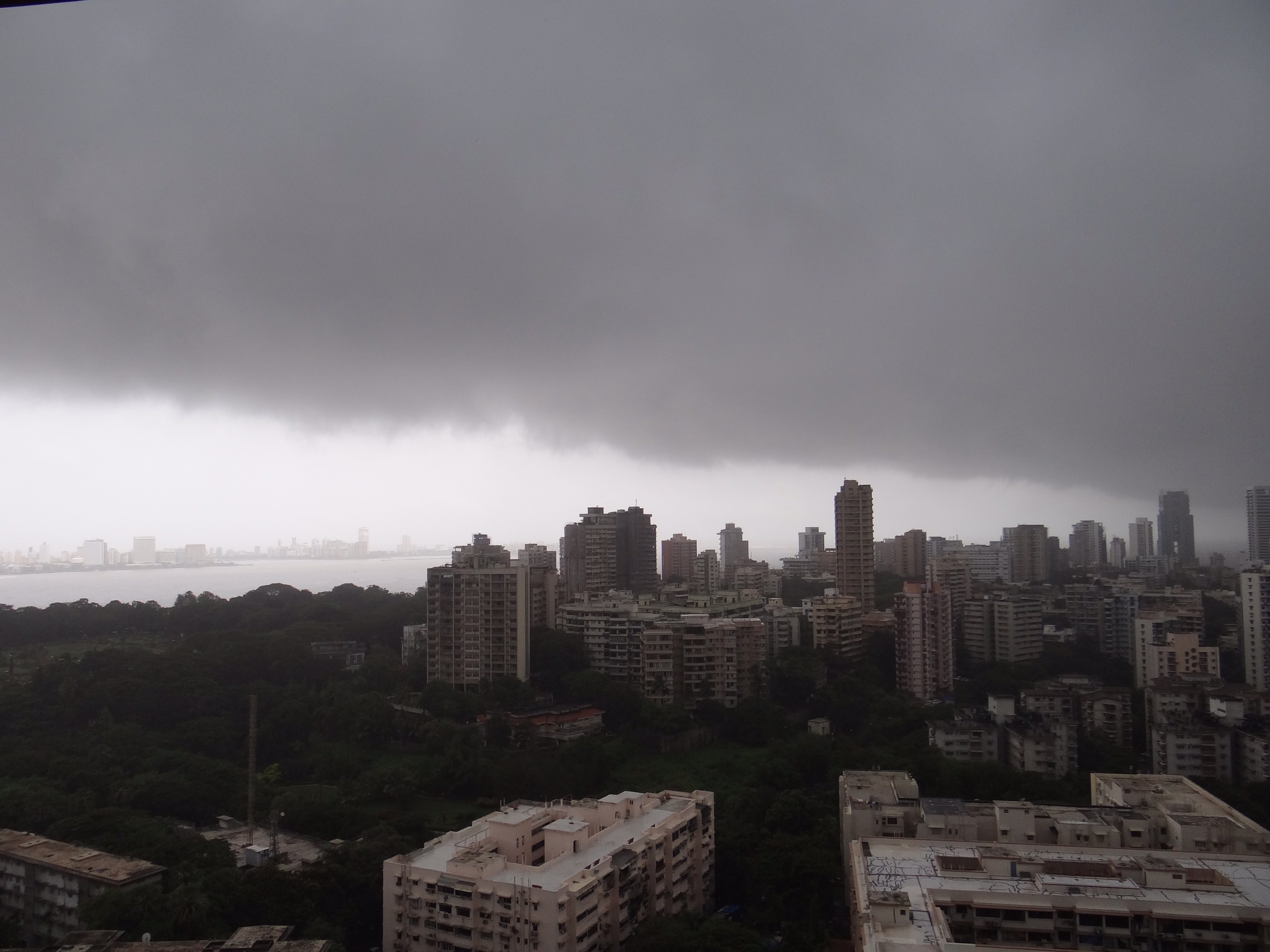
How can we describe the formation of the clouds and the colour of the skyline during a beautiful sunset on any day as in the photo above ?

Let us learn to live with life the way it is rather than the way we want it to be always.

S Ramesh Shankar