Never say never again…


A colleague of mine narrated an interesting incident, which happened when she was on vacation in another country. She went on a long drive with her family and entered a restaurant to have lunch. After all the family members had gone through the menu card they realised that did not like the food listed in the menu.  Further, they did not like the smell of the place.  They politely got up and told the butlers that they had changed their plans and hence wanted to move on.  Actually, they left the place in a hurry since they did not like the food nor the smell of the place.  They told themselves that will never ever come to this place again.

After driving for about 50 miles they realised that one of them had forgotten her handbag in the same restaurant.  So, they turned back and decided to drive back.  They hardly remembered the name of the restaurant.  But with the help of the highway police, they could trace their way back.  When they reached,  they were promptly handed back their forgotten handbag.  But, they felt embarrassed by the turn of events and being touched by their grace decided to have lunch in the same restaurant.

When she returned from her vacation and narrated this incident, I was recalling how many times I have felt the same way – ” never again “.  But, after listening to this incident I realised that may be the decision should be to say -“Never say never again …”.  The reason is that we feel never again at the spur of the moment on many occasions and with no logic or reason.  Sooner than later we realize that our decision was irrational or sometimes even unreasonable.

Let us reflect on a few real life incidents.  We climb a hill top and after a arduous and tiring trek up we realize that this is not for us. This will be our last trek and we will never do it again.  But as soon as we reach the peak and admire the beauty of nature around us we realize that the efforts were worth it.  We may decide to try one more time since the results were much more rewarding than the efforts put in.

We may decide never to visit a shop again just because an employee in a shop did not behave well with us.  It may be a one off incident and if we brood over the incident, we may have provoked the emotions of the employee and hence his outburst may have been more due to our own behaviour than his.  So, we may end up going to the same shop again since the benefit of shopping there is that everything is available and it is near your home.

We may travel to a country and may face a lot of embarassment from the day of arrival.  It may be immigration issues at the  airport and then misplacing your baggage and the final nail in the coffin may be your hotel reservation is not confirmed although u had a confirmed voucher.  All this may make us decide never to visit this country again.  But, we never know that destiny may take us to the same country for our first job from our campus or on a transfer from our organisation and we may really end up doing well in our career.

So, the lessons learnt is – “Never say never again…  “.  Only time and reflection may make us wiser.  It may be worthwhile to reflect and take time to decide – ” Why never again ?” 

Have you been through such incidents in your life ?

S Ramesh Shankar

“How much is good enough ?”


If each of us ask ourselves, “how much money is good enough?”to lead a happy life, we may not give the same answer.  Each of us try our best to be successful in life.  Each of us define success in our own way.  There is nothing right or wrong about our own definitions in life.  After all, each of us have a way of defining success and happiness in life and have our own priorities.

As we grow in life and career, we work hard and put our best foot forward.  We assimilate  material wealth one by one as we gradually increase our purchasing power in life.  We buy a two wheeler, a car, a house and so on.  Every time, we think we have arrived in life, we dream for more.  The needs increase and so does the greed.  In my view, there is nothing wrong with this journey.  We all have gone through it and so will the future generations.

However, it may be worthwhile to understand why this happens ?  If you ask a college student, when she would settle and be happy in life, she may say, the day I get a job and settle down.   If you ask a single working professional,when he wants to get married, he might say that the day I am able to stand on my own feet, I will.   If you ask a newly married couple, if they have arrived in life, they would say yes the day they are blessed with a kid.  If you ask a young mother, if she considers all her needs in life fulfilled, she may say yes the day her child finishes her schooling.  Then, you may ask a middle aged parent, if he is happy, he may say the day his child finishes education, gets a job and gets married.  This way the cycle repeats itself.

Does this mean that we are never happy in life ?  Does this mean that nobody feels content with what they have ?  It may or may not be true.  It is human nature to seek more from life all the time.  As I said, all of us go through this cycle of life.  Some of us realize that this is an endless cycle sooner than others.  It is this ability of fulfilling needs and balancing greed, which may help us to the road  of happiness.

I remember I started my career with a meagre salary in 1981.  I have grown in my professional and personal life.  However, I did realize somewhere in my mid career years that happiness and wealth do not necessarily have a direct correlation.  You could be happy in life with whatever you have or be unhappy in life with all that you dream to have and elusive today.  Happiness is a state of mind.  It’s an attitude to life and living.  Happiness is derived from contentment and our ability to balance need and greed.  We need to fulfill our needs and not our greed.  

Hence, if I try to answer the same question today- ” How much in life is good enough ? ” – I would say that much, which fulfills all your needs.  The day we can draw the line between need and greed and also learn to be content in life, we may be happy.   Many a time, we wait for a tomorrow to be happy in life.  That tomorrow may not arrive.  It may be a good idea to enjoy today with whatever we have rather than regret waiting for that elusive tomorrow in life, which never arrives.

Like in the photo above, my wife was filled with joy after buying this attire in a road side shop in Cairo. It is not the brand or the price of the dress but the joy of being colourful and content with what you have.

The choice to be happy or unhappy is always with us. Enjoy today, forget tomorrow.

S Ramesh Shankar

Knowledge is for sharing


All of us assimilate knowledge and skills as we grow in life.  Some of us are willing to share it, while others want to conserve it.  In my view, knowledge is for sharing.  Some of us believe that if we share knowledge, we may lose our uniqueness and our mental wealth. I think it is the other way around.  The more you share, the more you learn and the more you grow in life.

Let us first try to understand from the organisation context.  Let us assume we have great people practices in our organisation.  Some of us are reluctant to share our best practices with other organisations thinking that we may lose our competitive edge.  With many years of working in the corporate sector, I can confidently state that no organisation can cut, copy and paste the best of practices of any other.  An organisation culture evolves over years and can never be copied by another organisation just by aping it.

Similarly, the culture of a nation is built over centuries.  No other country can come in, learn and adapt this culture to their society.  It is like you may be able to copy and paste a photo or picture from one source to the other.  But, you can never transfer the beauty of nature in reality by copying photos of nature.

Now let us come down to the family as an institution.  Is it possible to imitate the values of a family by just trying to follow them.  It takes generations to institutionalise values in a family.  Even, if we generously share our values and beliefs, it is not possible just to transplant the same without evolving our own values.

Just like organisations and institutions, individuals are also worried about sharing knowledge and skills.  Let us imagine the world’s best batsmen trying to teach batting to any of us.  Even if he is willing to spend his lifetime sharing his knowledge and skills, we can not expect to become the world’s best batsman without putting in hard work and honing our own skills.  If knowledge sharing could lead to knowledge assimilation so easily, the world would have geniuses all around.  

Knowledge is for sharing.  The more we share knowledge and skills, the more we evolve and grow as an individual.  Let us look at the geniuses around us.  Whether it is a sports person or a musician or a scientist,  they are always willing to share their knowledge and skills with others.  The more they share, the more they learn and the more they are respected in society.

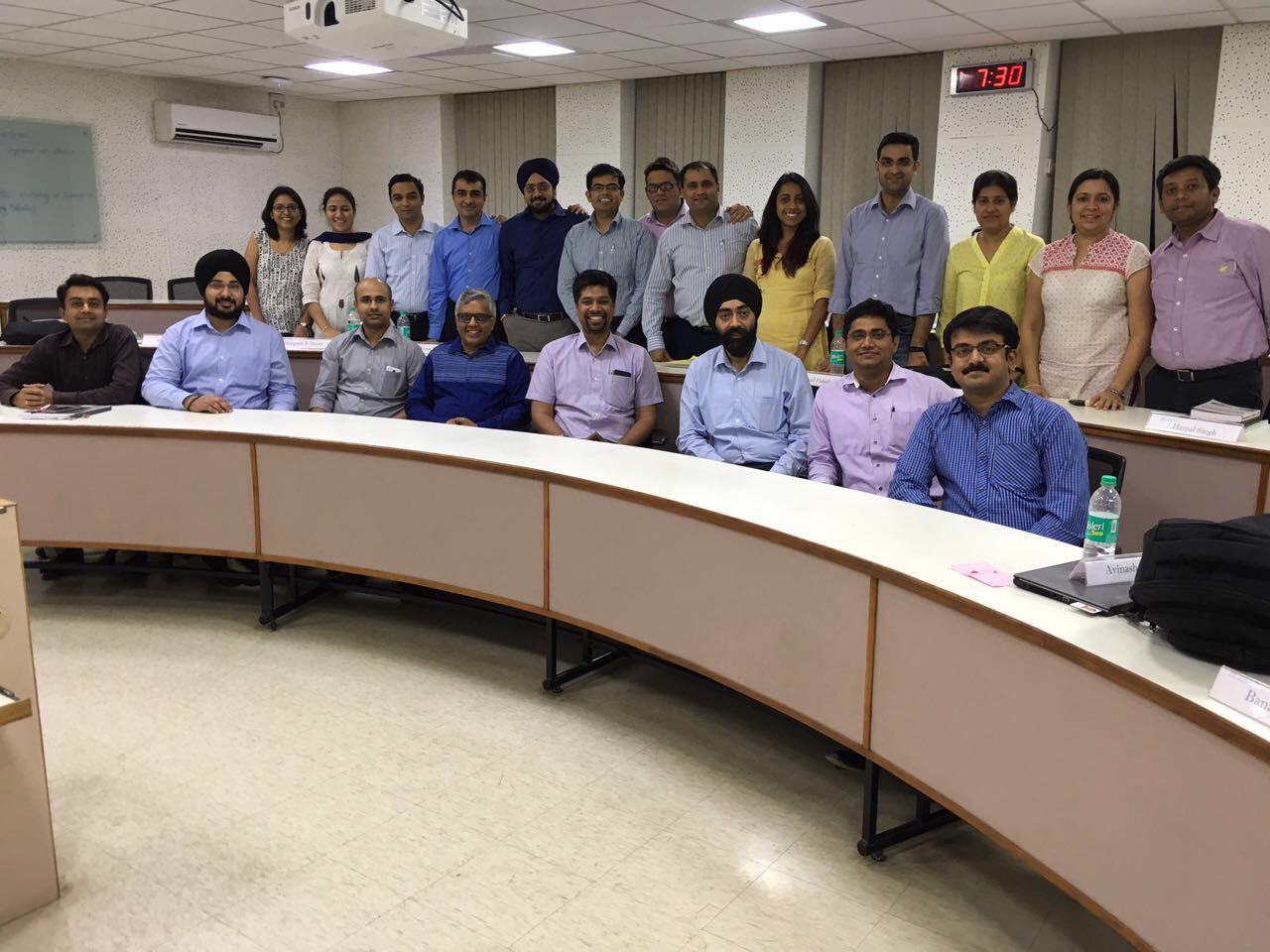
Like in the photo above, I met with a group of young talents in my organization, who were more than willing to share knowledge and skills with one another.

So, let us share whatever knowledge we have from today.  We will gain more than we are likely to lose.  Try it.

S Ramesh Shankar