Politics at the workplace

IMG_5930
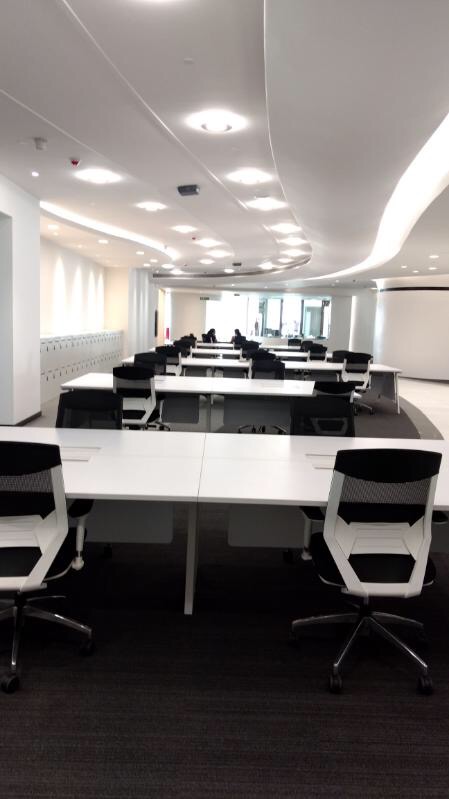
“Politics” could be defined as the art of weaving your way in the organisational context.  Does politics exist in organizations ?  The answer is a resounding “yes”.  Do you need to indulge in politics to be successful in your career ?  My answer would be a resounding “no” from my life experiences.  While behavioural scientists may say that “politics” is not a dirty word and they may be right.  According to them, politics is the art of using the ogranization’s human networks to your advantage.  

I am not against “networking” and using your networks to get your things done as suggested by the social scientists.  What I am against is to indulge in “political behaviour” in your day to day work.  This means simply that you are indulging in “behind the back” gossip.  This results in lack of trust in your team members and saps away the energy of the team.  A lot of organisational energy is used in resolving conflicts and misunderstandings rather than building bonds.

How can one avoid politics as a leader ?  This is a question many people leaders have asked me during the course of my career.   My answer is simple.  As a leader, one needs to clarify the “Dos & Don’ts” of behaviour expected in your team.  Further, one needs to lead by example what you expect from others.  For eg. I clearly encourage my team to raise any issue with anyone and sort it out face to face rather than talk behind the back.  Gossip or talking behind one’s back may be the fountain head of organisational politics.  This needs to be actively discouraged and even punished, if necessary.

On the other hand, if someone wants to build relationships so as to get things done, it is not politics in my definition.  After all organizations are nothing but a network of relationships between people working in different functions.  It is essential to build networks and relationships to get things done effectively.  We need to do everything to enable our team members to network across the organisation and build these relationships.

It is only when a team member ends up misusing a relationship or a network to gossip, politics sets in.  Politics in my view is like a wild fire in a dry summer forest. If not nipped in the bud, it can spread across the organisation and will be very difficult to put off.  I have been asked many a time as to how one can avoid these webs of organisational politics.  It is up to us.  If we want to stay clear of it, we can clearly and unambiguously communicate the same to our team members and colleagues and it works.

I have also been asked if one can be successful in one’s career without being political.  I believe so and have practised it all through my career.  Being a HR professional, I have seen most successful people do not indulge in politics, as I have defined it.  Further, this also ensures that your energy is chanelized to do more creative work in your domain.  Teams work with high energy and enjoy their work without any fear or barriers.

In my view, “politics” in the organisational context is counter productive if not channelised to build networks and relationships.  As a leader, it is up to us to define the rules of the game for our team and ensure nobody crosses the line.  If many of our team members play foul, we not only lose the game but also create poor team spirit and negative energy within the team.

Let us define the rules of our game today and lead by example to ensure others follow it.

S Ramesh Shankar

Travelling around


One of my passions in life is to travel.  I love visiting new places and meeting people.  I also love to understand the culture and crafts of that new place.  I have been lucky to visit different parts of the world and of my wonderful country as well. Every time I have travelled to a new place, it has been a new insight for me. The place, the people and the practices indeed teaches me many life lessons, which no education in the world can.

It does not matter which part of the world I am visiting or during which time of the year.  Every new place has a new meaning for me in life.  Every new location teaches me new things.  I wish I could have been a travel writer, visiting places around my country and the world and sharing my experiences with everyone.  Although, I have almost visited all the states of my country , I am yet to cover all the treasures of my native country.

I remember my first travel out of my country.  It was way back in 1989, when I visited UK for a three month training programme.  Apart from the learnings in the programme, which changed my perspectives on being a trainer, it was indeed great insights into a different country with varied cultures, norms and behaviours.  I still remember how I enjoyed the Big Ben to see the UK parliament or the Buckingham palace and these brought back vivid memories of my limited knowledge of history studied in school.

Another wonderful visit was my first visit to the state of Jammu & Kashmir, the northern most state of my country.  It was way back in 2004 and many of friends cautioned me against the travel since there was tension between ethnic groups and also the state was seized with terror attacks.  Both me and my wife felt that terror is a world wide phenonomenon today.  It can happen in your backyard where you are staying and hence we decided to go ahead.  This was one of the best decisions of my life.

This state gives you the best glimpses of nature.  Its warm and flat at Jammu, cold and chilly in the valley and solemn and snowy at Ladakh(as in the photo above).     As you land into Srinagar, you feel you have arrived in a fairy land.  You can see snow capped mountains around you and the warmth of the people you meet is unbelievable.  All the people you meet here are hospitable and are always keen to make you comfortable.  They call it “Kashmiriyat”.  It means the culture of secularism in simple terms. It is such lessons, no book in management or psychology can teach you.

One of the best states I have visited so far is Sikkim, one of the smallest states of India.  The capital Gangtok is again surrounded by snow capped Himalayas and the city is spotlessly clean.  You have foot paths all around the city and you can enjoy walking around without worrying about any road mishaps.  I sometimes wonder why all of us living in different parts of the country in other states cannot learn from this wonderful state.

Last but not the least, I would urge everyone to travel around whenever you can.  I would urge parents and elders to take your kids around the world and around India whenever you can.  A visit to a new place and meeting new people can never be substituted by books or the television.  My wife and kids have travelled around with me in my country and around the world wherever I could afford to go.  Each visit has brought in a new lesson for each of us.

Lets start our learning journey today.

S Ramesh Shankar

The sunset


The sunset has always been a source of joy for me.  Like Keats said, ” A thing of beauty is joy forever”.  Watching a sun set and taking photos has been a source of inspiration for me always.  If you ask me, I do not know why ?.  Scientists tell us that it is safer to watch a setting sun than a rising one because of the infra red and other harmful rays.  I watch the setting sun as it is a source of beauty and happiness for me.

As the sun sets in the horizon, we have the multicolour formation of the clouds.  No artist in the world can paint it.  No designer can visualise it.  It is the creation of nature and the gift of God. What amazes me more is that every day is a new design.  A new formation.  A new spread of colours.  The combination of colours is electrifying.  It soothes your mind and quenches your heart with emotions.

The setting sun signifies many things to me.  It declares the end of the day and the beginning of the night.  It means that life has both days and night.  While it may be easier to work in the day but much more difficult in the night.  The sun set prepares us for the difficulties of the night.  It cautions us to prepare for the more challenging phase of life.

I am lucky to travel to different parts of the world as part of my work.  Although I do not travel very often but every visit to a new place teaches me some thing.  The last time I was in Germany I was talking about sun sets with someone.  They told me how lucky we are that we have the sun for most part of the year in India.  As Indians we consider bright sun light as signifying higher temperatures and coupled with humidity, it definitely makes it a tougher day to bear.  But imagine life without much sun light.  If you live in countries, where the appearance of the sun is rare, you know what I mean.

The sun is not only a source of energy.  It brightens our life.  It balances nature. It helps us maintain our moods.  I recently experienced the absence of the sun for almost a week during the recent monsoon and I realised how much I missed it. I appreciate the reasons for depression and mood swings in the countries, where the appearance of the sun is a luxury.

The sunset may mark the end of the day.  But it also gives us hope that although we may have to spend a cold night but the rising sun the next day will give us hope and warmth back.  We miss something when we do not have enough of it.  In countries where the appearance of the sun is a phenomenon, its highly valued.  But in nations like India, where there is abundance of sunlight, we value it less till the day we miss it.

I am amazed by nature and everything around us. It is a great source of joy and happiness.  The sun, the moon, the earth, the tree, the sea, the mountains and so on.  If we sit back and reflect, we realise that we are privileged to learn so much from all of them.  Each of them is a mystery and a source of inspiration.  If at all we are willing to keep our eyes and ears open all the time, learning can never end.

The sun sets today to rise again tomorrow.  Let us also resolve to bounce back in life if at all we go through a bad patch in life like the sun does every day for us.

S Ramesh Shankar