Valuation versus Value creation

One of my friends, who heads HR of a large start up group  suggested that I should write about this topic. At first, I felt that I had no experience of a start up and hence may not be qualified to write. But later realised that life is no different than a start up in its own way. So I agreed to make an attempt.

Many start ups around the world are born out of a great idea and then the promoters convert that idea into reality and try to commercialise it so that they can make money. Most enterpreuners have succeeded in life this way. However, it is important to remember that not every start up succeeds and not every idea fails in the market place.

If we look at the Indian IT and services industry, they all started as service providers and are growing up the value chain. In the services sector, cost of operations is the competitive edge for the organisation. So , we have seen in our life time that many shared services have already moved away from high cost countries to lower cost countries. Similarly, IT services will also transcend to markets, which can provide the same service at a lower cost.

One of the reasons many IT companies have focussed on product development is because products create value to the customer and cannot be replaced by lower cost products unless they can create the same or higher value to the customer. This is possibly the reason why a high quality product always sells at a premium and cannot be easily replaced in the market by competitors.

However, in the start up eco system, the competition today is not to create better value to customers but more value for their own brand to later sell it in the market place. This is the “key difference” between value creation and valuation. Many start ups are vying with each other to create better valuation so that they can make a fast buck when the market is hungry and they can disappear from the competitive landscape. However, the start ups which focus on value creation for their customers are the sustainable ones and will always sell at a premium. In short, “Valuation” could be creating value for self while “Value Creation” could be considered as creating value for others.

I realise that our life is no different. Whether as individuals or as professionals, if we focus on our valuation based on our income or wealth, we are in the race for valuation of ourselves as a commodity. It does not matter if we are selling ourselves as commodities in the marriage market or in the organisation market place. On the other hand, if we evolve as balanced individuals creating value to our family members and society at large by contributing more than what we get from the communities around us, we create value and that becomes sustainable and invaluable.

So, it does not matter if we are a start up or an individual growing up in our respective space. We need to learn to create value to our customers or family or community around us. If we focus only on accumulating wealth without any value addition to others, we may fade as fast as we made an impact. The choice is ours always. It is upto us if we are interested in value creation or not. Either way one can make an impact. One is positive and sustainable when you create value for others and other is negative since wealth does not necessarily create positivity and value for others always.

Just as in the photo above, the time we spend with our friends is value creation as long as we do not evaluate it in terms of return on time spent with them. As otherwise, it would become valuation.

Life is like a start up. Let us focus on value creation and not be swayed away by the ephemeral cycle of valuation.

S Ramesh Shankar

27th July 2022
Gurus in our lives

Who is a Guru ? Someone who teaches you something in life. It could be your teacher in the classical sense of the word. But, in my view, it could be anyone around you. I would like to explore people in my life, who have always taught me something. I am every grateful to them and I would call them “Gurus in my life”.

Let me start with my family. My parents taught me simple living and groundedness. My father taught me patience and my mother resourcefulness. My spouse taught me organising my life. My daughter taught me hard work and my son has taught me to live life king size every day.

If I look at my career, there are innumerable people in my life, who have taught me many things. My first boss taught me magnanimity and selflessness. My colleagues have taught me almost everything I learnt in my career. Whether it is learning about computers when I first used them in the late eighties or about apps which I use them today.

My friends have made me what I am today. I remember my first days in my career, when one of my best friends of my life evolved and he taught me what fairness and humanness is all about. Some friends have made me experience giving without expecting anything in return. Others have taught me as how you could be around for someone without even physically being there.

If you look at the place you live, you realise that the people who work in your community teach you something every day. My house help has taught me to live life smilingly irrespective of all challenges you face. Another person has taught me how to be creative with the available resources you have and only mind is a limiting factor to our imagination.

I have learnt a lot from the public at large and even from people whom I have not met a second time again in my life. I remember travelling with a sportsperson once and he taught me how to learn from failures. I learnt how one could serve the community without expecting anything in return from many people in public life.

I have learnt a lot from politicians too although we generally think they are useless people. I have learnt how one could be a great orator if you can master a subject of your liking. I have learnt how one could serve your constituency to the best of your ability even though you may not have all the resources to support you always.

I have learnt a lot from animals too. A Labrador at home as a pet taught me loyalty, gratitude and selfless behaviour. Birds teach me to live life frugally every day. The cats teach me how you can keep your environs clean all the time. The bees teach me how you can contribute to others without expecting anything in return.

Life is a teacher. Everyone around you – human or otherwise teaches you something or the other. It is upto us to learn. A good student can learn from anyone. Age, experience or vocation is not a qualification for a teacher. It is the genuineness of the student and the eagerness to learn, which makes anyone a teacher for you. Our ability to observe and our willingness to submerge our egos may make us learn from everyone around us.

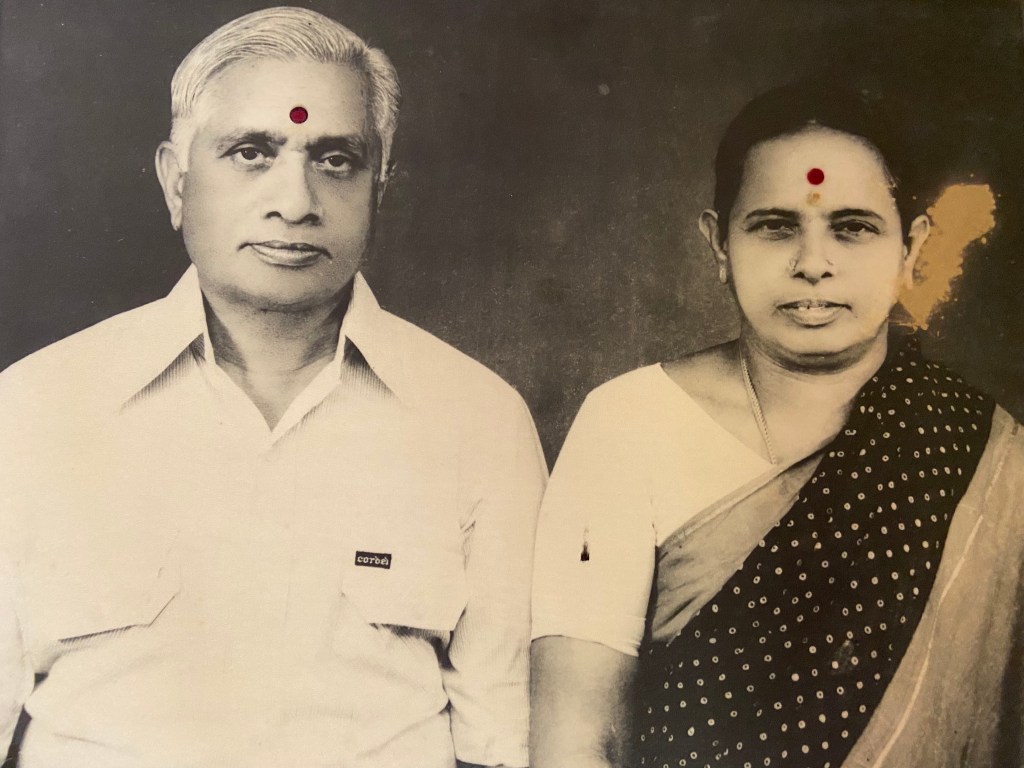
As in the photo above, our parents are our first Gurus in life and will always be for our life time.

Let us learn to be good followers. Teachers will always find us.

S Ramesh Shankar

30th May 2020

Learning by doing…

Choosing the right pan

I have always believed that learning best happens when you “learn by doing”. Today this concept got reinforced in my mind. A simple incident in my life but a great learning for my life time.

I normally have a half day fast once a week mainly to cleanse my body of all toxins. It is generally observed on Sundays but this week we were travelling and hence we observed on a Monday. Our routine is simple. No coffee or breakfast and fast till lunch with only water. Then break fast at lunch with fruits. Evening we take some dosas and end the day with curd rice.

Both my spouse and me undertook this weekly fasting exercise about a year and a half back. It helps us give some much needed break to our digestive system which works 24 x 7, 365 days otherwise. It also helps us refresh and rejuvenate for the week ahead.

We generally have fruits and then have a nap. When we get up,, we have dosas made of pulses as our first normal meal for the day. This not only is healthy but enables necessary intake of proteins and vitamins for the day. Normally my wife makes the dosas. Today she was a bit tired and hence I decided I will venture into the kitchen and try it myself.

I always thought making dosas was child play for me. This was because I had grown up as a child eating dosas and have had it at home and outside for my entire life. I have seen how dosas are made from the batter to the plate. The batter was already made and kept ready in the kitchen.

I had to just make it. So as I entered the kitchen I realised that I was not aware where the dosa pan was kept. Searching for it was the first task. Then I had look for the oil. As I got the oil I was not sure which of the two oils I should use as there was oil in two containers and both looked the same.

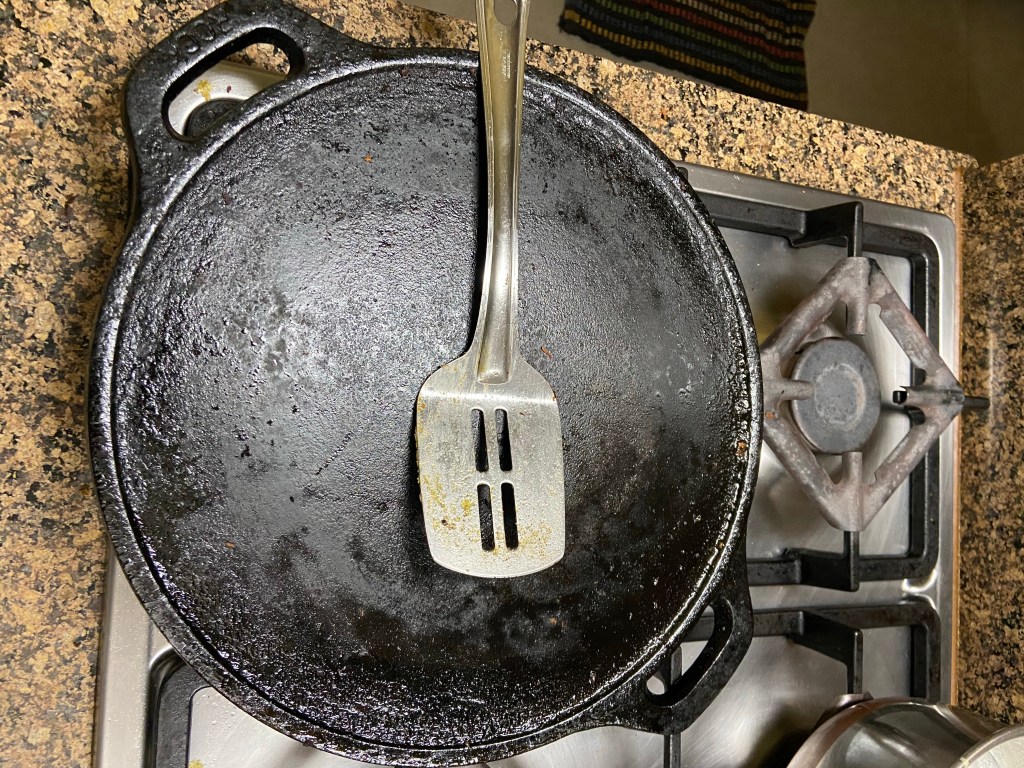
Then as I speak the batter on the pan, I thought I have made it till I realised after a few minutes that the dosa got stuck to the pan. I had chosen a wrong pan, which is normally used to make rotis. I did not know the difference between the two.

So as the dosa got stuck, I gave up my experimentation and waited for my wife to get up and help me with the making of the dosa. She got up and immediately pointed out that the dosa got stuck on the pan because I chose the wrong pan.

It stuck me that this was a simple exercise and just theoretical knowledge or observation was not good enough to do my job. In organisations, we think if we know the subject from college or have seen others do it, we can also do it. It may not be that simple. We need to learn by doing it ourselves.

This dosa experiment taught me and reinforced my learning that “ Learning by doing” is one of the best ways to learn and make others learn. We may end up making mistakes but that’s a learning too. I burnt the dosa and it got stuck on the pan but I did learn how to do it the right way , this way and hopefully next time will not repeat the same mistakes.

Our ability to accept our mistakes and learn from them makes us a better learner in life too. We need not feel bad that we have goofed up. Everyone does in some thing or the other. As long as we have the courage to accept and learn from it, it is great.

Life is always “Learning by doing”

S Ramesh Shankar

21st Dec 2020